

CNC Machining: The Ultimate Guide To Precision Manufacturing
Dec 10, 2024
Leave a message
In the world of modern manufacturing, CNC machining stands out as a critical technology. Used across multiple industries like automotive, medical, aerospace, and electronics. Thanks to its ability to deliver extreme precision and efficiency, CNC machining is fast becoming the preferred choice for creating custom parts.
In this guide, we will explore what CNC machining is, how it works, the types of CNC machines, and why it's such a crucial technology. We'll also dive into how to choose the best CNC machining service provider, with a focus on Shenzhen Pride.
What Is CNC Machining?
CNC machining, short for Computer Numerical Control machining, is a modern manufacturing process that uses computers to control machines. These machines perform tasks like cutting, milling, and drilling with high precision. CNC machines follow pre-programmed instructions, enabling them to achieve repeatable accuracy that manual methods cannot match.
The process begins with a design, often created using CAD (Computer-Aided Design) software. Once the design is ready, CAM (Computer-Aided Manufacturing) software generates the necessary commands for the CNC machine to follow. The machine then uses these commands to remove material from a solid block, shaping it into the desired part.
CNC machining is a versatile tool used across various industries, from high-tech applications in medical devices to simpler everyday products. Perfect for creating precision parts from metals, plastics, and composites. Whether for custom prototypes or mass production, CNC machining ensures tight tolerances and high-quality results.
In summary, CNC machining combines traditional manufacturing techniques with advanced computer technologies, offering a fast and accurate way to produce parts that meet exact specifications.
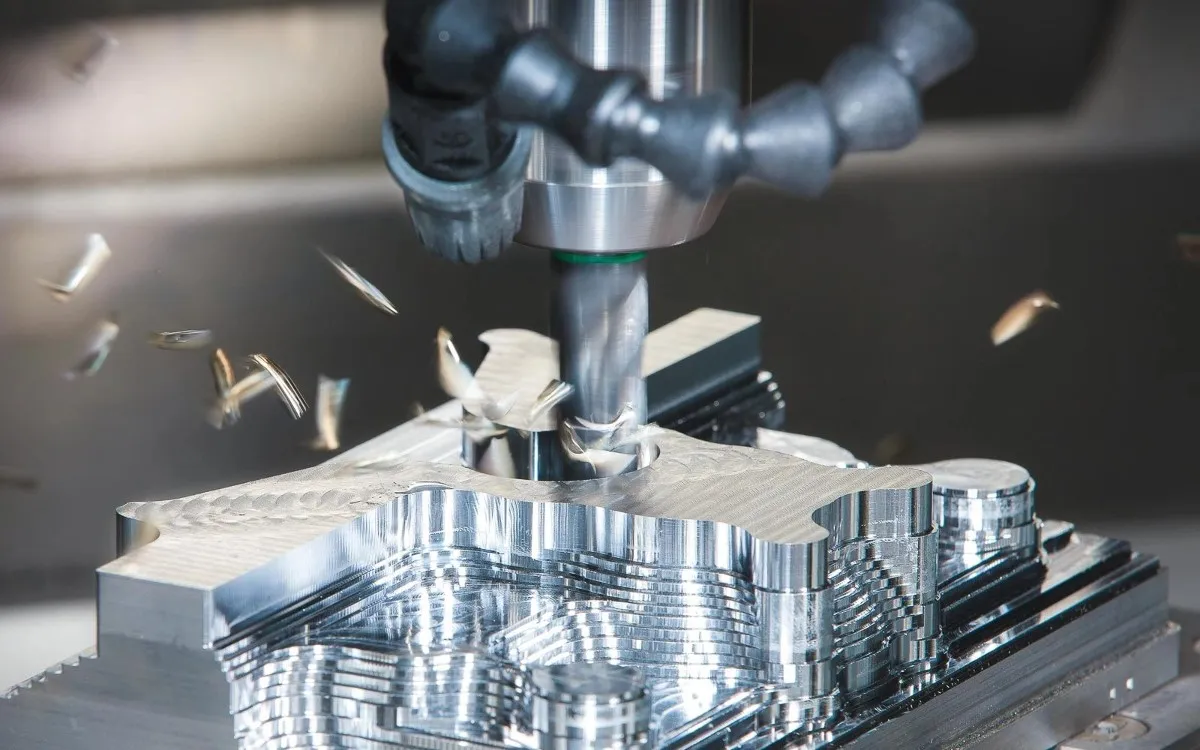
▲CNC Machining
How Does CNC Machining Work?
CNC machining is a precise, automated process that involves several key steps, from material preparation to final inspection. Below is a simplified breakdown of how CNC machining works:
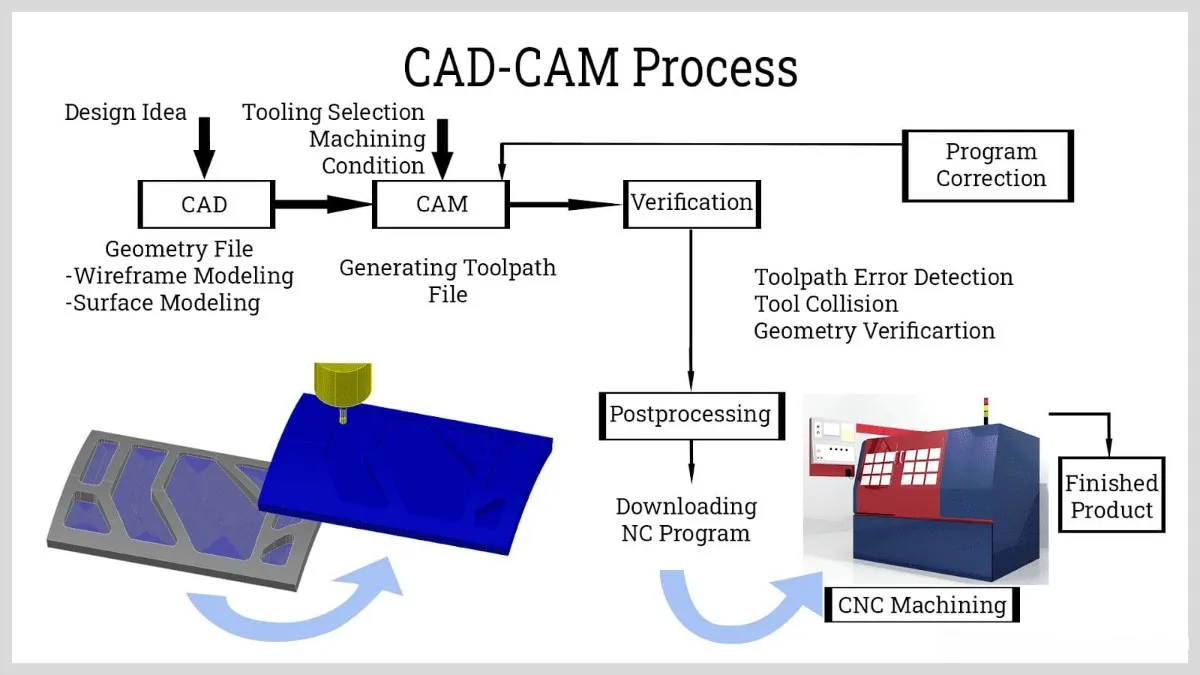
▲CNC Machining Process
1. Preparation
- Material and Tool Setup: The first step is gathering all required materials (like metals, plastics, or ceramics) and tools (cutting tools, drills, mills, etc.).
- Machine Check and Calibration: The CNC machine is carefully checked and adjusted. This ensures it works with the right precision. This includes checking the lubrication, machine settings, and fixture reliability.
2. CNC Programming
- G-code and M-code: Using G-code and M-code, a programmer writes the instructions for the CNC machine. These codes tell the machine how to move, where to cut, and how deep to go.
- Designing the Path: The program determines the cutting paths and parameters like speed and feed rates, ensuring that the material is cut efficiently and accurately.
3. Fixture Design
- Fixing the Workpiece: The fixture holds the workpiece securely in place during machining. The type of fixture depends on the part's size, shape, and material.
- Optimization: The fixture is designed to ensure stable clamping, preventing movement during the machining process and ensuring the precision of the final product.
4. Machining Process
- Loading the Program: Once everything is set up, the program is loaded into the CNC machine, ready to begin.
- Workpiece Positioning: The workpiece is positioned correctly on the fixture so that the machine can start its operations.
- Tool Setup: The appropriate tools are installed, ensuring they are tightly secured and ready to cut the material.
- Measurement and Calibration: Using measurement tools like calipers or micrometers, the workpiece is calibrated to verify its dimensions and ensure it's ready for machining.
- Parameter Adjustment: Cutting speeds, feed rates, and cutting depth are adjusted to optimize performance and material removal.
5. Post-Machining Inspection
- Measuring and Checking: After machining, the part undergoes thorough inspection using devices such as coordinate measuring machines (CMM), optical projectors, or roughness testers to verify dimensions, surface finish, and functionality.
- Recording Data: The measurements are recorded, and any deviations from specifications are noted.
- Optimization: Based on the results, adjustments are made to improve the machining process, material use, and overall quality.
6. Process Feedback and Optimization
Throughout the CNC machining process, critical steps are monitored and recorded, especially tool performance, machine status, and product quality. Continuous optimization ensures that parts meet custom specifications while improving efficiency and reducing waste.
In summary, CNC machining works by automating the manufacturing process through computer-controlled machines. Each step-from programming and fixture design to machining and inspection-ensures the creation of high-precision parts that meet exact specifications.
What Is a CNC Machine and How Does It Work?
A CNC machine is an automated tool that performs various tasks like cutting, drilling, shaping, and more. These machines can be programmed to carry out multiple operations in a single cycle, making them highly versatile.
How It Works: CNC machines operate based on G-code instructions. These codes tell the machine how to move, where to cut, and how deep to go. The machine follows these instructions with high precision, producing parts that meet strict specifications. Automation reduces human error and ensures repeatable accuracy.

▲CNC Machine
Different Types of CNC Machines
CNC machines come in various types, each designed for specific tasks. They can be classified based on movement type and function.
By Movement Type
- Point Control: Moves the machine to specific points.
- Linear Control: Moves along straight lines.
- Profile Control: Handles curved or complex paths.
By Function
- Lathes: Used for turning operations, shaping parts like shafts.
- Mills: Perform cutting and drilling tasks.
- Drills: Specifically designed for drilling holes.
- Grinders: Used for finishing parts with a fine surface.
Common Types of CNC Machines
- CNC Milling Machines: These versatile machines use rotating cutters to remove material. They can handle drilling, boring, and cutting tasks.
- CNC Lathes: These machines rotate the workpiece, allowing for the creation of cylindrical shapes like shafts and tubes.
- CNC Routers: Typically used in woodworking, CNC routers can also cut through materials like plastic and metal. They are ideal for various industries.
- 5-Axis CNC Machines: These advanced machines can move a tool along five axes simultaneously, allowing for the creation of complex and intricate designs.
- CNC Vertical Machining Centers (VMC): Featuring a vertical spindle, these machines are great for precise drilling and cutting. They are used for both simple and complex parts.
Key Components of a CNC Machine
CNC System: The CNC system is the brain of the machine. It receives and processes the digital commands, controlling the machine's movements. It consists of:
- Input Device: For loading the program.
- CNC Unit: Handles data processing and calculations.
- Servo System: Drives the machine's movements.
Machine Body: The machine body includes essential parts like the bed, spindle, and tool holder. The quality and design of these components directly affect the machine's stability and accuracy.
Auxiliary Devices: Auxiliary devices support the machine's operation, ensuring smooth functioning. These include:
- Cooling Systems: To reduce heat during machining.
- Lubrication Systems: To minimize friction and wear.
- Chip Removal Devices: To keep the workspace clear.

▲CNC Machine Setup in Action
Key Advantages of CNC Machining
CNC machining offers several key benefits, making it vital in modern manufacturing. Here's why:
- High Precision: CNC machines replicate CAD designs with high accuracy. They achieve tolerances of 0.0002 to 0.0005 inches. G-code controls the movement of tools, ensuring precision every time.
- Consistency and Repeatability: CNC reduces human error. It ensures the same result every time, even in large production runs. High repeatability ensures consistent quality, crucial for batch manufacturing.
- Ability to Make Complex Parts: CNC machines can handle up to 6 axes. This allows them to create complex shapes and intricate features. Multi-axis machines reduce setup time and improve efficiency.
- Reduced Human Error and Increased Safety: CNC machines follow pre-programmed instructions. This minimizes mistakes due to fatigue or miscalculations. Safety features like enclosed work areas reduce accident risks.
- Efficient for Large-Scale Production: CNC machining is fast. It reduces production time by automating tasks. The ability to repeat the same task improves efficiency in mass production.
- Cost-Effective for High-Volume Production: Although initial costs are high, CNC machining is cost-effective for large runs. It reduces labor costs and ensures consistent quality, making it ideal for mass production.
In short, CNC machining is fast, precise, flexible, and cost-effective, making it an essential tool for manufacturing today.
Disadvantages of CNC Machining
CNC machining has some drawbacks to consider:
- High Initial and Maintenance Costs: CNC machines are expensive. They require costly parts like computer systems, controllers, and advanced tools. This makes them difficult for small businesses to afford. Maintenance costs also increase with machine complexity.
- Skilled Operators Needed: CNC machines need operators and programmers with specialized skills. This increases labor costs. Unlike manual machining, CNC machining depends on technical expertise.
- Not Ideal for Small Batches: CNC machining is not cost-effective for small production runs. The setup costs are high. Each part requires a specific program, which adds to the time and expense. For small batches, manual methods may be more efficient.
In summary, CNC machining is better for large-scale production due to high setup and maintenance costs, and the need for skilled operators.
Industries and Applications for CNC Machining
CNC machining is not confined to any one sector-it is used in a variety of industries:
- Aerospace: CNC machining creates high-precision parts like turbine blades, engine components, and landing gear.
- Medical: CNC machines make implants, surgical tools, and prosthetics.
- Automotive: CNC machining is used to produce engine components, transmission parts, and bodywork. It also allows for custom parts for specific vehicle models.
- Electronics: CNC machines make parts like heat sinks, circuit board brackets, and enclosures.
- Drones: CNC machining is used to create lightweight yet durable parts for drones, such as frames and propellers.
- Shipbuilding: In shipbuilding, CNC machines produce hull components, engine parts, and equipment.
- Tools and Molds: CNC machines make tools and molds for processes like stamping, injection molding, and die casting.
- Art and Sculptures: CNC machines are used to create intricate carvings, sculptures, and decorative pieces in materials like wood, metal, and plastic.

▲Industries and Applications for CNC Machining
What Else Can CNC Machines Do?
In addition to traditional tasks like milling and turning, CNC machines are used for a variety of other advanced manufacturing processes, such as:
- Laser Cutting: CNC-controlled lasers offer a high level of precision for cutting through various materials, from metals to plastics.
- Grinding: CNC machines are also used in precision grinding, helping to achieve smooth, precise surfaces or meet specific tolerances.
- EDM (Electrical Discharge Machining): CNC machines can also be used for EDM, where electrical sparks are used to cut or shape hard materials.
What Is a CNC Machinist?
A CNC machinist is the skilled operator who programs and operates CNC machines. These professionals ensure that parts are made accurately according to the design specifications. CNC machinists need to have a deep understanding of machining techniques, material properties, and safety protocols.
How to Choose the Right CNC Machining Service Provider?
When choosing a CNC machining service provider, there are several factors to keep in mind:
- Experience and Reputation: Select a company with a proven track record of delivering high-quality parts. Look for reviews or case studies to verify their expertise.
- Capabilities and Equipment: Choose a provider with a wide range of machines, including CNC vertical machining centers, 5-axis CNC machines, and CNC lathe machining.
- Quality Control: Look for a provider that follows ISO standards, such as ISO 9100 or ISO 13485, to ensure that all parts meet stringent quality requirements.
- Lead Time and Cost: Understand the lead times and get a CNC machining quote to ensure your project fits within your budget and timeline.
At Shenzhen Pride, we specialize in precision CNC machining and offer both OEM and ODM solutions for a range of industries, with a focus on high-quality results and fast turnaround times.
Frequently Asked Questions
1. What is the difference between CNC machining and traditional machining?
CNC machining is fully automated and highly precise, while traditional machining requires manual input, making it more prone to human error.
2. How much does CNC machining cost?
The cost of CNC machining varies depending on factors such as material, complexity, and quantity. A CNC machining quote can help you determine the exact cost.
3. What materials can be used in CNC machining?
CNC machines can work with a wide variety of materials, including metals like aluminum and steel, plastics, and composites.
4. Can CNC machining be used for low-volume production?
Yes, CNC machining is highly versatile and can be used for both small and large production runs.
5. What is a CNC lathe machine?
A CNC lathe machine rotates the material against a cutting tool, creating cylindrical shapes like shafts or tubes.
6. How accurate is CNC machining?
CNC machining can achieve tolerances as fine as 0.001mm, making it suitable for industries requiring the highest levels of precision.
Why Choose Shenzhen Pride for Your CNC Manufacturing Needs?
At Shenzhen Pride, we offer reliable, high-quality CNC machining services that meet the exacting standards of industries such as automotive, aerospace, and medical. With state-of-the-art equipment and a team of skilled professionals, we are your go-to partner for custom CNC machining and precision CNC machining needs.