

Grinding Machine Processing Methods
Nov 11, 2024
Leave a message
I Introduction
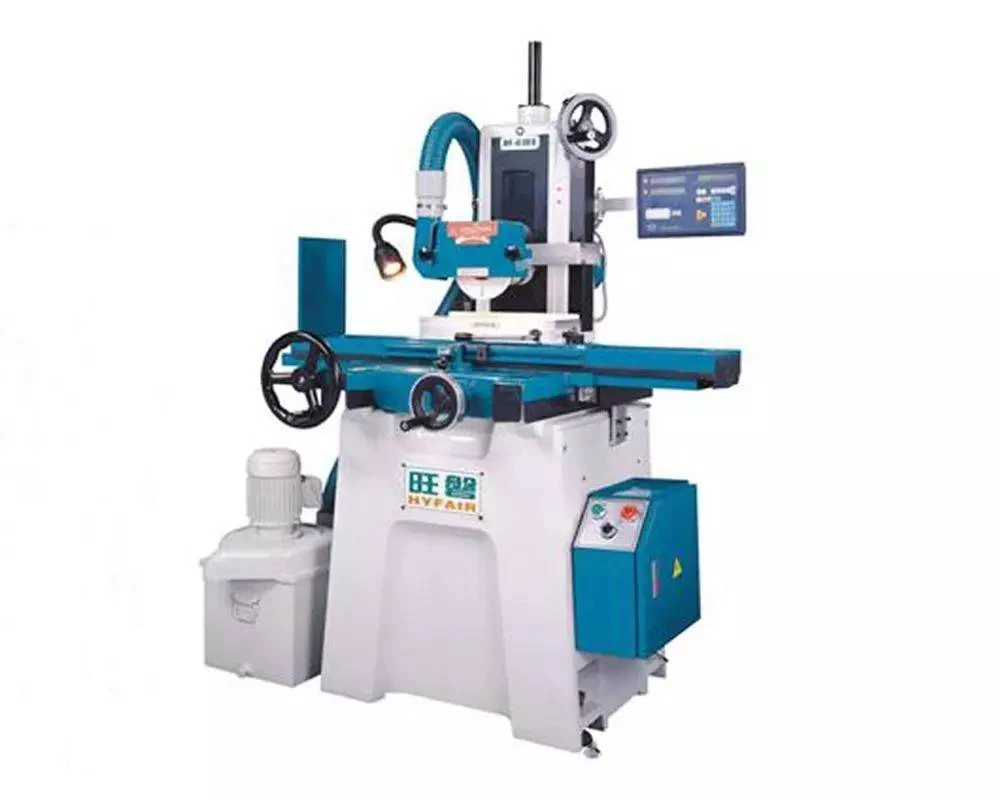
A grinder (grinding machine) is a machine tool that uses abrasives to grind the surface of a workpiece. Most grinders use high-speed rotating grinding wheels for grinding, while some use other abrasives like oilstones, sand belts, and loose abrasives for processing, such as honing machines, ultra-precision machines, belt grinders, polishers, and others.\
II Processing Range
Grinders can process materials with high hardness, such as hardened steel and tungsten carbide, and also brittle materials like glass and granite. Grinders can achieve high precision with minimal surface roughness, as well as high-efficiency grinding, such as power grinding.
III Classification
With the increasing number of high-precision and high-hardness mechanical parts, and the development of precision casting and forging processes, the performance, variety, and output of grinders have been continuously improving and increasing.
1. External Cylindrical Grinder: This is a basic model primarily used for grinding the outer cylindrical and conical surfaces.
2. Internal Cylindrical Grinder: This is a basic model primarily used for grinding the inner cylindrical and conical surfaces. There are also grinders that can process both internal and external surfaces.
3. Coordinate Grinder: An internal cylindrical grinder with a precision coordinate positioning device.
4. Centerless Grinder: The workpiece is held without a center and is typically supported between a guide wheel and a rest, with the guide wheel driving the workpiece to rotate. This grinder is mainly used for grinding cylindrical surfaces, such as bearing shafts.
5. Surface Grinder: This grinder is mainly used for grinding the flat surfaces of workpieces.
a. Hand-operated Surface Grinder: Suitable for processing smaller, high-precision workpieces. It can process various complex shapes such as curved surfaces, flat surfaces, and grooves.
b. Large Water Surface Grinder: Suitable for processing larger workpieces, with lower precision compared to hand-operated grinders.
6. Belt Grinder: A grinder that uses fast-moving sand belts for grinding.
7. Honing Machine: Primarily used for processing various cylindrical holes (including smooth holes, axially or radially interrupted surface holes, through holes, blind holes, and multi-step holes). It can also process conical holes, elliptical holes, and cambered holes.
8. Polishing Machine: A grinder used for polishing the flat or cylindrical inner and outer surfaces of workpieces.
9. Rail Grinder: This grinder is primarily used for grinding the guide rails of machine tools.
10. Tool Grinder: A grinder used for grinding tools.
11. Universal Grinder: Used for grinding cylindrical, conical inner and outer surfaces, or flat surfaces, and can grind various workpieces with attachments and following devices.
12. Special Purpose Grinder: A specialized machine tool used for grinding a particular type of part. It can be divided into spline shaft grinders, crankshaft grinders, cam grinders, gear grinders, thread grinders, curve grinders, etc.
13. End Surface Grinder: A grinder used for grinding the end faces of gears.
IV Characteristics and Requirements
According to the grinding machine's motion characteristics and process requirements, the following are the power drive and control requirements:
1. The rotation of the grinding wheel is generally not required to be speed-adjustable. It is driven by a three-phase asynchronous motor and should rotate in only one direction. For larger capacities, a Y-delta reduction start method can be used.
2. To ensure processing accuracy and stable operation, the reciprocating movement of the worktable should have minimal inertia and no impact. Therefore, hydraulic transmission is used to achieve the worktable's reciprocating motion and the horizontal feed of the grinding wheel.
V Factors Affecting Surface Roughness of Ground Workpieces and Improvement Measures
1. Factors Related to the Grinding Wheel
The main factors include the grain size, hardness of the grinding wheel, and wheel dressing.
The finer the grain size of the grinding wheel, the more abrasive particles there are per unit area, resulting in finer surface scratches and smaller surface roughness. However, too fine a grain size can cause clogging, increasing the surface roughness and leading to issues like waviness and burn marks.
The hardness of the grinding wheel refers to how easily the abrasive particles are removed from the wheel after being worn down. If the wheel is too hard, the worn abrasive particles may not fall off, causing strong friction and pressure on the workpiece, leading to increased surface roughness and burn marks. If the wheel is too soft, the abrasives fall off too easily, weakening the grinding action and increasing surface roughness. Thus, selecting the right hardness for the wheel is essential.
The quality of the dressing tool, along with the feed rate during dressing, is closely related to the grinding wheel's quality. Dressing the wheel with a diamond tool removes the worn-out abrasive layer, making the abrasive edges sharp again and reducing surface roughness.
2. Factors Related to the Workpiece Material
Factors like hardness, plasticity, and thermal conductivity significantly affect surface roughness. Soft materials like aluminum and copper alloys tend to clog the grinding wheel and are more difficult to grind. Heat-resistant alloys with high plasticity and poor thermal conductivity tend to cause early wear on the abrasive particles, increasing surface roughness.
3. Factors Related to Processing Conditions
These include grinding depth, cutting speed, cooling conditions, and the precision and anti-vibration capabilities of the machine. Increasing the grinding speed can reduce surface roughness by ensuring that the deformation speed of the material does not catch up with the grinding speed, preventing excessive plastic deformation. Larger grinding depths and feed rates lead to higher plastic deformation and increased surface roughness.
Cooling is crucial for reducing surface roughness, as cooling fluids reduce the temperature in the grinding zone, preventing burn marks and removing debris. However, it is important to select the correct cooling method and fluid.
VI Grinding Wheel Dressing Techniques
Dressing is the process of sharpening the abrasive grains of the grinding wheel. This is done by removing the binding material between the abrasive grains, exposing the sharp cutting edges. The quality of dressing is critical to maintaining high grinding performance.
VII Impact of Grinding Machine Accuracy on Workpiece Precision
The geometric accuracy, rigidity, thermal deformation, motion stability, and anti-vibration capabilities of a grinding machine directly affect the precision of the processed workpieces.
1. Geometric Accuracy
This refers to the movement accuracy and relative position accuracy of parts under no load. It is impossible to achieve absolute precision in machine tool construction, and inherent errors will affect the workpiece accuracy. Such errors include radial runout and axial movement of the spindle, straightness of the worktable movement, and positioning errors.
2. Rigidity
Rigidity refers to the ability of the grinding machine components to resist deformation under external forces. Higher rigidity ensures less deformation and better workpiece accuracy.
3. Thermal Deformation
Uneven heat distribution inside the machine causes thermal deformation, leading to reduced geometric accuracy and affecting workpiece precision.
4. Creeping of Grinding Machine Moving Parts
This refers to irregular motion during periodic or low-speed movements of parts like the worktable and wheelhead, which can lead to uneven feeding during grinding, affecting the surface roughness.
5. Vibration
Vibration during the grinding process causes periodic relative motion between the grinding wheel and the workpiece, leading to vibration marks on the surface and negatively impacting quality and accuracy.
VIII Daily Maintenance
1. Grinding Machine Maintenance
Ensure that the grinding machine is well-maintained with periodic checks to keep it in good working condition.
1) After finishing work, clean all parts, especially sliding surfaces, and lubricate them.
2) Remove grinding debris from all parts of the machine.
3) Apply anti-rust treatment where necessary.
2. Notes on Maintenance
1) Calibrate the grinding wheel balance before use.
2) Select the grinding wheel carefully based on workpiece material and hardness.
3) Apply a thin layer of oil to the spindle end and wheel flange to prevent rust.
4) Be mindful of the spindle rotation direction.
5) Do not use air guns to clean workpieces or machines.
6) Check the oil window and oil path for smooth operation.
7) Clean the dust collection system weekly.
8) If suction power is weak, check for blockages in the suction hose.
9) Keep the suction hose clean to avoid fire hazards.
3. Magnetic Chuck Maintenance
Permanent magnet or electromagnetic chucks are critical for the accuracy of workpieces and should be maintained properly. If there is damage or precision loss in the chuck, it must be re-ground to restore accuracy.
4. Lubrication System Maintenance
Change the lubricant after one month of initial use, and then every 3-6 months. Clean the oil reservoir and filter during oil changes.