
The Principles And Applications Of Electrical Discharge Machining (EDM)
Jan 15, 2025
Leave a message
Ⅰ Introduction to Electrical Discharge Machining (EDM)
If you've ever been amazed by the intricate shapes of some precision components, there's a good chance that Electrical Discharge Machining (EDM) is the "magician" behind the scenes. EDM is a non-contact machining technology that uses spark discharges between the tool electrode and the workpiece to efficiently remove material and produce highly precise components. It's particularly suited for processing high-hardness materials that traditional cutting methods struggle with, such as hardened steel or carbide alloys.
You might be wondering, "How does it work?" Well, it's a bit like carving a sculpture - but instead of a chisel, EDM uses electrical currents! Let's dive deeper into its principles and applications.
Ⅱ The Principles of Electrical Discharge Machining
The Power of Sparks: How Does It Work?
The core principle of EDM is relatively simple: it uses the high temperature (typically ranging from 8,000°C to 12,000°C) generated by pulse discharges to melt and vaporize metal. Think of it like focusing sunlight through a magnifying glass to burn paper - EDM controls the gap between the tool electrode and the workpiece to focus the discharge energy on an extremely small area, achieving ultra-precise machining.
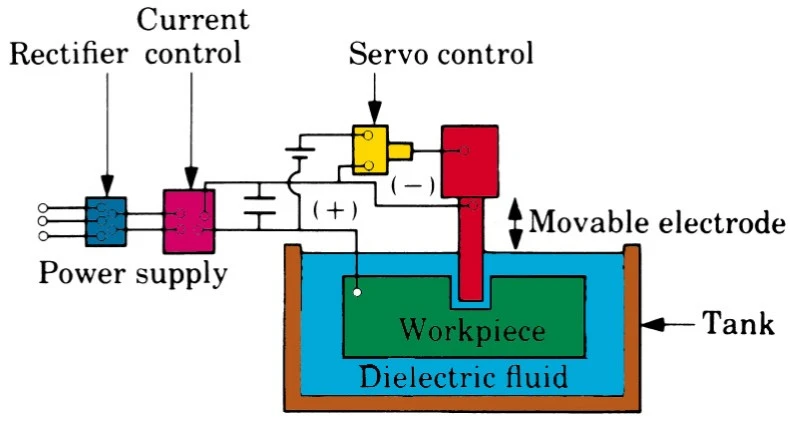
▲ Diagram showing the heat discharge principles of EDM
The Process is as Coordinated as a Dance
The entire EDM process can be likened to a delicate dance. The tool electrode (the cutter) and the workpiece (the material being machined) maintain a minuscule gap between them. As the electrode approaches the workpiece, a strong electric field forms in the gap. When the electric field overcomes the resistance of the dielectric fluid (spark oil), the spark discharge momentarily releases intense heat, melting or vaporizing the metal on the workpiece's surface. The cooling fluid then flushes away the melted material, creating a tiny crater. Thousands of such discharges accumulate, just as a sculptor painstakingly chips away at stone, gradually shaping the workpiece.
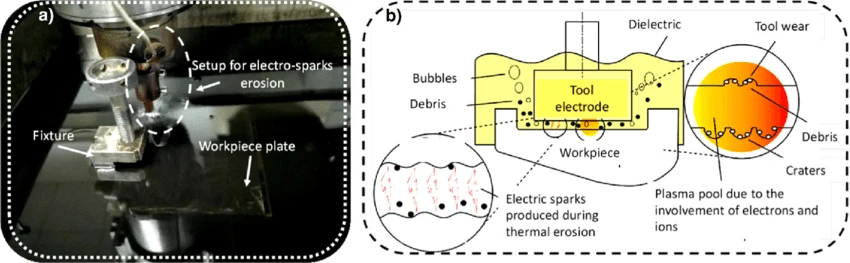
▲ Diagram showing the relative positioning of the electrode and workpiece during EDM
Conditions for Electrical Discharge Machining
Electrode Gap: The Crucial Distance
During EDM, the gap between the tool electrode and the workpiece must be precisely maintained (usually a few micrometers to a few hundred micrometers). If the gap is too wide, no sparks will form; if too narrow, short circuits or damage to the workpiece could occur. Maintaining the proper gap is akin to tuning a violin - even a slight deviation can disrupt the entire process.
Pulse Power Supply: The "Heart" of EDM
Spark discharges must be brief and intermittent. The timing is typically measured in microseconds (millionths of a second). This pulsed operation effectively controls heat accumulation, preventing excessive erosion or damage to the workpiece surface.
Working Fluid: The Unsung Hero of Cooling and Cleaning
Don't underestimate the dielectric fluid (spark oil) - it plays a crucial role in EDM. Not only does it cool the workpiece, but it also flushes away molten metal particles and prevents these impurities from causing secondary discharges, ensuring machining accuracy and stability.
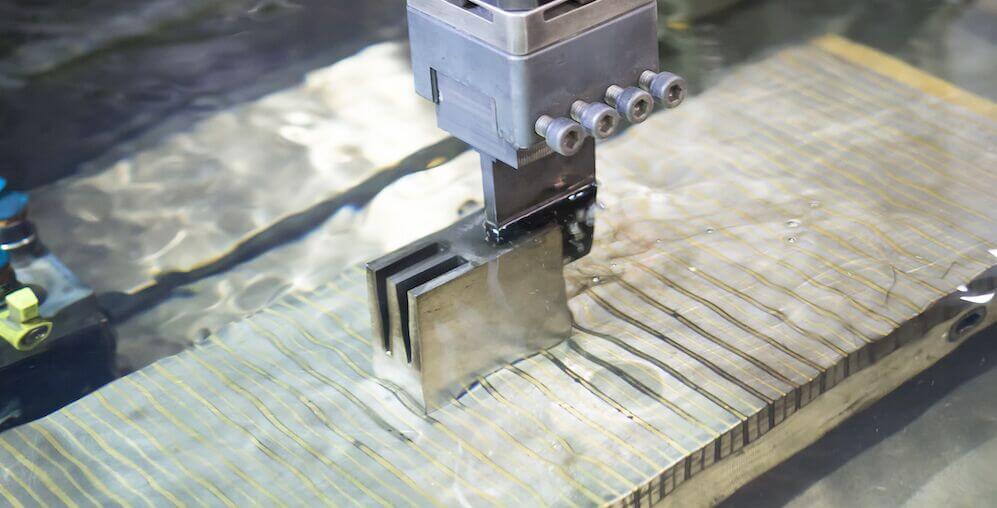
▲ Diagram showing the role of spark oil in EDM
Characteristics of Electrical Discharge Machining
Suitable for Hard-to-Machine Materials
One of EDM's greatest advantages is its ability to process tough materials like hardened steel, stainless steel, or carbide alloys. It imposes no specific hardness requirements on the material - as long as it conducts electricity, EDM can handle it.
No Cutting Forces? That's a Game-Changer!
Unlike traditional machining methods, EDM involves no mechanical cutting forces. This makes it ideal for machining thin-walled parts, micro-holes, or extremely fine grooves - areas where conventional methods often fall short.
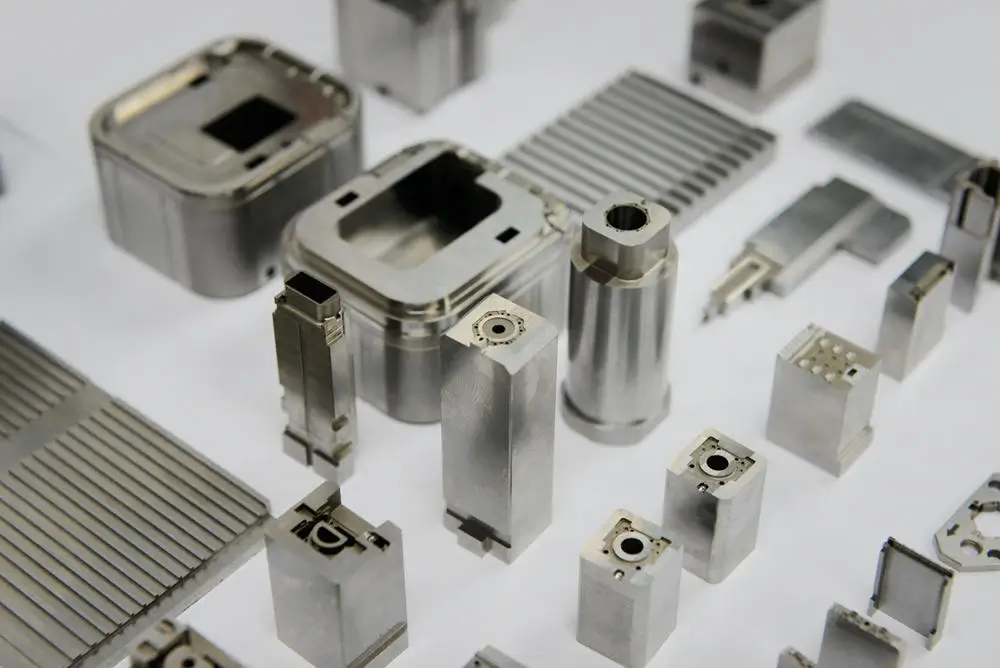
▲ Illustration showing EDM's suitability for machining thin-walled components
High Precision with Great Flexibility
EDM achieves dimensional accuracy typically up to IT7 standards, with surface roughness values as fine as Ra1.25. Moreover, simply switching to a differently shaped tool electrode allows EDM to produce a variety of complex geometries, offering unparalleled flexibility.
Key Applications of Electrical Discharge Machining
Hole Machining: From Micro-Holes to Complex Shapes
Whether it's micro-holes as small as 0.01mm in diameter or intricate curved holes, EDM drilling can handle it all. The accuracy of the resulting hole depends largely on the precision of the tool electrode, ensuring not only high accuracy but also smooth surfaces.
Cavity Machining: The "Artist" of Complex Molds
EDM cavity machining is widely used for manufacturing molds such as plastic molds, die-casting molds, and extrusion molds. It handles complex 3D shapes with ease, even ensuring precision in narrow corners.
Wire-Cut Machining: The "Surgeon's Scalpel"
Wire-cut EDM uses a thin wire as the electrode to cut workpieces along predefined paths. Like a surgeon's scalpel, it provides unparalleled precision, making it perfect for machining high-accuracy small parts.
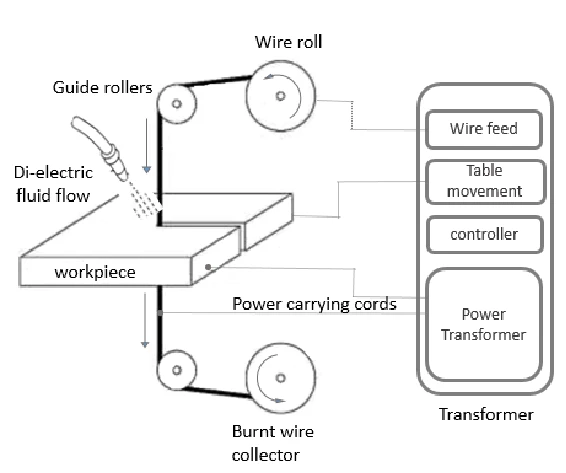
▲ Diagram of Wire-Cut EDM machining process
Surface Strengthening: Making Materials More Robust
Beyond machining, EDM technology can strengthen material surfaces through processes such as nitriding, carburizing, or surface quenching. It can also repair damaged parts, such as removing broken taps or drills from workpieces.
Advantages and Limitations of Electrical Discharge Machining
Advantages: When and Where to Use It
EDM is ideal for machining high-hardness, complex-shaped, or small parts. This non-contact machining method also eliminates mechanical forces on the workpiece, making it a valuable tool for precision manufacturing.
Limitations: No Technology is Perfect
However, EDM does have its drawbacks. Its machining efficiency is generally lower than traditional cutting methods, especially in mass production. Additionally, electrode wear can affect accuracy and requires regular monitoring and adjustments.
Future Trends in Electrical Discharge Machining
Automation and Smart Technologies: The Future is Now
As artificial intelligence and automation technologies advance, EDM machining is becoming increasingly intelligent. Modern EDM machines come equipped with advanced monitoring systems that automatically adjust machining parameters, monitor electrode wear, and even replace electrodes during operation.
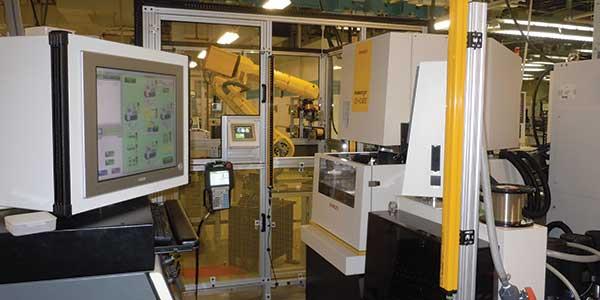
▲ Automated EDM machine demonstrating smart machining technologies
Eco-Friendly Innovations: Towards Sustainability
The future of EDM also lies in environmental sustainability. Traditional spark oil is being replaced by more eco-friendly dielectric fluids, such as water-based or biodegradable oils, which not only protect the environment but also maintain machining efficiency.
Conclusion: The Core Value of Electrical Discharge Machining
Electrical Discharge Machining is a "golden touch" technology that uses sparks to carve out precision components, driving the progress of modern manufacturing. From machining complex molds to handling hard-to-machine materials, EDM's performance is unparalleled. While it does have its limitations, the integration of smart technologies and eco-friendly solutions ensures that the future of EDM remains bright and full of possibilities.
FAQs
Is Electrical Discharge Machining only applicable to metal materials?
Yes, currently EDM is limited to conductive materials. However, future advancements may broaden its application to other materials.
What's the difference between EDM and traditional cutting methods?
EDM is a non-contact machining process that uses electrical discharges to remove material, while traditional cutting relies on physical contact between the tool and workpiece.
Can spark oil be fully replaced by water-based media?
Water-based media perform well in certain applications, but for high-precision machining, spark oil remains the preferred choice.
Why is EDM less efficient than traditional machining?
EDM's lower efficiency is due to its point-by-point material removal method, making it better suited for precision machining rather than mass production.
Is EDM suitable for use by general users?
Given its complexity and equipment requirements, EDM is typically operated by skilled technicians and is better suited for industrial applications rather than general use.