

Mechanical Processing Method - Wire Cutting
Jan 07, 2025
Leave a message
I Electrical Discharge Wire Cutting
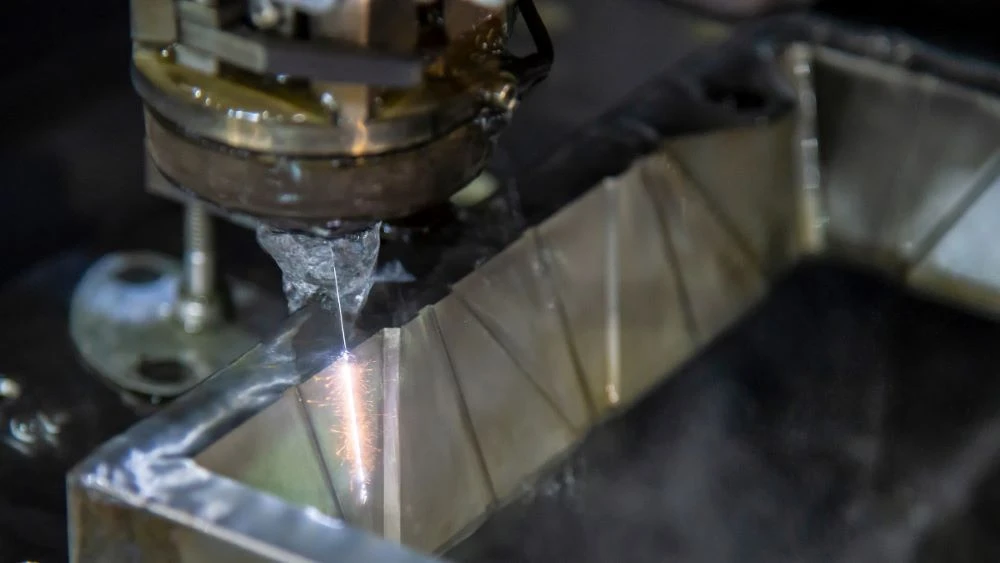
The Electrical Discharge Wire Cutting machine (Wire Electrical Discharge Machining, abbreviated WEDM) belongs to the category of electrical machining. It was discovered by Soviet researchers Lazarenkov and his wife while studying the phenomena and causes of erosion damage to switch contacts caused by spark discharges. They found that the instantaneous high temperature of the spark could melt and oxidize local metal, leading to corrosion. This led to the creation and invention of electrical discharge machining. The wire cutting machine was also invented in the Soviet Union in 1960, and China was the first country to use it for industrial production.
II Physical Principles
Free positive ions and electrons accumulate in the field, quickly forming an ionized conductive channel. In this stage, a current flows between the two plates, causing countless collisions between particles, forming a plasma zone that rapidly heats up to 8000 to 12000 degrees Celsius. This causes some material on the surfaces of the two conductors to melt instantly. At the same time, due to the vaporization of the electrode and dielectric liquid, a bubble is formed, and its pressure rises according to a regular pattern until it reaches a very high level. The current is then interrupted, and the temperature suddenly drops, causing the bubble to implode. The force generated by the implosion expels the melted material, creating a pit. The corroded material then condenses into small spheres in the dielectric liquid and is removed by the liquid. Through NC-controlled monitoring and management, the servo mechanism executes the discharge phenomenon uniformly.
III Classification
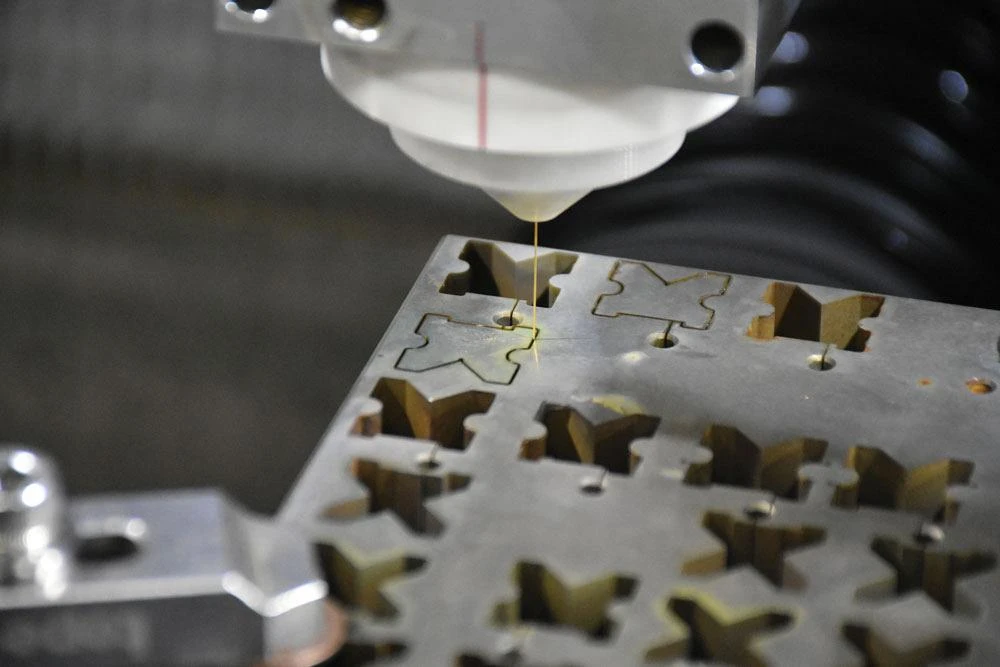
The Electrical Discharge Wire Cutting machines can be classified according to the wire speed into three types: high-speed reciprocating wire electrical discharge machining (commonly called "fast wire cutting"), low-speed one-way wire electrical discharge machining (commonly called "slow wire cutting"), and vertical self-rotating wire electrical discharge machining. They can also be categorized based on the type of worktable into single-column crossworktable type and double-column type (commonly called "gantry type").
1. Reciprocating Wire Electrical Discharge Machine
The wire speed for reciprocating wire electrical discharge machines is set at 6–12 m/s and is a unique type developed in China. In September 1970, the Ministry of Machinery Industry's State-owned Changfeng Machinery General Factory successfully developed the "digitally controlled automatic wire-cutting machine," which was the first of its kind in China. In 1972, the Ministry of Machinery Industry conducted a technical appraisal of the CKX CNC wire-cutting machine, which was deemed to meet the domestic advanced level. In 1973, mass production began for the CNC wire-cutting machine with the designation CKX-1.
In September 1981, the DK3220 CNC machine with taper cutting functionality was successfully developed, with the product's most significant feature being the ability to cut at a 1.5-degree taper. This marked a major technological improvement in wire cutting machines. As taper cutting technology gradually advanced, the technology for variable taper and upper-lower asymmetric cutting also saw significant progress. Breakthroughs in cutting thicker materials greatly improved cross-sectional and longitudinal accuracy, with cutting thickness exceeding 1000mm. This has made reciprocating wire cutting machines increasingly advantageous while meeting both domestic and international customer needs.
The number of such machines is growing rapidly, from an annual production of 2,000–3,000 units to tens of thousands of units annually. Currently, there are over 200,000 reciprocating wire-cutting machines in use nationwide, applied in various mid- and low-end mold manufacturing and special parts processing. It has become one of the most widely used machine types in China's CNC machine tools. However, reciprocating wire-cutting machines cannot implement constant tension control on the electrode wire, resulting in significant wire vibration and frequent breakages during processing. Since the electrode wire is reused, it causes wear, leading to reduced processing accuracy and surface quality.
2. Low-Speed One-Way Wire Electrical Discharge Machine
Low-speed wire cutting machines use copper wire as the tool electrode. The wire typically moves at a speed of less than 0.2 m/s in one direction. A pulse voltage of 60–300V is applied between the copper wire and the processed material, such as copper, steel, or superhard alloys, maintaining a gap of 5–50µm, which is filled with deionized water (close to distilled water) or other insulating media. This generates a spark discharge between the electrode and the workpiece, causing mutual erosion and corrosion, creating countless small pits on the workpiece surface. Through NC-controlled monitoring and management, the servo mechanism executes this discharge phenomenon uniformly, allowing the workpiece to meet the required dimensions and shape accuracy.
Currently, the accuracy can reach up to 0.001mm, and the surface quality is close to that of grinding. The electrode wire is discarded after discharge, and the machine typically features automatic wire threading and constant tension devices. The machine operates smoothly, uniformly, with minimal vibration, high processing accuracy, and good surface quality, but it is not suitable for processing thick materials. Due to its precise structure, high technical content, and high cost, the machine's operating cost is also high.
Early versions of low-speed wire electrical discharge machines were exclusively made by foreign companies. Although Taiwan's low-speed wire electrical discharge machine development started later, it has made rapid progress in recent years. A significant move was the joint investment by several electrical processing machine manufacturers, supported by government departments and the Industrial Technology Research Institute of Taiwan. After more than a decade of efforts, breakthroughs were made in key technologies such as control systems and power supply. Low-speed wire-cutting machines made by Taiwanese enterprises are now considered mid-range models, with a 20%–30% annual growth rate over the past three years. It is estimated that in the next five years, Taiwan's low-speed wire-cutting machine annual production will reach 2,000 units, accounting for over 25% of the global market.
Low-speed wire electrical discharge machines have high technical content, good market prospects, and offer high returns, making them a "battleground" or "strategic high ground" for electrical machining manufacturers. It can be said that whoever masters the technology of low-speed wire electrical discharge machines will gain an opportunity for the next phase of business growth. To capture the Chinese market, electrical machining machine manufacturers from Japan, Switzerland, and Taiwan have set up factories in mainland China to produce these machines. With support from the Ministry of Science and Technology's special fund, China's scientific researchers have invested considerable resources into developing the next-generation low-speed wire-cutting machine. Major breakthroughs have been made, and products with independent intellectual property rights have already occupied a certain market share, reaching mid-range machine performance levels. Some domestic companies are also hoping to develop low-speed wire-cutting technology through cooperation with Taiwanese companies.
3. Vertical Self-Rotating Wire Electrical Discharge Machine
The vertical self-rotating wire electrical discharge machine (also known as the horizontal self-rotating wire-cutting machine) differs from traditional high-speed and low-speed wire electrical discharge machining in several ways. Firstly, the movement of the electrode wire in this machine is not only a traditional forward-backward movement but also includes a rotational motion. Secondly, the wire speed is between that of high-speed and low-speed wire-cutting, at 1–2 m/s. Due to the rotational movement of the electrode wire during the process, the vertical rotating wire-cutting machine differs from other types of wire-cutting machines primarily in its wire-driving system. The wire-driving system of the vertical rotating machine consists of two identical structures at both ends of the machine, realizing both high-speed rotation and low-speed wire movement. The area between the two spindle heads is the effective processing zone.
Apart from the wire-driving system, the other components of the machine are the same as high-speed wire-cutting machines. Compared to low-speed wire-cutting machines, reciprocating high-speed wire-cutting machines still have a significant gap in key technical indicators such as average productivity, cutting accuracy, and surface roughness. To address these gaps, in the early 2000s, several domestic manufacturers of high-speed reciprocating wire-cutting machines introduced multi-cutting techniques for high-speed wire machines (commonly called "medium-speed wire cutting"). "Medium-speed wire cutting" does not refer to wire speeds between high and low speeds but to a composite wire-cutting machine that uses high-speed wire cutting (8–12 m/s) for rough cutting and low-speed wire cutting (1–3 m/s) for precision cutting. This approach stabilizes operations, reduces vibration, and minimizes errors caused by material deformation and tungsten wire wear, leading to improved processing quality.
Thus, "medium-speed wire cutting" is essentially a modification of reciprocating wire electrical discharge machines that incorporates some of the low-speed wire machine processing techniques, achieving strip-free cutting and multi-cutting. Over the years, almost all manufacturers of high-speed wire-cutting machines in China have begun producing and selling medium-speed machines. However, it has become clear that not all reciprocating wire-cutting machines can perform multiple cuts effectively or achieve good results using this technique. Multi-cutting is a comprehensive technology involving machine precision, pulse power supply, process databases, wire-driving systems, working fluid, and many other process issues. It is not simply about adding a wire-frequency control system to a high-speed wire machine. Only high-precision machines that have created the necessary conditions for multi-cutting can achieve multi-cutting and strip-free cutting with significant process effects.
Therefore, our manufacturers must pay close attention to this issue and approach it systematically, ensuring that the technology is well-implemented and the product is well-made. Some companies have already improved machine precision by using DC or AC servo motors to drive ball screws on the moving parts. This significantly improves precision, and many domestic companies are now able to achieve substantial improvements in wire-cutting process quality.
IV Conclusion
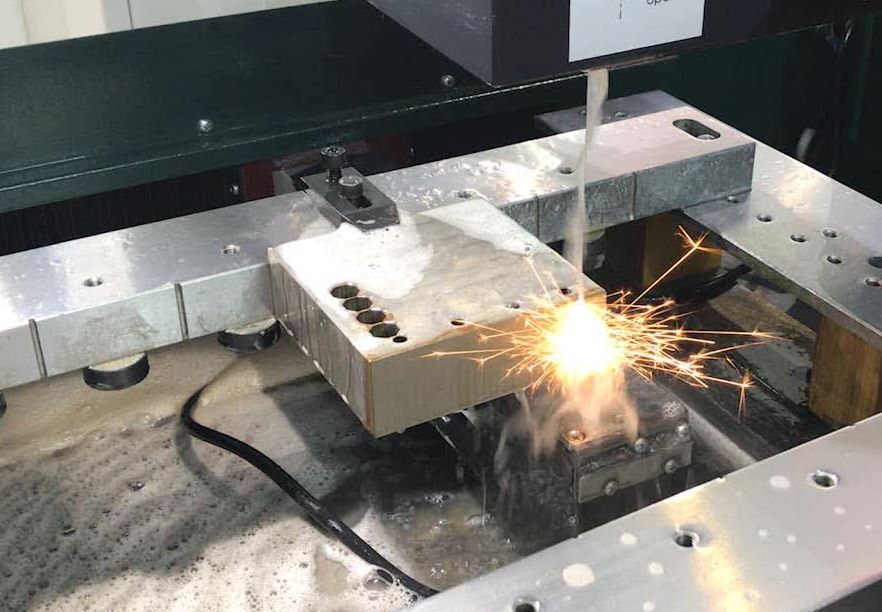
Wire electrical discharge machining, a crucial component of CNC technology, has played an important role in modern manufacturing. By understanding the different types of wire-cutting machines and the technological advancements in this field, we can better predict and adapt to the rapidly evolving needs of precision machining and strive for more sustainable and efficient solutions. This research provides valuable insights into the current landscape and the future direction of wire-cutting technology.