

Why Should Materials Be Heat Treated?
Oct 02, 2024
Leave a message
Tempering generally refers to the process of quenching and subsequent high-temperature tempering of steel. It is a common procedure in steel heat treatment. The purpose is to improve the mechanical properties of the metal through appropriate heat treatment processes, endowing it with good comprehensive mechanical performance. Below is a detailed introduction to the combination of quenching and high-temperature tempering:
I Quenching
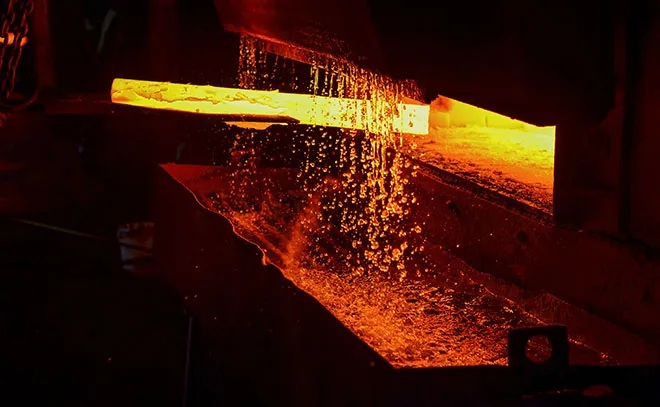
▲ heat treatment
Purpose
- Increase Hardness and Strength: Quenching transforms the steel's austenite into martensite, significantly enhancing the material's hardness and strength.
- Formation of Martensite Structure: Martensite structure possesses high hardness and strength but is relatively brittle.
Process
- Heating: The steel is heated to the austenitizing temperature (usually between 750°C and 950°C), causing its internal structure to completely transform into austenite.
- Rapid Cooling: The steel is quickly cooled (typically in water, oil, or air), converting the austenite into martensite.
Results
- Increased Hardness: The hardness of the steel is significantly improved after quenching, allowing it to withstand greater mechanical stress.
- Increased Brittleness: Due to the presence of martensite structure, the toughness of the steel is reduced after quenching, making it more susceptible to brittle fractures.
II High-Temperature Tempering
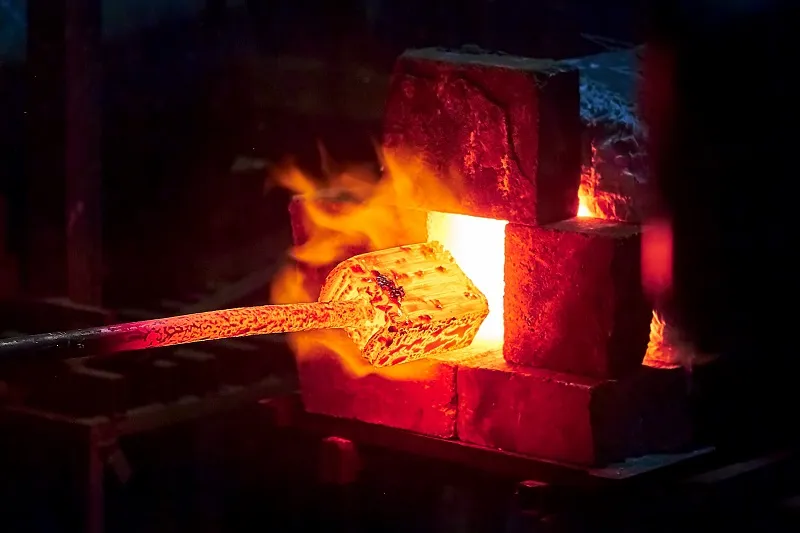
▲ heat treatment
Purpose
- Improve Toughness and Ductility: High-temperature tempering reduces the brittleness caused by quenching, improving the material's toughness and ductility.
- Eliminate Internal Stress: Internal stresses generated during quenching can make the material brittle. High-temperature tempering effectively eliminates these internal stresses.
- Adjust Hardness: Tempering adjusts the hardness of the steel to meet the desired performance requirements.
Process
- Heating: The quenched steel is heated to between 500°C and 650°C and held at that temperature for a period of time.
- Cooling: Usually, the steel is cooled slowly to ensure structural stability.
Results
- Reduced Hardness: High-temperature tempering moderately reduces the material's hardness while maintaining a relatively high level.
- Increased Toughness: The toughness of the steel is significantly improved after tempering, making it more resistant to impact and fatigue failure.
- Elimination of Internal Stress: The removal of internal stresses reduces the risk of cracking and improves dimensional stability.
III Comprehensive Effects of Tempering
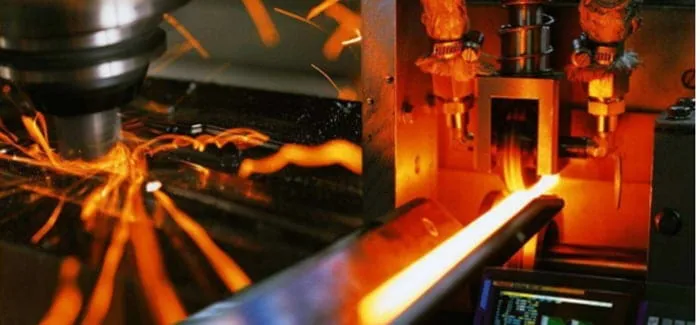
▲ heat treatment
Advantages
- Excellent Comprehensive Mechanical Properties: Steel treated through tempering has high hardness, high strength, as well as good toughness and ductility, meeting a wide range of application needs.
- Dimensional Stability: By eliminating internal stresses, the material maintains dimensional stability during use.
- Wide Application: Tempered steel is suitable for manufacturing various mechanical components such as shafts, gears, and springs, and is widely used in mechanical manufacturing, the automotive industry, aerospace, and other fields.
Typical Applications
- Mechanical Parts: Components like gears, bearings, and connecting rods that require high strength and toughness.
- Structural Components: Steel used in structures like bridges and buildings, requiring durable and stable performance.
- Tools: Tools such as cutting tools and molds that require high hardness and wear resistance.
Conclusion
The combination of quenching and high-temperature tempering, through the tempering process, optimizes the hardness, strength, and toughness of steel, providing excellent comprehensive mechanical properties. This treatment method is crucial in industrial applications, ensuring the material's reliability and durability in practical use.