

How to Turn Workpieces Made of Different Materials
Nov 05, 2024
Leave a message
I Turning Steel
Steel can be classified into non-alloyed steel, low-alloy steel, and high-alloy steel, all of which affect turning processing recommendations.
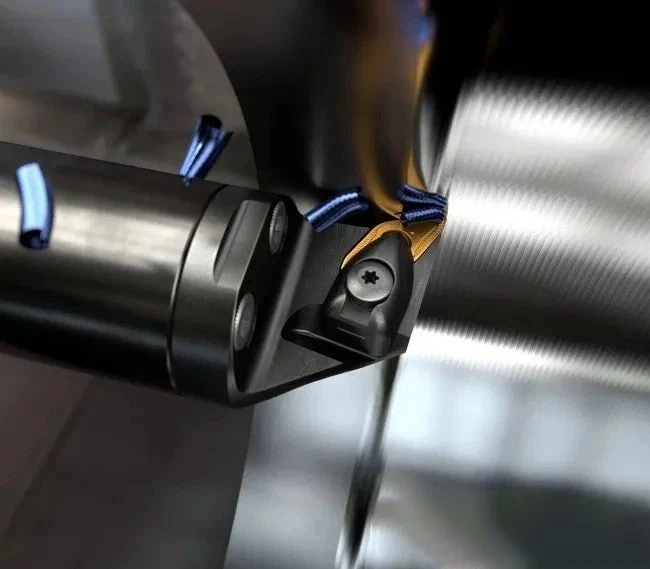
▲ turning
1. Turning Non-Alloy Steel
Material Classification: P1.1
Non-alloy steel can have a carbon content of up to 0.55%. Low-carbon steel (carbon content < 0.25%) requires special attention due to its difficulty in chip breaking and the tendency to form built-up edges.
To cut and control chips effectively, the highest possible feed rate should be used. It is strongly recommended to use finishing blade inserts.
Utilizing high cutting speeds helps avoid built-up edge formation, which can negatively affect the surface finish. A sharp cutting edge and light cutting geometry can reduce the tendency to form built-up edges and prevent blade damage.
2. Turning Low-Alloy Steel
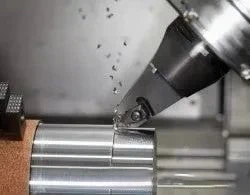
▲ turning
Material Classification: P2.x
The machinability of low-alloy steel depends on the alloy content and heat treatment (hardness). The most common wear mechanisms in this group are crater wear and flank wear. For hardened materials, plastic deformation in the cutting zone due to high heat is also a common wear mechanism.
For non-hardened low-alloy steel, preferred grades and geometries from the steel series are recommended. For hardened materials, using harder grades (cast iron grades, ceramics, and CBN) is beneficial.
3. Turning High-Alloy Steel
Material Classification: P3.x
High-alloy steel includes carbon steels with an overall alloy content exceeding 5%. This group comprises both soft and hard materials. Higher alloy content and hardness lead to poorer machinability.
For low-alloy steels, preferred grades and geometries should be selected.
Steels with over 5% alloy content and hardness exceeding 450 HB have additional requirements for resistance to plastic deformation and blade strength. Consider using harder materials (cast iron, ceramics, and CBN).
II Turning Stainless Steel
Stainless steel can be classified into ferritic/martensitic, austenitic, and duplex steel (austenitic/ferritic), each with its own turning processing recommendations.
1. Turning Ferritic and Martensitic Stainless Steel
Material Classification: P5.1
This stainless steel is classified as steel, therefore categorized as P5.x. General machining recommendations for this type of steel involve our stainless steel grades and geometries.
Martensitic steel can be processed under hardened conditions, requiring additional resistance to plastic deformation in the blades. Consider using CBN grades with HRC = 55 and above.
2. Turning Austenitic Stainless Steel
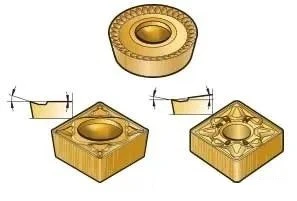
▲ turning
Material Classification: M1.x and M2.x
Austenitic stainless steel is the most common type of stainless steel, including super austenitic stainless steels with nickel content over 20%.
Recommended grades and geometries include our CVD and PVD grades for stainless steel.
For interrupted cutting or cases where chip hammering or chip clogging are primary wear mechanisms, consider using PVD grades.
Other Considerations:
- Always use coolant to reduce crater wear and plastic deformation, and choose the largest possible nose radius.
- Use round inserts or small main cutting angles to prevent notch wear.
- Built-up edges are common and negatively affect surface finish and tool life. Use sharp edges and/or geometries with positive rake angles.
3. Turning Duplex (Austenitic/Ferritic) Stainless Steel
Material Classification: M3.4
Higher alloy content in duplex stainless steel may lead to names such as super duplex or even hyper duplex stainless steel. The higher the mechanical strength, the more difficult these materials are to machine, especially regarding heat generation, cutting forces, and chip control.
Recommended grades and geometries include our CVD and PVD grades for stainless steel.
Other Considerations:
- Use coolant to improve chip control and avoid plastic deformation. Utilize tools with internal coolant supply for optimal cooling.
- Employ smaller main cutting angles to avoid notch wear and burr formation.
III Turning Cast Iron
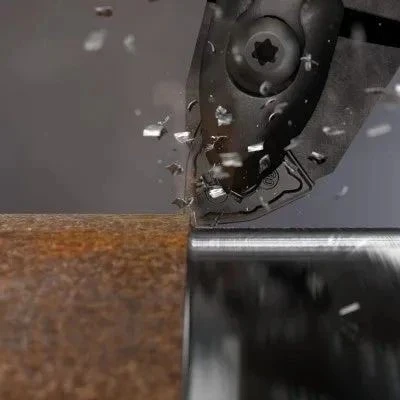
▲ turning
Cast iron primarily consists of five types:
- Gray Cast Iron (GCI)
- Ductile Cast Iron (NCI)
- Malleable Cast Iron (MCI)
- Compacted Graphite Iron (CGI)
- Austenitic Ductile Cast Iron (ADI)
Cast iron is an iron-carbon alloy with silicon content ranging from 1-3% and carbon content exceeding 2%. It is a short-chip material with good chip control in most cases.
For most cast iron materials, our cast iron grades and geometries are recommended. For higher cutting speeds in gray cast iron, ceramic and CBN grades are advised.
IV Turning Heat-Resistant Superalloys (HRSA)
Heat-resistant alloys exhibit outstanding mechanical strength and creep resistance (the tendency for solids to deform slowly under stress). They also have good corrosion and oxidation resistance. HRSA can be divided into four material categories:
- Nickel-based (e.g., Inconel)
- Iron-based
- Cobalt-based
- Titanium alloys (which can be pure titanium or titanium with α and β structures)
Machinability for heat-resistant alloys and titanium alloys is poor, especially under aging conditions, and the requirements for cutting tools are particularly high. Using sharp cutting edges is crucial to prevent the formation of so-called white layers with varying hardness and residual stress.
HRSA Materials: When turning HRSA materials, PVD and ceramic materials are commonly used. Tool geometries optimized for HRSA are recommended.
Titanium Alloys: Primarily use uncoated and PVD grades. Geometries optimized for HRSA are also advised.
Common wear standards for titanium and high-temperature alloys include notch wear. Follow these guidelines for optimal performance:
- Use a main cutting angle of less than 45°.
- Ensure the correct relationship between the insert diameter/nose radius and cutting depth.
- When using ramp milling or multiple passes, a cutting depth greater than 0.25 mm (0.0098 inches) is recommended.
- Always use coolant when turning high-temperature and titanium alloys, ensuring adequate flow and proper direction.
- When using ceramics, pre-chamfering is recommended to minimize burr formation during entry and exit from cutting and to achieve optimal performance.
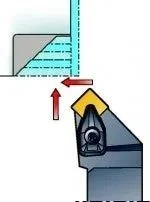
▲ turning
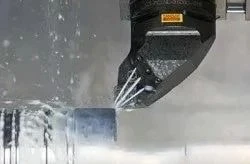
▲ turning
V Turning Non-Ferrous Metal Materials
This group includes non-ferrous soft metals such as aluminum, copper, bronze, brass, metal matrix composites (MMC), and magnesium. Machinability varies depending on alloying elements, heat treatment, and manufacturing processes (forging, casting, etc.).
Turning Aluminum Alloys
Material Classification: N1.2
Always use blades with positive basic shapes and sharp edges. Uncoated and PCD grades are preferred.
For aluminum alloys with Si content exceeding 13%, PCD should be used, as carbide tools may have significantly shortened lifespans.
Coolants in aluminum machining are primarily used for chip removal.
VI Turning Hardened Steel
Turning steel with a hardness of 55–65 HRC is known as hard part turning, providing a cost-effective alternative to grinding. Hard part turning offers greater flexibility, improved delivery times, and higher quality.
Cubic Boron Nitride (CBN) grades are the ultimate cutting tool materials for surface-hardened and induction-hardened steel parts. For steels with hardness below approximately 55 HRC, ceramic or carbide inserts should be used.
Use optimized CBN grades for hard part turning.
Ensure good machine and clamping stability.
Utilize the smallest cutting depth possible to achieve a minimal main cutting angle, and employ proper edge preparation to extend tool life.