Tungsten vs. Gold: The Biomaterials War
Dec 03, 2021
Leave a message
The global medical technology industry is expected to spend $39 billion annually on R&D by 2024, according to the study. Innovation in medical technology can mean anything from the creation of new disposable devices or health-related IT to improvements in devices, surgery and biomaterials.
The global medical technology industry is expected to grow by 5.6% annually between 2017 and 2024, with total sales reaching $595 billion in 2024. That's good news for manufacturers, equipment makers and the suppliers that serve them.
But while competitive markets mean huge opportunities, it also means that medical device design teams often race to reduce time-to-market, which means that somewhere, something (and hopefully not someone) could be compromised.
Material procurement challenges
In practice, competition can mean that medical device manufacturers are often squeezed into sub-standard procurement relationships due to shortened deadlines and budget allocation constraints.
For example, minimally invasive and diagnostic devices and drug delivery and life support systems often require raw materials, including specialty or precious metals. Not only are these materials subject to speculative pricing -- a sure way to drain budgets -- but many of them are considered conflict metals that require rigorous verification.
However, some devices only require unparalleled opacity, and this non-transmissibility linearity is only available in precious metals such as gold. In fact, gold is often found in drug delivery systems and stents because it combines high resistivity and transmission linearity for bacterial colonization.
Tungsten instead of precious metals
So how can manufacturers produce quality equipment efficiently and within budget? One way is to build good, strong relationships with experienced, innovative contract partners and suppliers.
For example, do you know of cost-effective alternatives to metals such as gold, platinum and palladium? I hope your purchasing partner does.
Tungsten has become an attractive alternative for applications where material toughness and transmission linearity are crucial. This is due to the many beneficial properties of tungsten, including:
· It's the density of gold
· Relatively high tensile strength and mineral hardness
· Low vapor pressure at high temperatures
· The highest melting point of any metal
Application of tungsten in medical applications
These properties combine to make tungsten strong, radiopaque, almost heat resistant, and flexible when alloyed. As a result, it is currently used in a variety of medical applications.
For example, tungsten is often incorporated into polymers and used in high-visibility catheters. It can be professionally machined into tungsten needles and rods with tight tolerances for dental and medical applications.
Because of its low coefficient of thermal expansion, tungsten is commonly used to form bonds with glass with similar coefficient of thermal expansion. This allows tungsten to be used in sealing components to power a variety of medical devices.
Advantages of gold-plated tungsten wire in medical applications
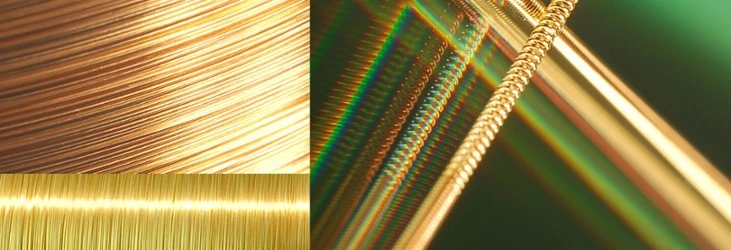
In addition, for some of the increased nontransmission linearity of pure gold, tungsten wires are sometimes coated with very thin layers of gold. This allows the gold-plated tungsten wire to have similar impermeability to platinum/iridium, but at a much lower cost. The gold plating increases the resistance of the wire to corrosion.
This gold-plated tungsten wire is commonly used in cautery applications, guide wires and probes used in deep brain studies. In addition to its opacity and corrosion resistance, gold-plated tungsten wires have many of the beneficial properties of tungsten, including:
Strength at very small diameters
It can maintain the straightness and shape of wires under various temperature conditions
Work with knowledgeable and trusted material suppliers
As the medical technology industry continues to allocate funding for R&D in the coming years, the question is, does your team have the quality sourcing relationships needed to bring your concept to market?
While tungsten is not always a suitable alternative, your material supplier should thoroughly understand how, when and what ingredients are the right, cost-effective alternative solution to the precious metal dilemma. In the era of one-stop shopping, many suppliers also offer secondary processing capabilities such as precision cutting, grinding, machining and surface treatments such as passivation and sandblasting.
Remember, because tungsten (like gold) is considered a conflict metal (under Section 1502 of the Dodd-Frank Act), your supplier should comply with all U.S. regulatory standards, establish a quality system, and provide traceability and metering.
As biomaterials continue to evolve, manufacturers want their contract partners to evolve with them. This means not only delivering quality products efficiently and at competitive prices, but also staying informed and bringing experience and innovation to the material procurement process.
To learn more about tungsten wire and its potential benefits for your application, request the Free Basics guide for Metal Cutting.
Please contact us at zhang@pride-cnc.com