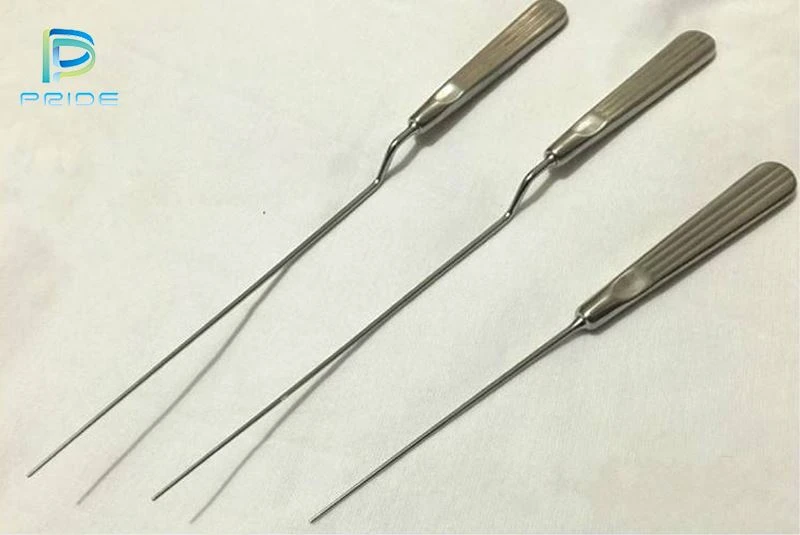
Some medical-grade stainless steel options
Dec 13, 2021
Leave a message
Relatively strong and with generally excellent chemical and corrosion resistance, stainless steels are available in a wide range of medical grades with varying properties.
When selecting stainless steel for medical device tubing, the first step is to know the end use and then specify the appropriate grade. Here are some examples.
Model 304 stainless steel
The most common stainless steel grade is Type 304 (also known as A2), which is inexpensive and readily available in a variety of standard sizes.
Type 304 stainless steel typically contains 18% chromium, a hard brittle metal that does not change color when exposed to air, and 8% nickel, known for its corrosion resistance, ductility and strength.
304 stainless steel is widely used, but also known for its molding and welding properties, excellent toughness and easy cleaning.
Due to its low carbon composition, the 304 is also well suited for high temperature applications and those seeking to minimize carbide precipitation.
Model 316 stainless steel
The second most common stainless steel grade, Type 316 (also known as A4), is a popular chromium, nickel, and molybdenum stainless steel that has higher corrosion resistance and is slightly more expensive than 304.
Often referred to as "Marine grade stainless steel," 316 is actually not resistant to seawater. However, it is noted for its resistance to pitting and crevice corrosion in chloride environments.
As a result, 316 is widely used in laboratory equipment, pharmaceutical processing, chemical containers and surgical implants.
316LVM stainless steel grade
Stainless steel 316LVM, low carbon vacuum melt version of 316, is not affected by sensitization (grain boundary carbide precipitation). Therefore, it is widely used for heavy duty welded parts (approx. 6 mm or 0.236 in.).
For example, seamless 316LVM stainless steel in tubular form for medical devices has been used to produce coronary stents and devices used in brain surgery.
In these applications, the material must be molded and machined to precise tolerances, while being free of tiny metal particles.
Pride processing products in Europe and the United States, Japan and South Korea, the Middle East, Southeast Asia are widely praised.
Please contact us at zhang@pride-cnc.com