

How to choose between nickel plating, zinc plating, and chrome plating?
Aug 02, 2024
Leave a message
I. The Concept and Function of Electroplating
The Concept of Electroplating
Electroplating is a process that uses electrolysis to attach a layer of metal film onto the surface of a metal or other material.
This process serves to prevent metal oxidation (such as rust), enhance wear resistance, conductivity, reflectivity, corrosion resistance (e.g., in sulfuric acid environments), improve aesthetics, and repair worn or misprocessed workpieces.
Types and Functions of Electroplating
Electroplating includes copper plating, gold plating, silver plating, chrome plating, nickel plating, and zinc plating.
In the manufacturing field, zinc plating, nickel plating, and chrome plating are the most widely used, with zinc plating accounting for 50%, and copper, chrome, and nickel plating together accounting for 30%.
Different Functions of Various Electroplatings
1. Copper Plating: Used as a base layer to enhance the adhesion and corrosion resistance of the plating layer. (Copper is easily oxidized, and the green patina formed is non-conductive, so copper-plated products must be protected.)
2. Nickel Plating: Used as a base layer or for appearance, improving corrosion and wear resistance. (Chemical nickel plating in modern processes surpasses chrome in wear resistance.) (Note: Many electronic products, like DIN connectors and N-type connectors, no longer use nickel as a base layer because nickel's magnetic properties can affect electrical performance and passive intermodulation.)
3. Gold Plating: Improves electrical contact resistance and signal transmission. (Gold is the most stable and the most expensive.)
4. Palladium Nickel Plating: Improves electrical contact resistance, enhances signal transmission, and is more wear-resistant than gold.
5. Silver Plating: Improves electrical contact resistance and signal transmission. (Silver has the best performance but is easily oxidized, although oxidized silver is still conductive.)
Electroplating layers are more uniform than hot-dip layers and are generally thinner, ranging from a few micrometers to several tens of micrometers. Refer to this article for more information.
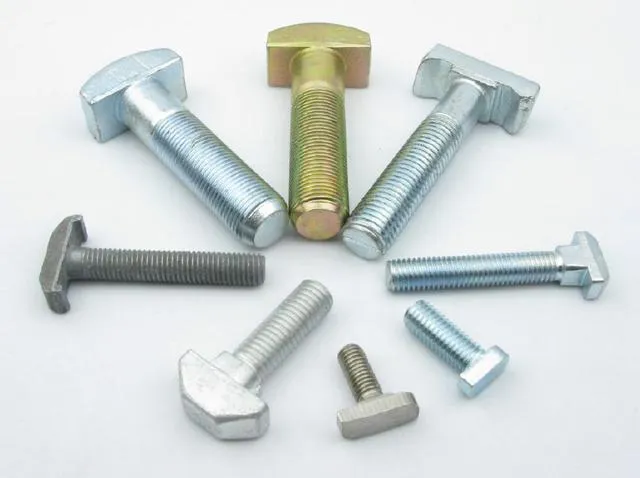
▲ Various Electroplatings
II Characteristics of Zinc Plating Process
Zinc plating refers to applying a layer of zinc on the surface of metals, alloys, or other materials for aesthetics and rust prevention.
The main method used is hot-dip galvanizing.
Due to its low cost and moderate corrosion resistance, it is widely used in screws, circuit breakers, and industrial products.

▲ Zinc Plating
III Characteristics of Nickel Plating Process
Nickel plating can serve as a protective and decorative coating on steel, zinc die-castings, aluminum alloys, and copper alloys to protect the base material from corrosion or provide a bright decorative appearance.
It is often used as an intermediate coating for other coatings, such as applying a thin layer of chrome or a gold-like layer on top for better corrosion resistance and improved aesthetics.
In functional applications, nickel plating about 1-3mm thick on parts in special industries can achieve repair purposes.
It is increasingly used in continuous casting molds, molds for electronic component surfaces, die-casting molds for alloys, complex-shaped aerospace engine components, and the manufacture of microelectronic components.

▲ Nickel plating
IV Characteristics of Chrome Plating Process
Chrome plating has high hardness, good wear resistance, strong reflectivity, and good heat resistance (its gloss and hardness remain unchanged below 500°C; it begins to oxidize and discolor above 500°C and starts to soften above 700°C). However, its rust resistance is not as good as zinc and nickel plating.
Due to its excellent performance, chrome plating is widely used as an exterior protective-decorative coating and as a functional coating.
It is commonly applied to bright decorative parts in household appliances and electronic products, tools, and faucets.

▲ Chrome plating
Differences Between Nickel Plating, Zinc Plating, and Chrome Plating
1. Chrome plating enhances hardness, aesthetics, and rust prevention. The chrome layer is chemically stable and does not react with many substances. Since chrome does not change color, its reflective ability is better than that of silver and nickel.
2. Nickel plating is wear-resistant, corrosion-resistant, and rust-resistant, with a relatively thin thickness.
3. Zinc plating is aesthetically pleasing and rust-resistant. Zinc is active and reacts with acids, having poor corrosion resistance.
4. In terms of cost, chrome plating is the most expensive, followed by nickel, and zinc is the cheapest.
5. Common chrome plating appears bright white, nickel plating has a slight yellow tint, and zinc plating is silver-white.
6. For preventing rust on parts, zinc plating or decorative chrome plating can be used; for preventing wear on parts, nickel or chrome plating is the best choice.

▲ Nickel Plating, Zinc Plating, and Chrome Plating