

Liquid Cooling: The Next Optical Module in the AI Era
Oct 04, 2024
Leave a message
I. Liquid Cooling Has Shifted from "Optional" to "Essential"
1. The Surge in Demand for Computing Power and Optical Modules
In the rapidly evolving landscape of artificial intelligence (AI), the demand for computing power has reached unprecedented heights. The emergence of large models, such as those used in OpenAI's ChatGPT, has created a significant gap in the necessary computing power. OpenAI reports that the growth rate of model computing power outpaces the advancements in AI hardware by a staggering tenfold. As large models expand to trillions of parameters, the need for improved performance from AI training chips has become critical, driving expectations for faster data transmission.
This exponential growth in computing scale has made interconnectivity within data centers a central issue. As AI training progresses, the limitations of single card/server computing are becoming evident. Chip-to-chip interconnectivity has emerged as a priority, necessitating efficient and high-speed optical modules to facilitate rapid data exchange. Consequently, the deployment of high-speed optical modules is essential to enhance interconnectivity efficiency, especially as data centers upgrade their computing power architectures.

▲ Optical modules facilitating high-speed data transmission in data centers
2. The Turning Point for Liquid Cooling
Liquid cooling is poised to become the next critical element in AI infrastructure, paralleling the evolution of optical modules. As electronic products continue to advance, the necessity for efficient cooling systems is becoming undeniable. Just as the trajectory of optical modules transitioned from a luxury to a necessity, liquid cooling technology is following suit.
Historically, cooling solutions evolved from passive methods like natural air cooling and heat sinks to more advanced technologies, including air conditioning and finally, liquid cooling. This transition reflects a broader trend in the electronics sector where thermal management is paramount to ensuring optimal performance and longevity of components.
3. Why Liquid Cooling Is Now Essential
Chips
The impact of environmental temperature on semiconductor chips is critical. Elevated temperatures can significantly degrade the performance and lifespan of electronic components. High thermal environments lead to thermal expansion in materials such as capacitors and resistors, which may cause mechanical failures and hinder normal operation. According to reports from ANJIE, traditional air cooling can only manage heat dissipation up to 800W, a threshold that is being surpassed by several NVIDIA products.
Data Centers
Air-cooled data centers typically support a density of 8-10 kW per cabinet. However, as AI cluster computing power is projected to reach 20-50 kW per cabinet by 2025, the limitations of air cooling become starkly evident. The increasing power density demands more efficient cooling methods, positioning liquid cooling as the superior alternative.
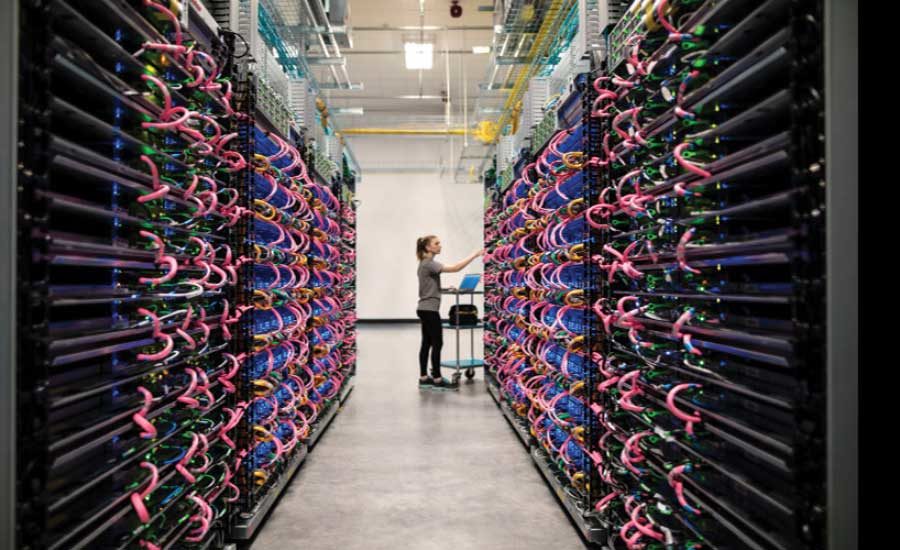
▲ High-density AI data center employing liquid cooling technologies
II. Liquid Cooling Policies Inject a "Stimulant" into the Market
PUE (Power Usage Effectiveness) serves as a key metric for evaluating the energy efficiency of data centers. A lower PUE indicates a greener, more efficient data center, as it reflects the ratio of total energy consumed by a facility to that consumed solely by IT loads. In typical data centers, IT equipment accounts for approximately 50% of energy consumption, while cooling systems contribute about 35%.
Liquid cooling technologies tend to exhibit significantly lower PUE values compared to traditional air cooling. For instance, while traditional air cooling maintains a PUE of around 1.3, liquid cooling methods can reduce this to between 1.05 and 1.2, depending on the specific technology employed.
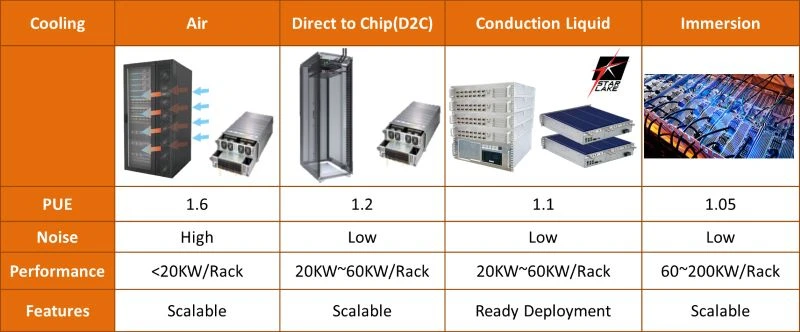
▲ PUE comparison between air cooling and liquid cooling technologies
III. Vertiv's Strategic Growth through Liquid Cooling
Vertiv has made significant strides in enhancing its liquid cooling capabilities with its acquisition of CoolTera. This UK-based company specializes in liquid cooling infrastructure and has collaborated with Vertiv for several years on multiple data center and supercomputing projects. This acquisition is expected to bolster Vertiv's position in the thermal management market, enabling it to offer more robust solutions tailored to the evolving needs of data centers.
IV. The Core Value Chain of Liquid Cooling
1. Understanding Liquid Cooling
Liquid cooling refers to methods used to maintain optimal operating temperatures for computer systems. By leveraging the high specific heat capacity of liquids, this technology effectively transfers heat generated by internal components to the outside environment. Liquid cooling systems can be categorized into direct and indirect cooling techniques. Indirect cooling, such as cold plate systems, ensures that the cooling liquid does not contact heated components directly, while direct cooling methods include immersion cooling, where the cooling medium interacts directly with heated components.
2. Liquid Cooling Industry Ecosystem: Cold Plate Systems
The liquid cooling industry comprises various components and systems, including:
- RCM (Refrigerant Supply and Return) Units: These units manage the distribution and collection of refrigerant within liquid cooling cabinets.
- Cooling Distribution Units (CDUs): CDUs facilitate the separation of refrigerants entering cold plate components from cooling water on the cold source side.
- LCMs (Liquid Circulation Modules): These modules manage the transport and return of refrigerants throughout the cooling system.
The refrigerants used can vary, with options including deionized water and glycol-based solutions, both of which contribute to effective heat transfer.
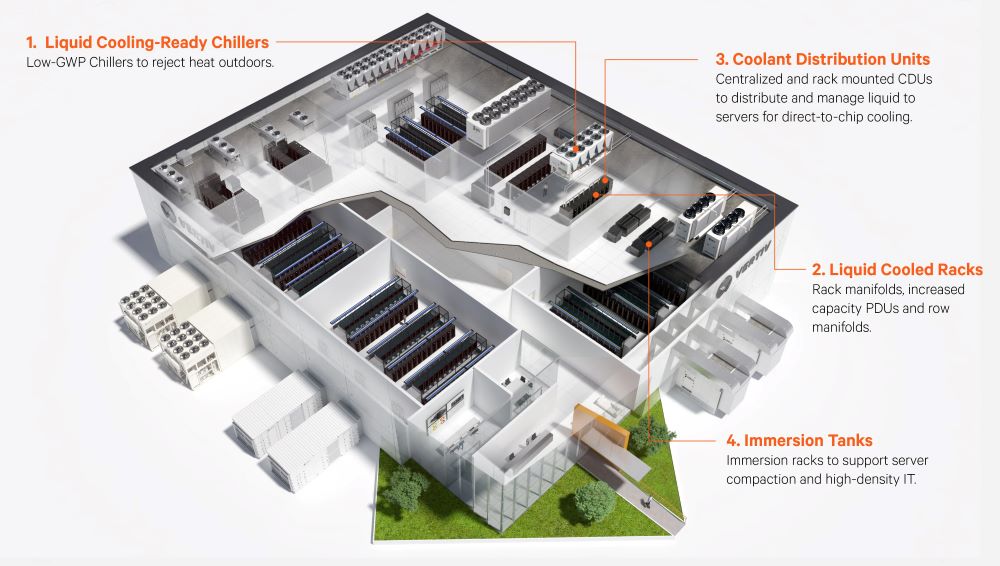
▲ Overview of the liquid cooling ecosystem in data centers
V. Identifying Beneficiary Companies in the Liquid Cooling Supply Chain
1. Beneficiary Companies: Server Internal Components
The liquid cooling supply chain can be divided into three primary categories: internal server components, liquid cooling construction, and liquid cooling infrastructure providers. Internal components include cold plate systems and quick disconnects, which are vital for enhancing the performance of high-powered AI chips. Companies like Huawei and NVIDIA are key players in this sector.
2. Liquid Cooling Construction
Liquid cooling construction encompasses full-chain solution providers and server manufacturers. Full-chain providers, like Vertiv, deliver comprehensive solutions but may not supply servers directly, necessitating collaboration with chip manufacturers.
3. IDC Construction
IDC manufacturers are responsible for constructing data centers and developing liquid cooling solutions tailored to client needs. These manufacturers will increasingly integrate liquid cooling technologies into their designs to optimize performance.
4. Infrastructure Providers
Infrastructure providers offer specific liquid cooling components such as CDUs and LCMs. As demand for these technologies rises, it is anticipated that both the volume and pricing of these products will increase, reflecting the growing importance of liquid cooling in data center design.
Conclusion
The shift from air cooling to liquid cooling in AI infrastructures is not just a trend but an essential evolution driven by rising computing demands. With the proliferation of large models and the necessity for efficient thermal management, liquid cooling technologies are set to play a pivotal role in the future of data centers. As companies like Vertiv enhance their capabilities through strategic acquisitions and partnerships, the liquid cooling market is poised for significant growth. This transition will ultimately contribute to more efficient, sustainable, and high-performance computing environments.