

In-Depth|2024 Medical Nitinol Market Development Report
Jul 03, 2024
Leave a message
Ⅰ Executive Summary
Nitinol is a high-performance alloy with exceptional properties, including superelasticity, making it widely applicable in various fields such as medical devices. Even before the COVID-19 pandemic, it had been a popular material in the medical device industry.

Pride has observed that the demand for medical nitinol materials has surged dramatically post-pandemic.
"Minimally invasive treatment" has become a core demand among clinical patients. With the continuous enhancement of interventional treatment devices and the advantages of shorter recovery periods and high accessibility, elective minimally invasive surgeries have flourished. The use of nitinol devices in outpatient minimally invasive surgeries has become more widespread. This trend is unstoppable, with the number of clinical applications and market scale growing at rates exceeding the industry average.
The successful application of medical nitinol in the field of interventional devices has driven the development of more clinical subfields, including general surgery, structural heart disease, plastic surgery, orthopedics, and more, continually expanding the boundaries of clinical application scenarios.
However, with the rise of new applications and minimally invasive interventions, the cost of medical nitinol is also increasing. Coupled with factors such as international trade wars and geopolitical issues, the supply-demand relationship in the medical nitinol industry is changing, necessitating various strategies to reduce product costs.
This report focuses on the supply of upstream raw materials and manufacturing processes of medical nitinol, systematically analyzes the current state of domestic and international markets, and competitive landscape, and provides key insights into the development trends and challenges of the medical nitinol market. It aims to stimulate industry reflection and resonance to accelerate the strengthening and supplementation of the nitinol medical device industrial chain in China.
Ⅱ The "Wonder Kid" with Unique Performance
Exceptional memory and toughness, and incredibly nice.
Nitinol (NiTi) alloy is a shape memory alloy made from nearly equal concentrations of nickel and titanium. Due to its excellent properties, it is widely used in the field of medical devices and has various applications in aerospace, energy, electronics, and communication.
Typically, various metals such as stainless steel, titanium and its alloys, platinum and related platinum-group metals, and cobalt-based alloys can be used for medical devices. However, compared to other materials, nitinol offers designers incredible flexibility.
In the medical device field, nitinol is renowned for its good biocompatibility and shape memory (superelasticity), high-temperature strength, corrosion resistance, and long fatigue life.
Traditional materials like stainless steel exhibit elastic deformation behaviors that differ from those of human structural biomaterials. Stainless steel's elastic deformation is limited to about 1%, with strain proportional to the applied load. However, hair, tendons, and bones can elastically deform up to 10% strain in a nonlinear manner. Nitinol behaves similarly to these biological materials: it can withstand large strains without increasing stress when loaded, and the strain decreases at a low but constant stress when unloaded.
This unique alloy is the material of choice for self-expanding stent implants, sports medicine, and trauma devices, as these devices closely match the mechanical characteristics of human connective tissues. Delivery system pull wires and guide wires made from nitinol can navigate the most tortuous anatomical structures without kinking.
Nitinol's excellent fatigue resistance and kink resistance make it highly favored by medical device designers.
In short, the magic of nitinol lies in its combination of metallic strength, polymer-like flexibility, and biocompatibility.
Ⅲ The "Wonder Kid" Growth History in Application
In 1976, nitinol was first used for orthodontic archwires.
Due to its biocompatibility, nitinol implants, when surface-treated through electropolishing and passivation, form a passivated titanium oxide layer that acts as a barrier, preventing corrosion and the release of toxic nickel ions into the bloodstream. Moreover, nitinol orthodontic archwires can accommodate significant strain while loaded, applying continuous pressure as teeth move. This reduces the need for frequent archwire changes or painful re-tightening compared to traditional materials.
In 1978, the first military application of nitinol was for the hydraulic couplings of the Soviet F-14 Tomcat fighter jet.
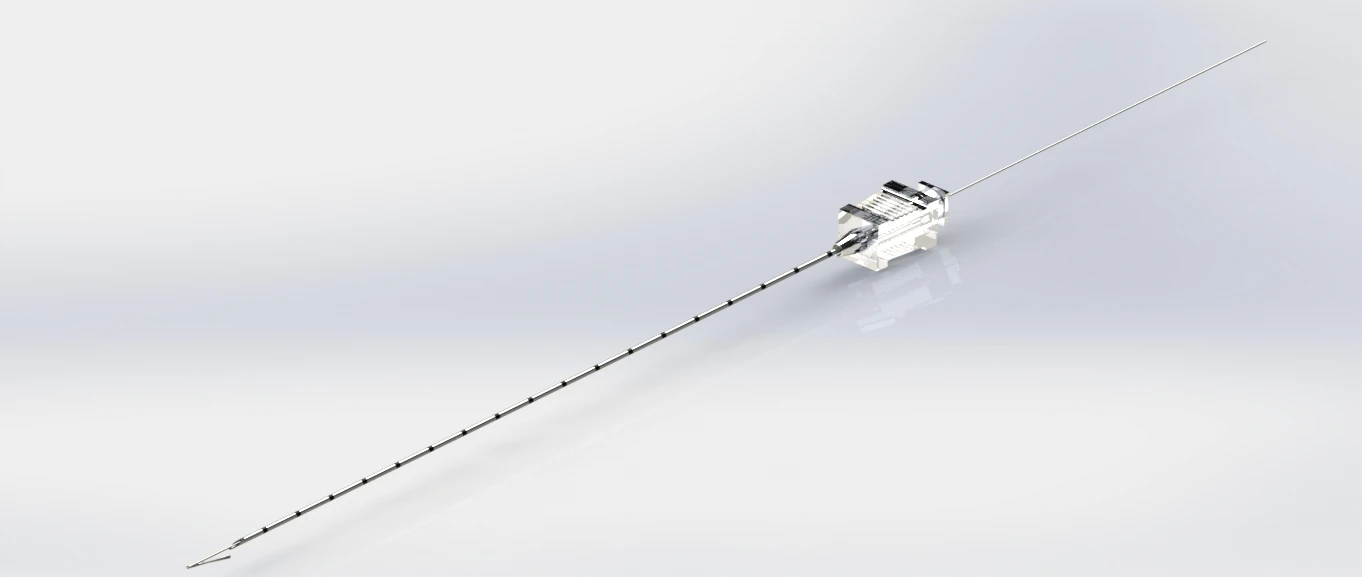
By the late 1980s, the first commercialized nitinol medical device, Homer Mammalok®, a breast tumor locator, was introduced.
▲ Various types of Artificial Heart Valves
The first nitinol-based orthopedic implant, the Mitek® bone anchor, also began commercialization. Nitinol's compliance with bone and other structural elements of the body, compared to the rigidity of titanium or stainless steel, makes it ideal for orthopedic implants like bone screws and plates.
Subsequently, nitinol was increasingly used to manufacture catheters, guide wires, stone retrieval baskets, needles, dental files, archwires, and other surgical instruments. Later, it extended to scoliosis rods and more.
The superelasticity and high strain capacity help devices reach difficult-to-access areas within the body. Today, nitinol is the preferred material for self-expanding stents and graft support systems in minimally invasive and endoscopic surgeries, one of the fastest-growing application fields.
In vascular interventions and natural orifice procedures, nitinol is widely and maturely used in stents, micro guide wires, access catheters, filters, occluders, artificial heart valves, and chocolate balloons, among other devices.


▲ Various types of Artificial Heart Valves
Recent new applications include endovascular aneurysm repair devices, inferior vena cava filters, and embolic protection devices. Nitinol is increasingly used in various implants, orthopedic and minimally invasive surgeries, and even surgical robots.
According to an iHealthcareAnalyst report, over the past decade, the nitinol market has primarily expanded in the peripheral vascular product sector, such as stents and guide wires.
One of the most well-known applications of nitinol is the peripheral vascular self-expanding stent.
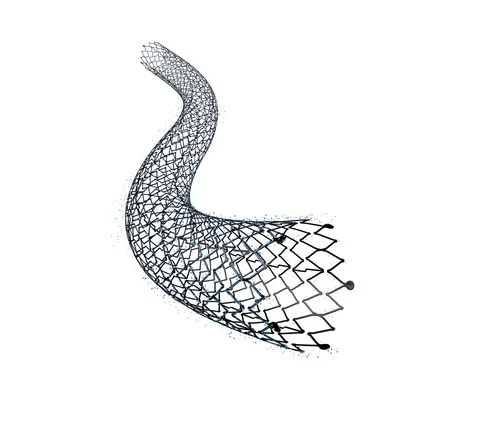

▲ Stentperipheral Vascular Self-expanding Stent
Lower limb peripheral arteries include the iliac, femoropopliteal, and below-the-knee arteries. Stents implanted in peripheral arteries are exposed to high mechanical stress from the surrounding environment, such as knee bending, walking, or running.
Nitinol's superelasticity and stress hysteresis allow it to handle these external forces better than other materials. Its anti-kinking properties make these stents ideal for tortuous vascular paths in peripheral arteries. Like coronary stents, peripheral vascular stents can also be made in four available types: bare-metal, drug-eluting, covered, and bioresorbable stents.
Nitinol stents are also beginning to dominate some non-vascular markets, including urology, gastrointestinal tract, and tracheobronchial applications. They have also achieved numerous technological advances in structural heart, electrophysiology, neurovascular, and orthopedic treatments.
Therefore, with the extensive application of nitinol in the medical device field, its market size continues to expand. It is estimated that 63% of peripheral stents globally are made from nitinol. Another statistic suggests that over 50% of peripheral and coronary stents on the market are made from nitinol. Overall, nitinol stents account for 60% of the endovascular stent market.
According to iHealthcareAnalyst data, the global market size for nitinol medical devices is expected to reach $38.6 billion by 2031.
Ⅳ Opportunities and Challenges in the Nitinol Supply Chain
The increase in nitinol medical devices has driven up the demand for nitinol alloy, especially in minimally invasive surgeries. Producing nitinol also requires another very expensive metal, titanium. Titanium is sensitive to thermal damage and difficult to process, which significantly increases the operating costs of the final product.
Currently, the challenge of producing this remarkable alloy lies in global supply chain issues and production problems caused by inflation.
(I) Raw Material Market Supply Side
The global nitinol market is expected to maintain steady growth in the coming years. According to the latest market research report, the global nitinol market size in 2023 is approximately 3.9 billion yuan, and by 2030, it is expected to reach nearly 7.8 billion yuan, with a compound annual growth rate (CAGR) of 9.6% over the next six years.
Indonesia is one of the world's largest nickel producers, with abundant nickel resources. Therefore, in Indonesia, the production and sale of nitinol plates are important industries. Nitinol plates, known for their high-temperature resistance, corrosion resistance, and high strength, are widely used in aerospace, shipbuilding, chemical, and medical device industries.
Currently, in Indonesia, the price of nitinol plates fluctuates due to changes in market supply and demand, raw material price volatility, and international market conditions. According to the latest data, the price of nitinol plates in Indonesia ranges from $5,000 to $8,000 per ton, depending on quality, specifications, and thickness. The Indonesian market has numerous sellers of nitinol plates, with various brands available.
Russia is another major producer of nitinol plates, with substantial nickel and titanium resources and advanced production technologies. Generally, the price of nitinol plates in Russia is relatively high. However, due to their reliable quality and excellent performance, they are still favored by many customers. According to market data, the price of nitinol plates in Russia ranges from $7,000 to $10,000 per ton. For some special specifications or brands, the increase might be even higher.
(II) High-Barrier Processing Technology
Nitinol materials come in various forms, such as nitinol tubes, wires, plates, and strips. Sheets, strips, and especially tubes are harder to obtain and much more costly. Nitinol alloys have high thermal mechanical sensitivity and processing difficulty, making their design and processing challenging. Therefore, the production process of nitinol medical devices is complex and precise, involving multiple critical steps.
1. Melting and Casting
Nitinol raw materials need to undergo strict selection and proportioning to ensure their chemical composition meets medical device standards.
Nitinol ingots are melted using a combination of vacuum induction melting (VIM) and vacuum arc remelting (VAR). Most nitinol materials are simple nickel-titanium alloys, with the two components in approximately equal proportions. However, slight adjustments in these proportions can significantly affect nitinol's properties, especially its transformation temperature. An increase in the nickel ratio can cause a sharp decrease in phase transformation temperature and an increase in austenite yield strength. Increasing the nickel-titanium ratio to 51:49 can lower the active Af by over 100°C. This sensitivity to nickel proportion makes it challenging to manufacture nitinol with uniform and repeatable performance.
Therefore, melting requires controlling parameters like temperature and time to ensure uniform and pure alloy composition.
Casting involves pouring the melted alloy into specific shapes and sizes, preparing it for subsequent processing and forming. In recent years, process optimization and improved raw material purity have successfully developed nitinol ingots with fewer or smaller inclusions, where inclusion size plays a dominant role in influencing fatigue life rather than inclusion quantity.
2. Machining and Stamping
Next, the alloy undergoes rolling or drawing processes. After multiple passes, the desired shape and size are achieved. This step significantly impacts the mechanical properties and shape memory effect of the material. Stamping and imprinting are widely used for nitinol wires, strips, sheets, and tubes. During processing, the material's extensive cold working (low ductility) and poor high-impact fracture toughness can lead to a low success rate, higher tool wear or life, and difficulty in deburring.
Nitinol can be machined using traditional techniques such as milling, turning, and grinding (e.g., profile grinding of guide wires), but the tools wear out quickly. Nitinol exhibits work-hardening properties, increasing material hardness during processing, thus complicating cutting and machining. Therefore, appropriate carbide tools, tool geometry, cutting speed, and feed rates must be used to achieve excellent tolerances and surface finishes.
Wire EDM, laser machining can effectively be used for many complex shapes and small parts processing. Consequently, laser cutting has become the industry standard for manufacturing endovascular stents from nitinol tubes. Besides etching, electro-polishing, and some cutting operations, chemical or electrochemical material techniques are rarely used to remove materials.
Cold forming operations are challenging due to the typically intensive processing resulting in excessive cold work, causing brittleness. Stress relief heat treatment can mitigate or minimize these issues. Selective heat treatment can be used locally to enhance formability.
3. Surface Treatment
Surface treatment can enhance corrosion resistance, fatigue resistance, and biocompatibility. Common surface treatment methods include sandblasting, polishing, and plating.
The challenge lies in achieving uniform and effective surface treatment for complex-shaped nitinol components. Due to the presence of a titanium dioxide oxide layer, plating is a challenging operation. The oxide layer must be effectively removed through mechanical tests (e.g., sandblasting or bead blasting) or chemical etching methods. The actual plating layer must withstand the high levels of recoverable strain that nitinol components may endure. Additionally, hydrogen embrittlement is a concern depending on the plating process used.
4. Overcoming Nitinol Disadvantages
Nitinol is not radiopaque, which is crucial for correctly placing stents or locating devices within the body. As stent designs become smaller or geometries change to form fine struts and mesh structures, the X-ray characteristics of stents decrease. Radiopaque markers made of materials with higher radiopacity must be crimped, riveted, or welded onto stent ends to enhance X-ray visibility. Tantalum markers are commonly crimped, riveted, or welded onto stent ends, while marker systems made from precious metals (e.g., platinum-iridium alloy or gold) are also used. However, due to the different potentials between precious metals and nitinol, careful design and processing are necessary to prevent electro-corrosion.
Under the combined effects of global supply chain challenges and inflation, the cost of nitinol materials is expected to continue rising. The complexity of the production process makes nitinol production a costly investment project.