

Four Techniques for CNC Milling Cutting Process
Mar 26, 2025
Leave a message
For CNC milling parts, the quality of the finished workpiece is crucial. In CNC milling cutting, the selection of cutting tools and the effective determination of cutting parameters are key aspects. To ensure the machining process meets standards, programmers must accurately grasp the basic principles of tool selection and cutting parameter determination. At the same time, the characteristics of each part's machining process should also be given high importance.
I How to Select Cutting Tools for CNC Milling
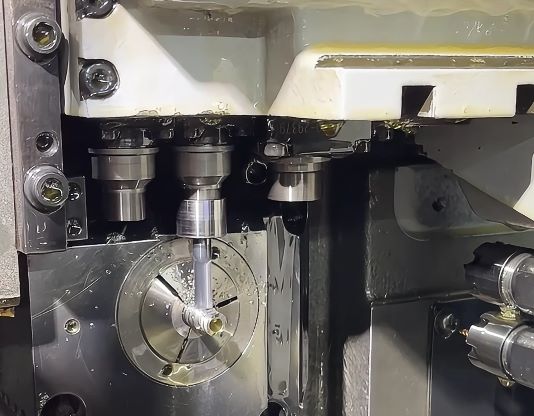
CNC milling machines have high requirements for supporting cutting tools. The tools must have high precision, high strength, and high rigidity, and should be easy to install and adjust. Different cutting tools have tool holders and tool head shapes of varying lengths. When selecting tools, factors such as the clamping capability of the milling machine, the material characteristics of the workpiece, and the machining method should be considered. While meeting other conditions, shorter tool holders should be chosen as much as possible to maximize tool rigidity, meet machining precision requirements, and extend tool life.
1. Common Types of Milling Cutters
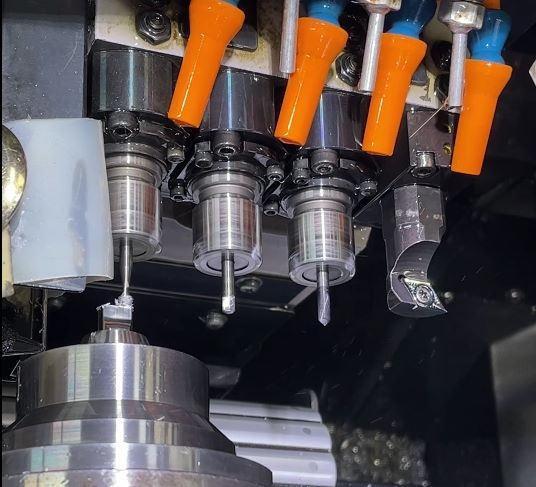
Due to the diversity of materials and shapes of workpieces, milling cutters also come in various types and forms. Currently, milling cutters are usually classified based on material, structure, or tool head shape.
Based on material, milling cutters can be categorized into high-speed steel tools, alloy steel tools, diamond tools, ceramic tools, and cubic boron nitride tools [1]. Different materials have different hardness and rigidity, making them suitable for machining workpieces of different materials.
Based on structure, milling cutters can be divided into integral cutters and insert-type cutters, with insert-type cutters further classified into welded and indexable types.
Based on tool head shape, milling cutters can be categorized into ball-end mills, flat-end mills, tapered mills, T-slot cutters, etc.
2. Factors Affecting Milling Cutter Selection
CNC milling is a highly complex operation. When selecting a milling cutter, the performance and characteristics of the machining material should be considered. For instance, the tool selection varies for non-ferrous metals, ferrous metals, composites, and polymer materials. Additionally, attributes such as hardness, toughness, rigidity, and wear resistance of the material should be taken into account [2].
Furthermore, since CNC milling relies on the machine tool's capabilities, tool selection should also consider the machine's characteristics. The goal is to minimize the number of tools used and complete multiple processes in a single setup.
3. Common Applications of CNC Milling Cutters
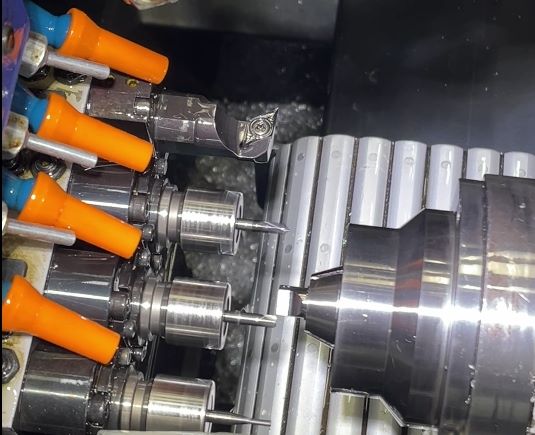
End Mills - Suitable for machining protrusions or grooves on workpiece surfaces. They can be used for roughing, finishing, and bottom cleaning.
Keyway Cutters - As the name suggests, they are ideal for machining various slots and keyways on workpieces.
Ball Nose Cutters - Suitable for fine surface finishing with small cutting depths. Due to their low material removal rate, they are generally not used for large shapes.
Face Mills - Primarily used for machining large planar workpieces.
4. Principles for Tool Selection in Practice
In general, the selection of milling cutters should follow the principles of easy installation and adjustment, ensuring machining precision, and extending tool life. Under the premise of ensuring machining quality and efficiency, shorter tool holders should be chosen whenever possible to improve tool rigidity and prolong tool life.
The geometric shape of the workpiece is an important factor in tool selection. Different workpiece shapes require different types of milling cutters and tool head shapes. Improper selection can seriously affect machining quality, potentially leading to a large number of defective products and resulting in significant losses.
II Determination of Cutting Parameters in CNC Milling
In CNC milling, the machining of workpieces is achieved through cutting in different directions. Different cutting parameters significantly impact machining speed, quality, and tool life. The main cutting parameters include cutting speed, depth of cut, and width of cut. Different situations require different cutting parameters, with machining precision and surface finish as primary criteria.
Scientific calculations should be used to set cutting parameters to achieve a balance between machining quality, efficiency, and tool wear reduction.
1. Determining Cutting Speed
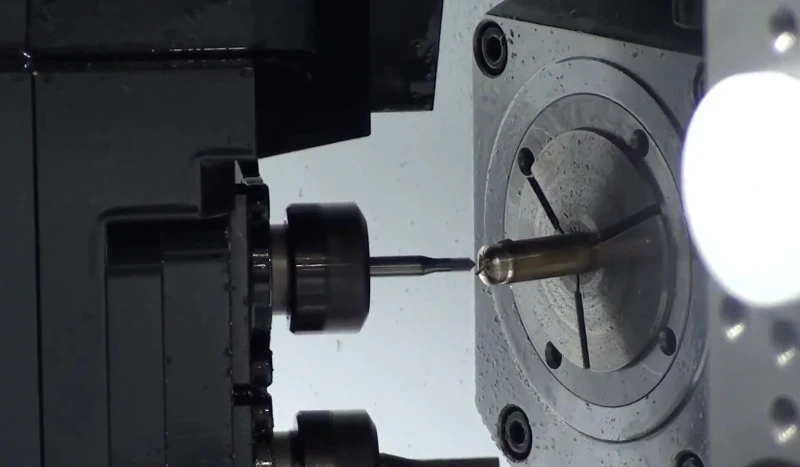
Cutting speed selection depends on factors such as workpiece hardness, tool material, and tool life. During rough machining, the cutting speed should be appropriately reduced, as the cutting depth is usually large. If the cutting speed is too high, it will generate excessive heat, shortening tool life. Conversely, in finishing operations, a higher cutting speed can be used to ensure surface precision and machining efficiency.
2. Determining Feed Rate
Feed rate is a crucial indicator of machining efficiency, referring to the cutting depth per minute, generally ranging from 100 to 200 mm/min. When using high-speed steel tools or performing deep-hole machining, the feed rate should be reduced accordingly, typically maintained between 20 mm/min and 50 mm/min.
3. Determining Depth of Cut
The determination of cutting depth (both axial and radial) affects operational safety and the longevity of the tool and machine. Excessive cutting depth may lead to tool crashes, damaging the tool or machine. However, selecting the maximum tolerable depth of cut within a safe range can reduce the number of passes required and improve production efficiency.
III CNC Milling Cutting Process Breakdown
1. Rough Machining
The primary goal of rough machining is to maximize material removal per unit time. Rough machining aims to bring the workpiece's shape and size as close as possible to the final product. Typically, after rough machining, the workpiece achieves a semi-precise contour. Using larger diameter tools improves production efficiency and reduces tool wear. CNC milling machines control two of the three coordinate axes simultaneously, achieving 2D control.
2. Semi-Finishing
Unlike rough machining, semi-finishing focuses on a balance between efficiency and quality. The goal is to produce a smooth surface with uniform stock allowance in preparation for finishing operations. Excess material should be removed to ensure a flat surface that meets precision standards.
3. Corner Cleanup
Corner cleanup focuses on achieving uniformity and coherence of the mold surface rather than speed. The goal is to remove excess material in preparation for finishing. Small-diameter tools are often needed, requiring multiple passes to meet requirements. However, tool diameter should not exceed the finishing tool's diameter.
4. Finishing
Finishing is the final machining step, requiring compliance with all size, surface roughness, and shape accuracy requirements in the drawings. A specific stock allowance is typically left to stabilize cutting forces, minimize machining errors, and ensure high surface quality.
The recommended finishing sequence is:
- Machining the outer contour
- Machining raised features
- Machining stepped and freeform surfaces
- Machining recessed areas
- Machining auxiliary surfaces
During high-speed finishing of mold cores and cavities, tool contact points must adjust according to the surface slope and tool radius changes. If machining complex surfaces, completing it in a single pass reduces tool retraction times and preserves the mold surface. Furthermore, feed direction should be arched to ensure a continuous, smooth cutting surface. Stopping mid-cut should be avoided to prevent minor deformations or indentations, which could affect accuracy and surface quality.
IV Effective Improvements in CNC Milling Cutting Processes
1. Improving Rough Machining
Using Machining Simulation Software – Accurately calculate the cutting area and material removal rate to balance tool load and wear while enhancing machining quality.
Choosing Proper Cutting Approaches – Prefer slanted tool entry/exit to avoid vertical plunging when machining cavities. Spiral cutting (as shown in Figure 1) can effectively reduce tool load.
Using Climb Milling for Large Stock Removal – Reduces cutting force, improves surface integrity, and minimizes heat generation.
Avoiding Sudden Feed Direction Changes – Prevents cutting speed drops, avoids overcutting, and reduces safety risks.
1.1 Improving Semi-Finishing
Maintaining a proper cutting pitch and tolerance is crucial. A stable entry order should be followed to minimize tool damage. Ensuring continuous cutting helps prevent frequent tool retractions or changes.
1.2 Improving Corner Cleanup
Uneven stock allowance in recessed areas affects cutting stability and final accuracy. A well-planned corner cleanup process should be implemented to remove excess material efficiently.
1.3 Improving Finishing
Optimizing cutting programs (as shown in Figure 2) helps avoid excessive tool retractions or vertical plunges, preventing surface damage. Climb milling should be used to reduce sliding issues. Cutting paths should be optimized to minimize deformation and, if necessary, increase the number of passes to achieve the best surface quality.