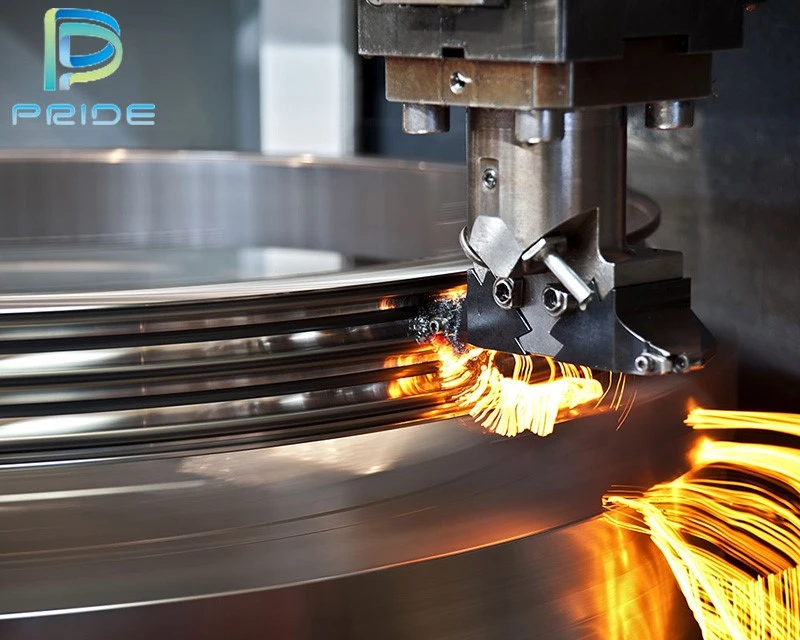
Decoding Electric Discharge Machining (EDM): Principles, Process, and Mechanics
Dec 19, 2023
Leave a message
Electric Discharge Machining (EDM) represents a cornerstone in the field of precision manufacturing. Characterized by its ability to shape hard materials with remarkable accuracy, EDM has revolutionized how intricate components are produced. This article aims to explore the fascinating world of EDM, shedding light on its working principles, process mechanics, and its pivotal role in modern manufacturing.
The Basics of EDM
At its core, Electric Discharge Machining is a process where electrical discharges (sparks) are used to remove material from a workpiece. It's a non-traditional, non-contact machining method, meaning it does not involve physical cutting tools. This technique is particularly beneficial for hard materials that are difficult to machine with conventional methods. There are three main types of EDM:
Wire EDM, where a thin wire is used as an electrode to cut the material.
Die-Sinking EDM, involving an electrode formed into a specific shape that's used to create intricate cavities or shapes in the workpiece.
Wire-Cutting EDM, which uses a continuously moving wire to slice through the material.
The roots of EDM can be traced back to the 1940s, with its evolution mirroring advancements in electrical and control technologies. From its initial use in making hard metal dies, EDM has expanded into various industries, including aerospace, automotive, and medical.
Working Principles of EDM
The working principle of EDM is fascinating. It involves creating an electrical spark between an electrode and the workpiece. This spark, generated in a dielectric fluid, creates intense heat, melting and vaporizing the material in a controlled manner. The electrode never physically touches the workpiece, preventing any mechanical stress or distortion. Key components in an EDM machine include:
A power supply to generate electrical discharges.
An electrode that delivers the spark to the workpiece.
A dielectric fluid, usually oil or deionized water, that controls the spark and flushes away material particles.
The precision of EDM comes from the control of these sparks. By adjusting parameters like current intensity, pulse duration, and the gap between the electrode and workpiece, operators can achieve remarkable accuracy.
Applications and Advantages of EDM
EDM is renowned for its precision and versatility, making it indispensable in various industries. In aerospace, it's used to machine complex components made of superalloys. In the automotive sector, EDM is essential for creating detailed molds and dies. The medical field benefits from EDM in the production of precise surgical tools and implants. The main advantages of EDM include:
Ability to machine complex shapes that are difficult or impossible to achieve with traditional machining.
Suitable for hard materials like titanium, hardened steel, and superalloys.
No direct contact between tool and workpiece, reducing mechanical stresses and ensuring the integrity of delicate parts.
High precision and accuracy, crucial for critical applications in aerospace and medical fields.
Operational Considerations and Challenges in EDM
Operating EDM machines requires a deep understanding of various parameters that influence the machining process. Key factors include:
The electrical properties of the tool and workpiece material.
The intensity and duration of the electrical pulses.
The gap between the electrode and workpiece, which must be precisely controlled to maintain consistent spark conditions.
Challenges in EDM are primarily related to the wear of the electrode and the surface finish of the machined parts. Managing electrode wear requires constant monitoring and adjustments, while achieving a high-quality surface finish may necessitate additional processing or refinements.
Latest Technological Advancements and Future Trends in EDM
The EDM field has witnessed significant technological advancements. Recent developments focus on enhancing precision, reducing electrode wear, and improving surface quality. Innovations like micro-EDM have enabled the production of extremely small and intricate parts. Automated EDM systems, integrated with CAD/CAM software, are increasing efficiency and reducing human errors. Looking to the future, trends suggest further integration of AI and machine learning for predictive maintenance and process optimization, along with advancements in environmentally friendly EDM processes.
Conclusion
Electric Discharge Machining stands as a testament to the ingenuity of modern manufacturing techniques. Its ability to handle materials that are challenging for traditional machining and to produce parts with intricate geometries makes it indispensable in many high-tech industries. As we continue to push the boundaries of precision and complexity in manufacturing, the importance of EDM is only set to grow. The ongoing advancements in this field promise to further enhance its capabilities, making it a key player in the future landscape of manufacturing technologies.