

Advantages of Cold Plate Liquid Cooling Technology in the ICT Industry
Sep 05, 2024
Leave a message
Currently, the liquid cooling technologies employed in computing power centers mainly consist of cold plate liquid cooling, spray liquid cooling, and immersion liquid cooling.
Spray liquid cooling releases the cooling medium in the form of a spray onto the heat source of the server, achieving heat dissipation through evaporation and absorption of heat.
Immersion liquid cooling involves completely submerging the entire server or server components in a coolant, dissipating heat through direct contact. Compared to cold plate liquid cooling, spray and immersion liquid cooling technologies can achieve higher cooling efficiency in cases of extremely high power density.
However, spray and immersion liquid cooling technologies are relatively complex to implement and maintain, involving more safety and environmental considerations, and require more investment. Compared to direct contact liquid cooling technologies, cold plate liquid cooling offers the following advantages:
I High Density: High-density node deployment can effectively enhance computing capacity per rack
With the rapid development of technologies such as artificial intelligence, big data analysis, virtualization, and high-performance computing, computing power centers are increasingly demanding more computing power. However, the limited carrying capacity of computing power centers, restricted by building space and environmental regulations, has become a key challenge. Increasing the power density per rack has become a crucial method to reconcile this issue.
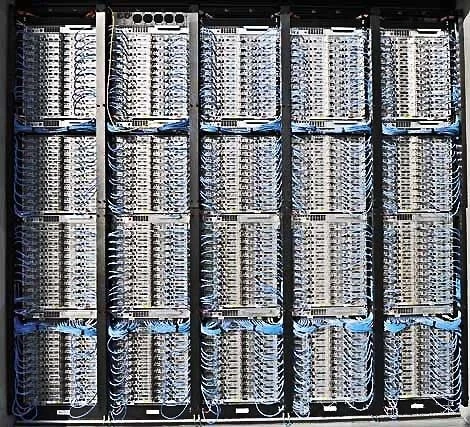
▲ computing power centers
In 2022, the power consumption of Intel's fourth-generation server processors exceeded 350W per CPU, and NVIDIA's GPUs surpassed 700W per unit, with AI cluster computing densities commonly reaching 50kW per rack. Currently, the power density per rack in naturally air-cooled computing power centers typically supports only 8-10kW. Relying solely on traditional air cooling technology can no longer meet the cooling needs of high-density computing nodes. Therefore, adopting new cooling technologies to increase node deployment density and enhance computing capacity per rack has become especially important.
The cold plate liquid cooling system is an effective cooling technology to increase rack power density.
- Efficient Cooling Performance: Cold plate liquid cooling technology closely integrates liquid cooling plates with server nodes, directly removing heat and achieving efficient cooling, thereby enabling higher power density.
- Smaller Footprint: In addition to efficient cooling performance, cold plate liquid cooling technology also has a smaller footprint. The close integration of liquid cooling plates with server nodes saves space, allowing computing power centers to deploy more nodes within a limited space, further enhancing computing capacity density.
II High Efficiency: Liquid cooling at the heat source side greatly improves server cooling efficiency
Due to the thermal transfer characteristics of air, the cooling efficiency of air cooling technology is limited. The low thermal conductivity of air and its susceptibility to environmental temperature fluctuations significantly impact the cooling performance of air cooling systems in high-temperature environments. Moreover, the cooling capability of air cooling systems is also constrained by airflow speed and air circulation conditions. In contrast, liquid cooling technology, with its higher thermal transfer efficiency and more stable cooling performance, excels in high-power-density and high-temperature environments. Therefore, more computing power centers are transitioning to liquid cooling technology to meet the growing demand for computing power.
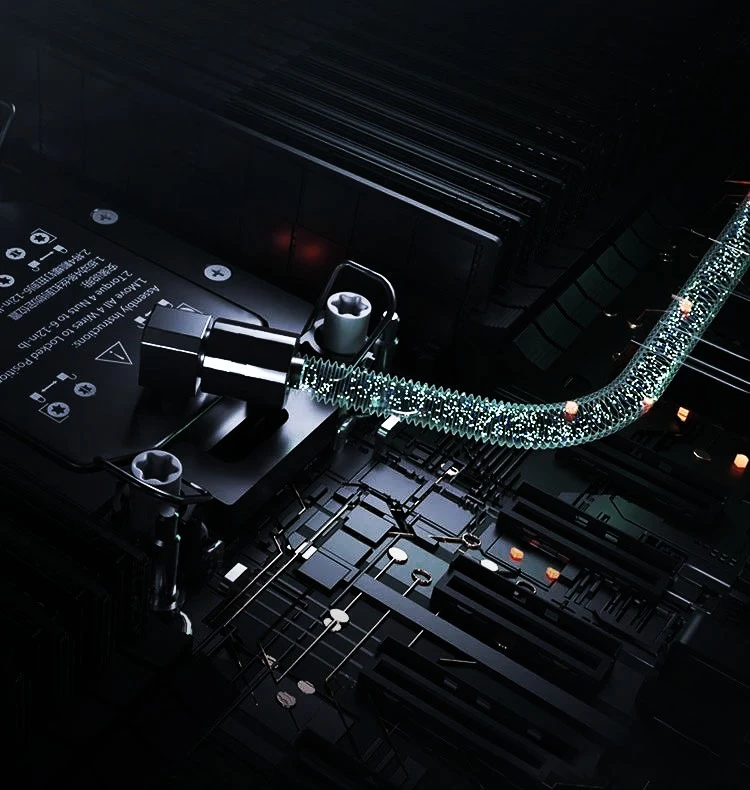
▲ Cold plate liquid cooling technology
Cold plate liquid cooling technology replaces air with a coolant as the heat transfer medium, directly channeling the coolant to the heat-generating chip modules. Through indirect contact heat transfer, the heat generated by the chips is conducted away, reducing the temperature of the chip modules and enhancing both their cooling efficiency and computing performance.
- The specific heat capacity of liquids is far higher than that of gases, meaning that the amount of heat absorbed/released per unit temperature change is much greater than that of air, leading to a substantial improvement in cooling efficiency. For example, water's heat transfer efficiency per unit volume is 3,500 times greater than that of air, effectively addressing the cooling challenges posed by increasingly high-density servers.
- In addition, by replacing air cooling with liquid cooling, the need for fans is eliminated, reducing the operating energy consumption of the entire cooling system. In one typical node, with 80% of the CPU and memory covered by cold plates, the cooling PUE can be reduced to 1.15 or lower. Therefore, compared to air cooling, liquid cooling offers higher cooling capacity for individual chips.
III High Reliability: Scientifically designed scenarios ensure reliable and stable system operation
The coolant within the liquid cooling system is one of the key factors maintaining its normal operation. Professional leak prevention design and operational management are crucial for the stability of cold plate liquid cooling systems. After years of development and improvement, the reliability of cold plate liquid cooling technology has been well ensured, with safety measures such as leak prevention design, full leak monitoring, and fault management providing multi-angle and comprehensive fault risk prevention, ensuring that system equipment operates in a safe and stable environment, thus protecting both the environment and personnel safety.
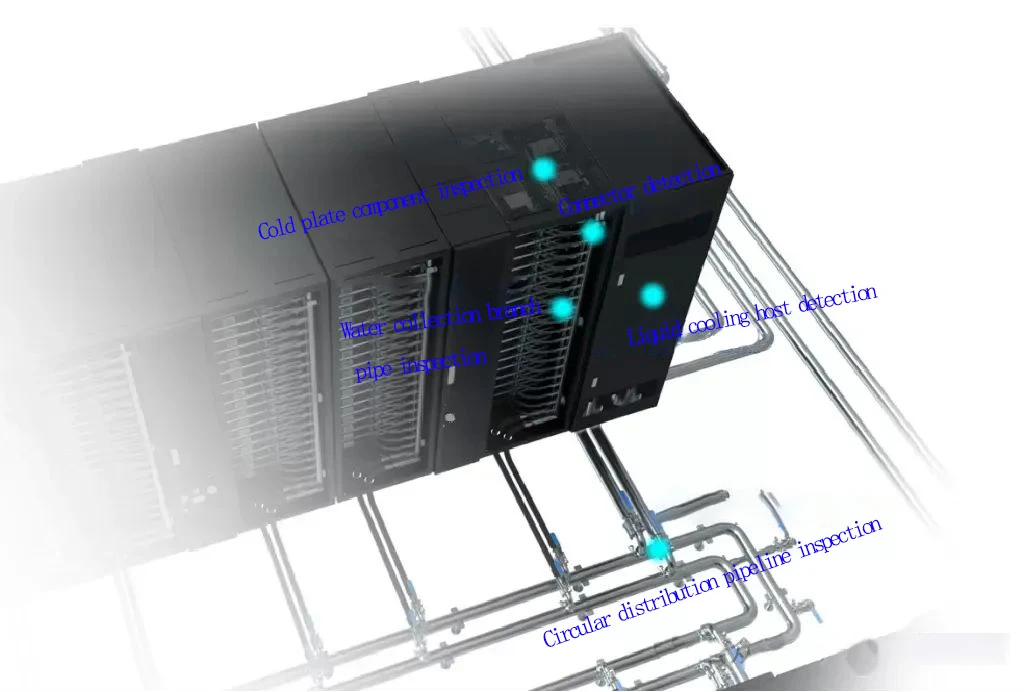
▲ liquid cooling system
The cold plate liquid cooling system employs a three-level leak prevention design, ensuring zero leak incidents at the node, cabinet, and room levels.
- The node base is fully sealed, capable of directing and promptly draining any leaks, preventing them from affecting other nodes.
- The cabinet is equipped with quick-connect leak spray designs and electromagnetic valves for automatic cooling liquid control.
- The room employs a dual-loop design, ensuring that a single cabinet leak is isolated and does not impact the normal operation of other cabinets.
The cold plate liquid cooling system can achieve full leak monitoring. Entire cabinets are equipped with three-level leak detection capabilities, providing precise leak alerts.
- Nodes use water-immersed rope sleeves to detect leaks and report them to the BMC (Board Management Controller) for monitoring and alerting.
- Cabinet dividers are equipped with photoelectric leak sensors at both the water inlet and outlet, with RMU (Ring Main Unit) monitoring alerts reported to the network management platform.
- The air-liquid heat exchanger (liquid cooling door) monitors water levels with float sensors, and alerts are reported to the network management platform via RMU.
IV Low Energy Consumption: Innovative energy-saving technologies guide green and low-carbon development in computing power centers
As major energy consumers, computing power centers supply only a small portion of their power to IT loads, with the main energy consumption coming from the cooling system. By replacing fans and air conditioning with cold plate liquid cooling technology, which does not require continuous electricity consumption, the overall energy consumption of the computing power center can be greatly reduced, significantly lowering the PUE value. Cold plate liquid cooling technology, through a series of energy-saving technologies such as cold distribution, precise temperature control, warm water cooling, and waste heat recovery, significantly reduces the power consumption of computing power centers, achieving efficient energy utilization.
▲ power centers
Cold plate liquid cooling technology directly supplies low-temperature coolant to heat-generating components through the cold distribution unit, quickly and efficiently absorbing the heat generated by the servers, effectively shortening the heat transfer path and improving system cooling efficiency.
- Compared to traditional air cooling systems, cold plate liquid cooling systems reduce the need for widespread air cooling, enabling precise temperature control and significantly reducing the cooling energy consumption of computing power centers.
- Additionally, cold plate liquid cooling technology adopts warm water cooling, with outlet water temperatures reaching 55-60°C, enabling year-round natural cooling. Furthermore, with return water temperatures exceeding 55°C, the high thermal quality allows for waste heat recovery for reuse. Warm water liquid cooling reduces the cooling system's heat dissipation load, and waste heat recovery lowers overall energy consumption. Together, they can significantly reduce the energy consumption of computing power centers. Besides the reduced energy consumption of the cooling system itself, cold plate liquid cooling helps further lower chip temperatures, leading to higher reliability and lower energy consumption. Overall system energy consumption is expected to decrease by approximately 5%.
V Easy Maintenance: Integrated server cabinets enable automated and intelligent simplified maintenance
With the development of technology and increasing demand, computing power centers are expanding in scale, and their application and system environments are becoming more complex, requiring more manpower and technical support to ensure stability and security. Integrated cold plate liquid cooling cabinets are widely recognized in the market for their advantages in rapid deployment and convenient maintenance.
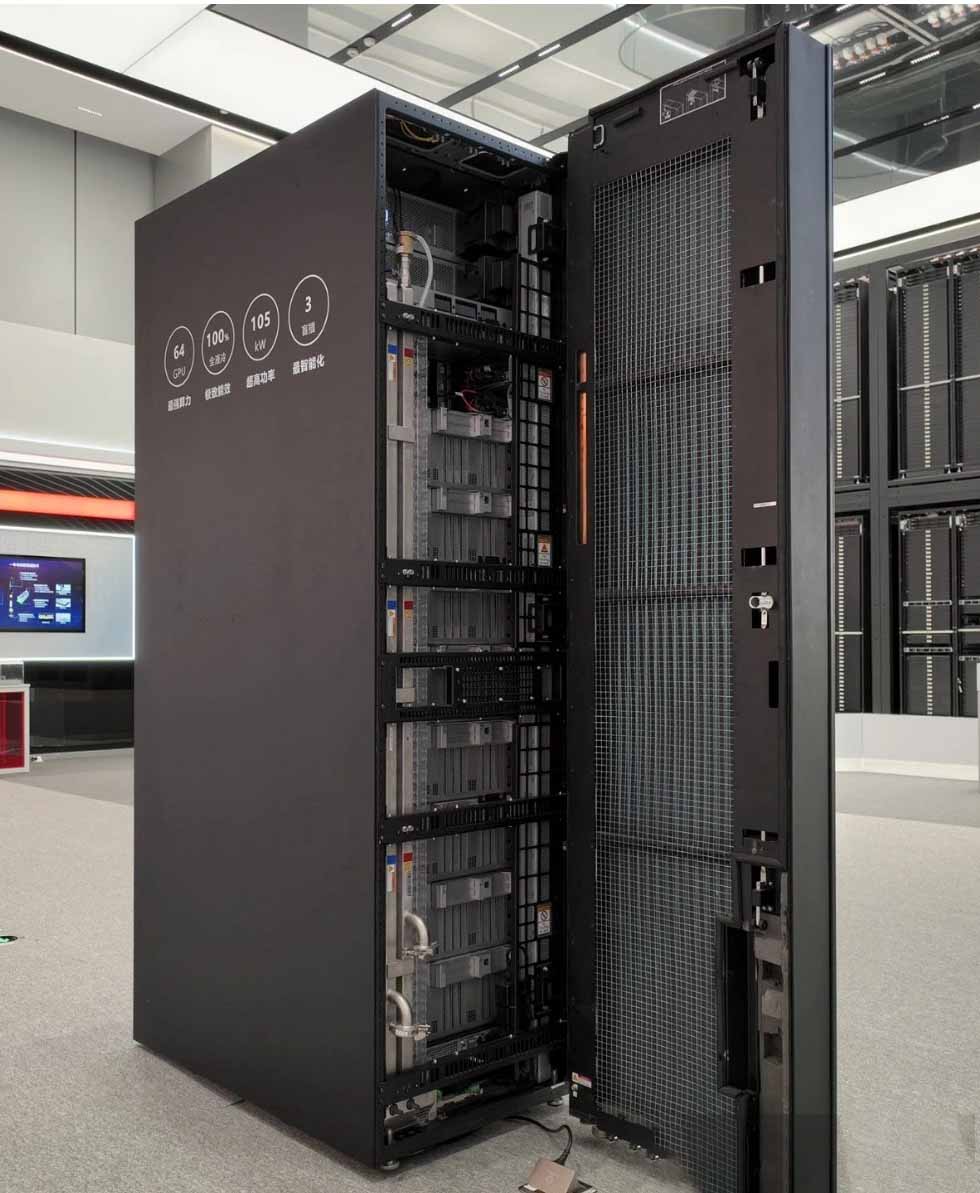
▲ Integrated cold plate liquid cooling cabinet
Liquid-cooled server cabinets achieve automated maintenance with zero cables through a three-bus blind insertion design for the liquid cooling water circuit, power supply, and exchange network, greatly simplifying the maintenance process and reducing failure risks.
- After being installed, tested, and debugged on the production line, liquid-cooled server cabinets can be delivered directly to the customer's data center, achieving on-site zero installation and reducing the delivery cycle to a few days.
- Secondary side pipelines use a modular design, with components pre-fabricated in the factory, eliminating the need for on-site welding and flushing, improving efficiency by 50%, and significantly accelerating deployment and activation.
- Furthermore, liquid-cooled server cabinets feature robotic maintenance, automatic server U-position identification, third-party network management integration, and intelligent management, simplifying maintenance processes while improving maintenance efficiency.
Through an integrated design, liquid-cooled server cabinets' zero-cable automated maintenance, efficient component replacement, rapid cabinet delivery, efficient pipeline design, and intelligent maintenance capabilities make maintenance more convenient, deployment faster, and operations more efficient, while reducing maintenance costs and labor input. These advantages make liquid-cooled server cabinets the ideal choice for reliable operation and future development of computing power centers.
VI Easy Retrofit: Flexible operability advantages support the upgrade and transformation of outdated data centers
In the face of tightening energy consumption requirements and policies, traditional computing power centers are facing significant challenges. To meet energy conservation and environmental protection demands, computing power center operators must take effective measures. Among these, air-to-liquid retrofitting, with its significant economic efficiency, high energy utilization, and excellent performance, has become a feasible path for computing power center operators to adapt to current energy consumption requirements and environmental challenges.
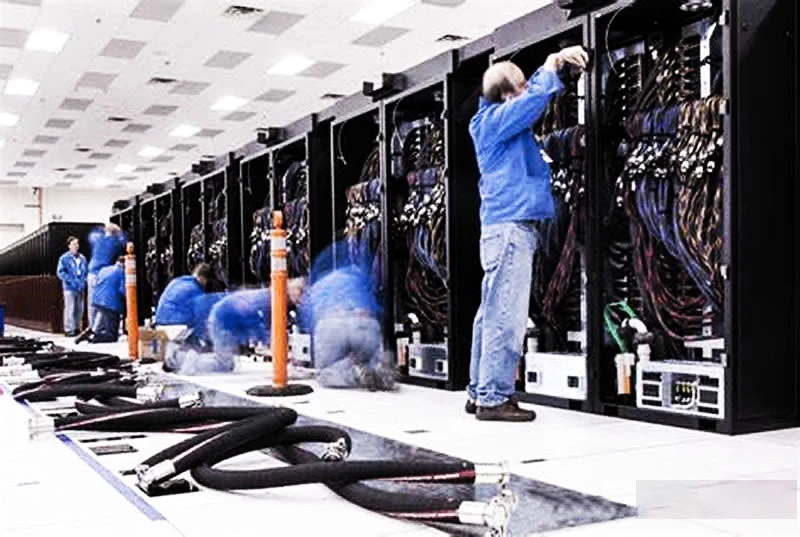
▲ liquid cooling technology
By transitioning the cooling methods of some or all servers from traditional air cooling technology to efficient liquid cooling technology, computing power centers can significantly improve energy utilization, reduce PUE values, and thereby decrease overall energy consumption. This move not only helps meet energy consumption requirements but also enhances server cooling efficiency, increases computing capacity, and reduces issues related to fan noise and air circulation, improving the stability and reliability of servers.
- Firstly, cold plate liquid cooling technology offers better material compatibility with heat-generating components. In a cold plate liquid cooling system, the coolant only flows through the cold plate's pipelines and does not directly contact the server's motherboard and heat-generating components. Therefore, there is no need for special material design for the motherboard and heat-generating components. When selecting the coolant, one only needs to consider its compatibility with the circulation pipeline and the cold plate. This makes cold plate liquid cooling technology more flexible and suitable for various server equipment without requiring extensive hardware modifications.
- Secondly, cold plate liquid cooling technology is easy to retrofit. This technology does not alter the original form of the server motherboard but instead modifies it while retaining the existing motherboard. This modification method not only allows for easy disassembly and convenient installation but also offers better feasibility in terms of technology, industry, and large-scale production. Since it does not require major changes or replacements of the motherboard, the installation and maintenance of cold plate liquid cooling technology are simpler and more convenient, while also reducing the difficulty of scaling up production in technology and industry. In contrast, immersion liquid cooling technology typically requires the design of specialized liquid-cooled motherboards to accommodate its fully submerged characteristics, which undoubtedly increases both technical and manufacturing costs.
Leveraging these advantages, cold plate liquid cooling technology is more convenient and cost-effective in practical applications, making it the preferred technology for upgrading and retrofitting old air-to-liquid cooling systems in computing power centers.