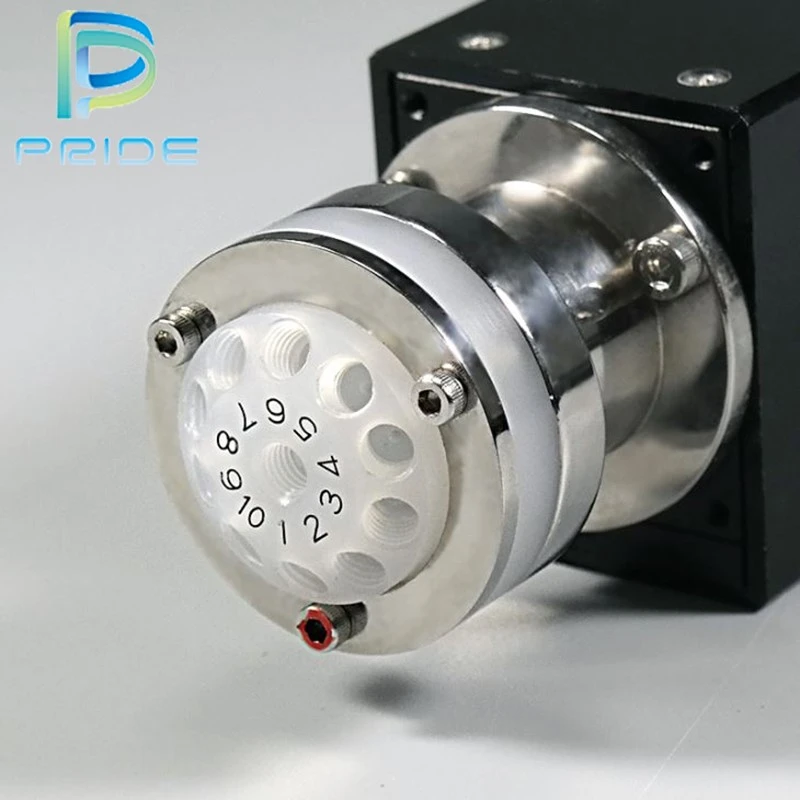
The Precision Art: CNC Machining of Microfluidic Electric Rotary Valves
Dec 12, 2023
Leave a message
In the intricate world of microfluidics, precision is not just a requirement; it's an art form. Microfluidic technology, central to a variety of cutting-edge applications from medical diagnostics to chemical analysis, hinges on the ability to manipulate fluids at a microscale. At the heart of this technology lies a critical component: the microfluidic electric rotary valve. These valves, essential for the precise control of fluid flow, embody a fusion of sophisticated design and advanced manufacturing techniques, notably CNC (Computer Numerical Control) machining.
The marriage of CNC machining and microfluidic technology represents a significant leap in the capability to produce components with unparalleled precision and reliability. This article delves into the world of CNC machining of microfluidic electric rotary valves, uncovering the nuances of this precision art and its transformative impact on various fields.
Understanding Microfluidic Electric Rotary Valves
Microfluidic electric rotary valves are marvels of engineering, designed to control the flow of fluids through channels smaller than a human hair. These valves operate by rotating a disc or cylinder, precisely aligning ports to direct fluid flow. This precise control is vital in applications ranging from automated drug delivery systems to environmental monitoring.
The adoption of these valves in various industries speaks volumes about their versatility. In the biomedical field, they are instrumental in lab-on-a-chip devices, enabling rapid disease diagnostics. In chemical synthesis, they allow for the meticulous handling of reagents, paving the way for novel compounds. The application of these valves in microfluidic setups has revolutionized how experiments and analyses are conducted, offering speed, efficiency, and accuracy.
The CNC Machining Process
Central to the production of microfluidic electric rotary valves is CNC machining, a process revered for its precision and versatility. CNC machining transforms raw materials into intricate parts using computer-controlled cutting tools. The process starts with a solid block of material, commonly brass, stainless steel, or specialized plastics, chosen for its resistance to the chemicals and pressures encountered in microfluidic systems.
The precision of CNC machining is pivotal. Even the slightest deviation, measured in micrometers, can lead to significant errors in fluid control. Advanced software programs guide the CNC machines, translating intricate designs into precise cutting paths. This ensures that each valve meets stringent specifications for internal channel geometry, surface smoothness, and alignment.
Design Considerations
Designing a microfluidic electric rotary valve involves more than just technical know-how; it requires a deep understanding of the application's nuances. Engineers use CAD (Computer-Aided Design) and CAM (Computer-Aided Manufacturing) software to create and optimize the valve designs. These tools allow for the simulation of fluid dynamics, helping to predict how the valve will perform in real-world conditions.
Customization is another critical aspect. Microfluidic applications vary widely, necessitating bespoke solutions. Whether it's adjusting the valve size to fit into a compact lab-on-a-chip device or altering the flow channels for a specific chemical analysis, each design element is carefully considered to meet unique operational demands.
Quality and Precision Control
In CNC machining of microfluidic electric rotary valves, maintaining high standards of quality and precision is paramount. This is achieved through rigorous quality control protocols. Each valve undergoes extensive testing to ensure it meets the required specifications. Precision in CNC machining is monitored using advanced metrology equipment, capable of detecting minute anomalies that could impact the valve's performance.
The precision control extends to the calibration of the valves. Each is calibrated for specific flow rates and pressure conditions, ensuring reliable and consistent performance in their designated applications. This meticulous attention to detail is what sets CNC-machined microfluidic valves apart in terms of reliability and efficiency.
The Impact of CNC Machining in Microfluidics
The integration of CNC machining into the production of microfluidic ele ctric rotary valves has marked a significant advancement in the field. This technology has enabled the manufacture of more complex, reliable, and precise components than ever before. Case studies from biomedical research and environmental monitoring illustrate the transformative impact of these valves, providing enhanced control and efficiency in experiments and processes.
As we look to the future, the potential for CNC machining in advancing microfluidics technology continues to grow. Innovations in machining techniques and materials, alongside the evolving demands of microfluidics applications, promise to open new frontiers in this exciting field.
Conclusion
The CNC machining of microfluidic electric rotary valves represents a fusion of precision engineering and innovative technology. As this field evolves, the importance of such high-precision components in advancing research and industrial applications becomes increasingly clear. In the precision art of CNC machining, the future is bright, filled with the promise of further advancements and groundbreaking discoveries.