



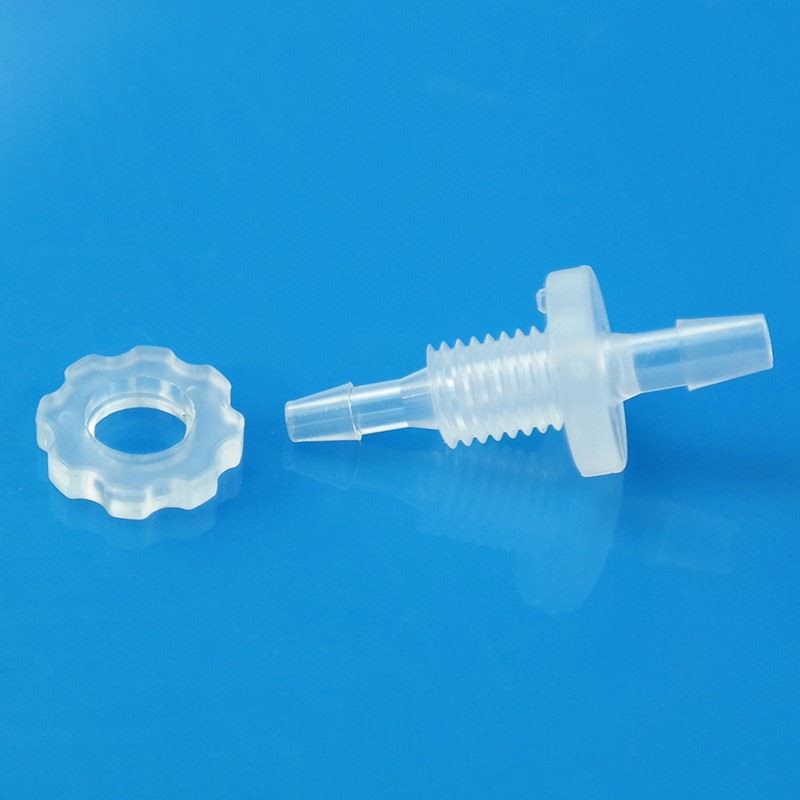
Quick Coulpling Bulk Head Union Silicone Rubber Hose Connector Plastic

Quick Coulpling Bulk Head Union Silicone Rubber Hose Connector Plastic

Quick Coulpling Bulk Head Union Silicone Rubber Hose Connector Plastic

Quick Coulpling Bulk Head Union Silicone Rubber Hose Connector Plastic

Quick Coulpling Bulk Head Union Silicone Rubber Hose Connector Plastic
Quick Coulpling Bulk Head Union Silicone Rubber Hose Connector Plastic
Description
Technical Parameters
| Quick Details |
Type: | ADAPTER |
| Application: | Automotive, indistrial/lab/medical device etc. |
| Gender: | Male |
| Screw: | 1/4-28UNF male/M8 male/M10 male |
| Material: | PP/PTFE |
| Function: | connecting soft tube through board |
| Adapted Tube: | rubber/silicon |
| Adapted Medium: | gas/liquid |
| Feature: | flexible connection way, smooth, high quality |
| Color: | milk white |
| Standard: | food grade/medical grade |
| Single Package Size: | 8.5X15X11 cm |
| Single Gross Weight: | 0.300 kg |
| Package Type: | Box with inner bag and foam |
| Shows of Production |




| More Details |
 | Application Note |
1. Bulkhead Union is used for fixing fluidic tubing through metal or wooden board to keep them an unobstructed flowing way on your device or production line.
2. Soft Tube Equal Bulkhead Union is suitable for flexible tubing such as silicon, rubber, viton tube etc.
3. Two-Piece Fittings Installation Steps:
a. Drill a hole (diameter same as outer diameter of 1/4-28UNF, M8, M10 or M12 male thread) on necessary specific place of your board
b. Insert the thread part of bulkhead union into the board hole, then tighten the 1/4-28UNF, M8, M10, M12 nut forward until reaching the board.
c. Female thread of nut should be same as male thread of the main connector body.
d. Connecting soft tube at barbed end of soft tube bulkhead union. |

| Our Company |
 | 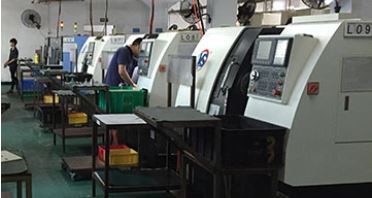 |
CNC Milling WorkshopCNC machining centers, high speed drill and tap center | CNC Turning WorkshopSlant bed CNC turning machine, diameter range from 200 to 630mm |
 |  |
Laser Cutting And Welding WorkshopRobot arm laser welding | Stamping WorkshopHydraulic punching machines from 30 tons to 300 tons |

| Our Machines |


| Packing & Delivery |
 |  |  |
| 1. Professional Placement | 2. Plastic Bags | 3. Carton Boxes For Shipping |
 |  |  |
| 4. Professional Placement | 5. Professional Shock | 6. Complete Package |
| Latest News |
 | Surface Modifications of Dental Implants |
by Gabriel ConstantinescuonNovember 18, 2019
A huge amount of research has been performed on surface modifications of micro- and nanorough Ti and Ti implants. If the relatively compact implant surface is replaced with a nanostructured surface or coating (nanotubes, nanorods, etc.), numerous possibilities of structural, morphological and chemical modifications arise and their resulting synergistic effects can lead to significant improvements in the field of tissue engineering.
The mechanical methods most widely used in obtaining rough or smooth Ti and Ti alloy surfaces and in fabricating nanophase surface layers are subtraction (grinding, polishing, machining, blasting) and attrition processes, respectively.
These mechanical modifications aim to produce specific surface topographies or to clean or roughen the surface, which could then lead to improved adhesion in bonding, as the roughness of the structure would be more favourable for biomineralisation due to the increased surface area.

Titanium-ceramic crowns and bridges.
The chemical methods are used in order to improve biocompatibility, bioactivity and bone conductivity (or osteoconduction, essentially meaning that bone grows on a surface), corrosion resistance and removal of contamination. These methods provide Ti and Ti alloys with bioactive surface characteristics. Some of the most widely used chemical methods are acid and alkaline etching, electrochemical anodization, chemical deposition and biochemical surface coating methods.
Physical surface modification methods include thermal spraying, physical vapour deposition, ion implantation and glow discharge plasma treatments. For these methods, there are no chemical reactions taking place to produce the desired engineered surface, and the resulting layer/film/coating from the Ti substrate surface is basically a product of the different energy types (thermal, electrical, kinetic) characteristic/specific to each method.
For Ti implants surfaces, irregular nanometric morphologies can be easily established through various chemical methods. On the other hand, in order to produce controlled, “symmetric” nanostructures (nanodots, nanotubes or nanorods), electrochemical anodization of Ti is one of the most popular methods used. Further functionalization of the Ti implants surfaces is possible in both cases, afterwards, if necessary.
The recent developments in the production of nanostructured Ti and Ti oxides surfaces and the mechanisms which take part in Ti anodization can be consulted in the latest reviews by Roy et al. and Kowalski et al. On the surface of most Ti alloys containing transition metals, such as Ti-6Al-7Nb, Ti-6Al-4V, Ti-6Al-4Zr and TiZr alloys with different Zr concentrations, regular TiO2 nanostructures can nowadays be produced rather easily and efficiently.
Hot Tags: quick coulpling bulk head union silicone rubber hose connector plastic, China, manufacturers, suppliers, factory, wholesale, customized, made in China
Send Inquiry


