

Stainless Steel Telescopic Tube
Sep 08, 2020
Leave a message
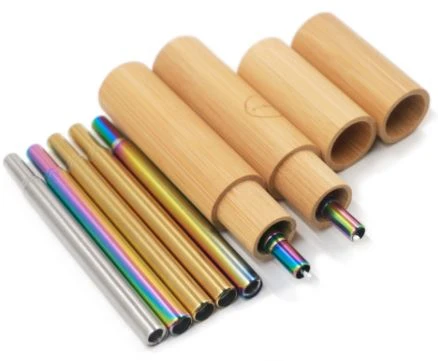
Stainless steel seamless steel pipe is a long strip of steel with a hollow section and no joints on the periphery.
Stainless steel welded steel pipe is also a kind of hollow section steel, but it is welded by rolling a plate into a steel pipe, so the welded steel pipe has a welding gap.
Features of stainless steel seamless pipe
First, the thicker the wall thickness of the product, the more economical and practical it is. The thinner the wall thickness, its processing cost will rise significantly; secondly, the product’s process determines its limited performance. The seamless steel pipe has low precision: uneven wall thickness, low brightness on the inside and outside of the pipe, high cost of sizing, and there are pits and black spots on the inside and outside that are not easy to remove; third, its detection and shaping must be processed offline. Therefore, it embodies its superiority in terms of high pressure, high strength, and mechanical structure materials.
Types of stainless steel pipes
The rolling method is divided into hot rolling, hot extrusion and cold drawing (rolling) stainless steel pipe.
Stainless steel pipe specifications and appearance quality
A. According to the provisions of GB14975-94 "Stainless Steel Seamless Steel Tubes", the steel pipes usually have a length (indefinite length) of hot-rolled steel pipes of 1.5-10m, and hot-extruded steel pipes are equal to and greater than 1m. For cold drawn (rolled) steel pipes with a wall thickness of 0.5~1.0mm, 1.0~7m; for those with a wall thickness greater than 1.0mm, 1.5~8m.
B. There are 45 kinds of hot-rolled (hot-extruded) steel pipes with a diameter of 54-480mm and 36 kinds with a wall thickness of 4.5-45mm. There are 65 kinds of cold drawn (rolled) steel pipes with a diameter of 6~200mm and 39 kinds with a wall thickness of 0.5~21mm.
C. There must be no cracks, folds, cracks, cracks, rolling, delamination and scarring defects on the inner and outer surfaces of the steel pipe. These defects should be completely removed (except for pipes for mechanical processing). The diameter exceeds the negative deviation. Other minor surface defects that do not exceed the allowable negative deviation may not be removed.
D. Allowable depth of straights. Hot-rolled and hot-extruded steel pipes, with a diameter less than or equal to 140mm, not greater than 5% of the nominal wall thickness, and the maximum depth is not greater than 0.5mm; cold drawn (rolled) steel pipes are not greater than 4% of the nominal wall thickness, and the maximum depth is not greater than 0.3 mm.
E. Both ends of the steel pipe should be cut at right angles and burrs should be removed.