Thread rolling-the best way to make external threads
Jun 17, 2020
Leave a message
The thread rolling machine is strong and the preferred method of production is smooth, precise and uneven male thread form. The thread rolling machine is different from other types of thread processes, such as cutting, grinding, and chasing.
Thread forming and thread rolling machines are used to form threads, and the former refers to the creation of internal threads and the latter external threads. In these two processes, the thread is formed into a blank shape tool, commonly known as \'rolling die of the thread\', just the blank, similar to knurling in the process. These processes are used for mass production because the typical production speed is about one piece per second. Forming and rolling to produce chipless and less material is necessary because the blank size starts to be smaller than a blank, the required thread cutting; usually 15 to 20% of the blank, saving material by weight. Rolled threads can be easily obtained due to the formation of fasteners from open blanks with recognized thread having a larger diameter than blank rods taken from; however, the thread can be cut or driven towards the blank to fill the neck and undercut without rolling, and Some fasteners will be pushed out by reducing the calf in the area where the gap will be pushed out to maintain a constant large diameter from the thread. Unless confronted, the end threads of the hot-rolled fasteners have a cup-shaped end, as the remaining material falls back in the blank space where the final thread count is evenly collapsed.
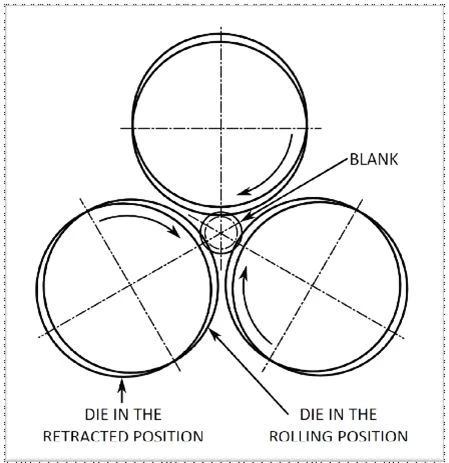
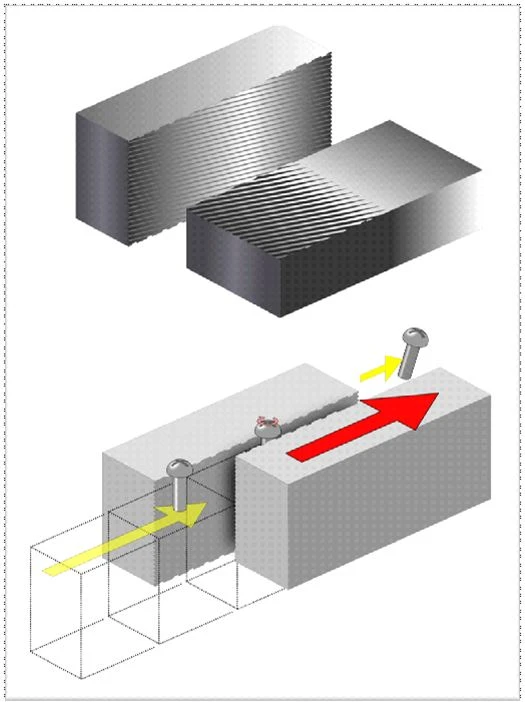
There are four main types of rolling threads, named configurations die: flat die, die two cylinders, three-die cylinder, planet die. The flat die system has two flat die heads. The bottom one is fixed and the other slides. The blank is placed on one end to fix the mold and then move past the blank, causing the blank to roll off the thread formed between the two molds on the slide. Before the moving mold reaches the end, its stroke is blank and the fixed mold is fixed in the completed form. The two-mold cylindrical process is used to produce threads up to 6 inches (150 mm) in diameter and 20 inches (510 mm) in length. There are two types of three-die process; for the first time there is a three-die head, moving from the center to the radial out to let the blank into the blanking die, and then closing and rotating the roller thread. This type of process is generally used for turret lathes and screw machines. The second form of self-opening die. This type is more common than the former, but the limit is unable to form the last to 2 1.5 threads on the shoulder. The molds of the planet were produced in large quantities using threads, to a diameter of 1 inch (25 mm).
Unit thread rolling
Planet Rub
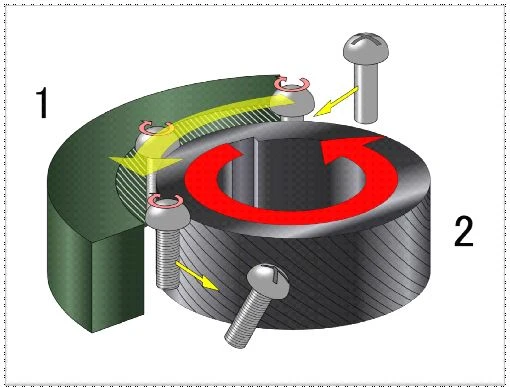
Two die cylinders rolling
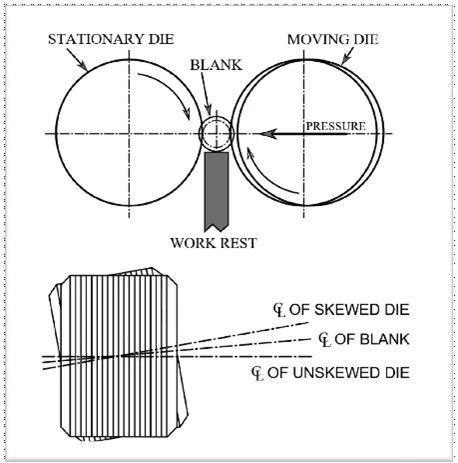
Three-mode cylindrical rolling