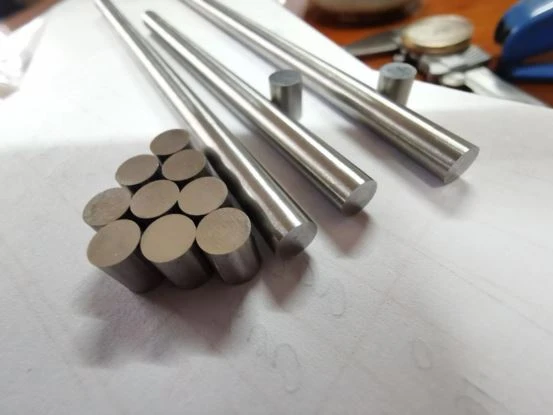
Stainless steel cutting performance classification
Aug 17, 2021
Leave a message
Classification according to the microstructure and heat treatment conditions of stainless steel is the most common method for classification of stainless steel cutting performance. This classification divides all stainless steel into three categories, namely hardened stainless steel (martensitic stainless steel) and non-hardened stainless steel (Ferritic stainless steel), austenitic stainless steel. Each of these three categories includes some free-cutting steel grades. Now these three categories of stainless steel are briefly introduced as follows:
The first category: hardened stainless steel (martensitic stainless steel)
This type of stainless steel is composed of 400 series of steel cables that can be hardened by heat treatment. Among them, free-cutting stainless steel types are: 416, 420F, 440F; general cutting performance is 403, 410, 420, 431, 440A, 440B, 440C Etc.; all of the above steels are martensitic stainless steel, so they are magnetic in the annealed state; they can be quenched and tempered to achieve various hardness levels. This type of steel is the easiest to cut and process is 416 and 416F, the most difficult to cut is 440C, because the high carbon content of 440C steel will cause severe wear of cutting tools.
The second category: non-hardened stainless steel (ferritic stainless steel)
This type of stainless steel includes those steels in the 400 series that cannot be significantly hardened by heat treatment. The structure of these steels is ferrite, so they are also magnetic in the annealed state. Among them, there are 430F for free-cutting stainless steel; the ones with general cutting performance are: 405, 430, 446
The third category: austenitic stainless steel
This type of stainless steel is the so-called nickel-chromium 300 series stainless steel. Recently, their scope has been expanded to include several Cr-Ni-Mn steels in the 200 series. The annealed structure of this type of steel is austenite, so it is basically non-magnetic and cannot be hardened by heat treatment. However, most of this type of stainless steel has a high work hardening rate, which of course is much higher than that of ferritic and martensitic stainless steels.
Among this type of steel, 303 and 303Se can be easily cut. It also includes some standard austenitic stainless steels, such as 201, 202, 301, 302, 304, 305, 308, 309, 310, 316, 317, 321, 347, etc. There are many other austenitic stainless steels that have not been included in the national standards. Compared with most martensitic or ferritic stainless steels, the cutting of austenitic stainless steels is much more difficult. The main difference is that the austenitic stainless steels in a small annealed state are very sticky and cut. Processing often produces fibrous cutting chips, which can only be avoided by using special processes. In addition, the high work hardening rate during processing will also cause cutting difficulties.
Please contact us if you need: zhang@pride-cnc.com.