

Several guidelines for machining titanium alloy parts
May 29, 2020
Leave a message
Titanium alloy parts processing, a processing technology with a lot of public opinion in the metal processing industry. Recently, there has also been a boom on the Internet. Many large, medium and small enterprises related to this process want to know more about this aspect, mainly to know what are the principles of titanium alloy parts processing. Let's take a look!
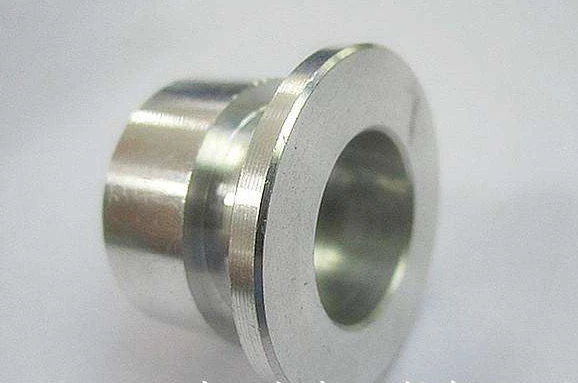
Several guidelines for the processing of titanium alloy parts:
1. The clamping force of the fixture
Titanium alloys are easily deformed, and the clamping force cannot be too large, especially during the finishing process, a certain amount of auxiliary support can be selected.
2. Feed depth and amount
It is a reasonable way to reduce the cutting speed and increase the cutting speed. If there is an oxide layer and a subcutaneous pore layer, a large cutting depth can directly cut to the basic non-oxide metal layer, thereby improving the tool life.
3. Cutting speed
Cutting speed is an important factor affecting the edge temperature. Excessive cutting speed will lead to overheating of the cutting edge, serious cutting edge bonding and diffusion wear, frequent tool regrind, and shorten tool life. At the same time, it will cause the surface layer of the titanium alloy workpiece to crack or oxidize, affecting its mechanical properties. Therefore, on the premise of ensuring the durability of the larger tool, the appropriate cutting speed must be selected to reduce costs and ensure the processing quality.
Fourth, the geometric angle of the tool
When cutting titanium alloys, choosing geometric parameters such as rake angle and rake angle suitable for the processing method and proper treatment of the tool tip have an important impact on cutting efficiency and tool life.
Tests have shown that in order to improve the heat dissipation conditions and strengthen the cutting edge during turning, the rake angle is generally 5 ° -9 °; to overcome the friction caused by springback, the rear surface of the cutter body is generally 10 ° -15 °; when drilling, The length of the drill bit is shortened, the thickness of the drill core and the amount of guide cone can be increased several times.
5. Cutting fluid
Cutting fluid is an indispensable lubricant in the processing of titanium alloys. The cutting fluid can not only effectively reduce the cutting temperature and reduce the heat generated by the tool and cutting friction, but also can be used as a lubricant in the cutting process to reduce the adhesion of titanium alloy chips and tool surface, improve efficiency, reduce costs, and extend the life of the tool. However, cutting fluids containing chlorine or other halogen elements and sulfur cannot be used, which will adversely affect the mechanical properties of titanium alloys.
The above are some of our guidelines for processing titanium alloy parts. From these points, we will not make too many mistakes when processing titanium alloy parts. For more exciting content about CNC precision parts processing, you can continue to pay attention Us, or call us directly.