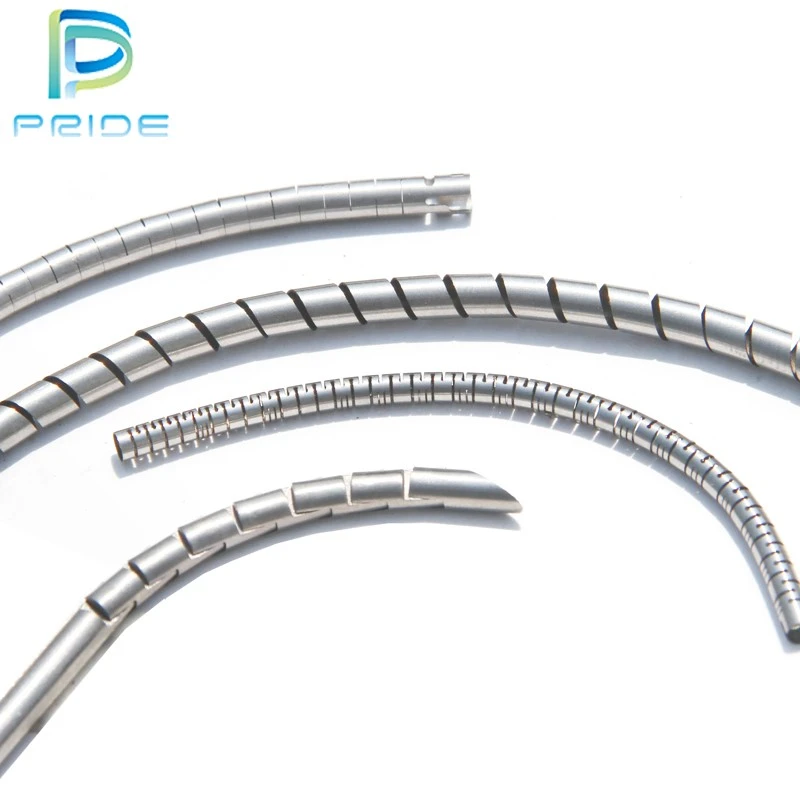
Precision Redefined: The Vital Role of Hypotubes in Medical Device Innovation
Dec 06, 2023
Leave a message
In the ever-evolving landscape of healthcare, precision and innovation stand as cornerstones of progress. The development of medical devices is no exception, with the demand for increased precision driving advancements in patient care. At the heart of this revolution lies hypotubes-ultra-thin, versatile, and biocompatible tubes that have become indispensable in the manufacturing of cutting-edge medical devices. In this exploration, we delve into the world of hypotubes and uncover their transformative role in medical device innovation.
Understanding Hypotubes
Hypotubes, at first glance, may appear as unassuming components, but their significance cannot be overstated. These slender tubes exhibit remarkable properties that make them ideal for medical applications. Hypotubes are typically constructed from materials like stainless steel or nitinol, known for their biocompatibility and resistance to corrosion. However, it is their minuscule dimensions-sometimes measuring less than a millimeter in diameter-that truly set them apart. This thinness allows for the creation of remarkably precise medical instruments and devices.
Navigating Minimally Invasive Surgery
The field of surgery has witnessed a paradigm shift in recent years, with an increasing focus on minimally invasive techniques. Smaller incisions, reduced trauma, and quicker recovery times have become the goals. Hypotubes have played a pivotal role in making these goals achievable. By serving as the building blocks for miniature surgical instruments, such as endoscopes and laparoscopic tools, hypotubes enable surgeons to access and treat anatomical sites with unprecedented precision. These instruments, with their hypotube components, have become essential in a wide range of surgical procedures.
Cardiovascular Innovations
The cardiovascular arena is another area where hypotubes shine brightly. The delicate nature of the vascular system demands precision and flexibility in medical devices. Hypotubes, with their slender profiles, have become indispensable in the manufacturing of devices like catheters, guide wires, and stents. In cardiology, where millimeter-level accuracy can be a matter of life and death, these tiny tubes ensure that medical interventions are as effective and safe as possible.
Neurology and Neurosurgery
The field of neurology and neurosurgery presents some of the most intricate and delicate challenges in medicine. Here, hypotubes have found their niche in the development of devices such as neurovascular catheters and deep brain stimulation leads. These devices, designed to interface with the brain and nervous system, demand the utmost precision. Hypotubes deliver the required flexibility and control, making them indispensable tools for neurosurgeons and neurologists alike.
Implantable Medical Devices
Implantable medical devices, ranging from pacemakers to cochlear implants, rely on the precision of hypotubes. These devices must seamlessly integrate with the human body and function flawlessly for extended periods. Hypotubes, often hidden within these implants, provide the necessary structural support and pathways for electrical signals or fluid flow. The biocompatible materials used in hypotubes ensure that they do not elicit adverse reactions, making them ideal for implantable applications.
Endoscopy Advancements
Endoscopy has greatly benefited from the precision of hypotubes. These thin tubes serve as the conduits for light, imaging, and instrumentation within endoscopes. By allowing for the precise manipulation of tiny cameras and surgical tools, hypotubes have enhanced the capabilities of endoscopic procedures. As a result, diagnoses are more accurate, treatments are less invasive, and patient recovery times are shorter.
Manufacturing Challenges and Solutions
Manufacturing hypotubes to meet the exacting standards of the medical industry presents unique challenges. Achieving consistent wall thickness, surface finish, and dimensional accuracy at such small scales requires advanced machining techniques and rigorous quality control. Precision machining, including methods like electrochemical machining (ECM) and laser cutting, is often employed to craft hypotubes with utmost precision. Strict quality control measures ensure that each hypotube meets the exacting standards required for medical applications.
Future Horizons
The future of hypotubes in medical device innovation holds great promise. As technology continues to advance, the medical industry is poised for further breakthroughs. Emerging trends such as nanoscale applications and smart medical devices are on the horizon, and hypotubes are expected to play a central role in these developments. The quest for precision in healthcare will persist, and hypotubes will remain essential tools in the pursuit of better patient outcomes.
Conclusion
In conclusion, the marriage of precision and innovation in healthcare is epitomized by hypotubes. These unassuming yet remarkable components have transformed the landscape of medical device manufacturing. From enabling minimally invasive surgeries to enhancing the accuracy of diagnoses, hypotubes have left an indelible mark on patient care. As we look to the future, the role of hypotubes in medical device innovation is set to expand even further, promising a healthcare landscape where precision is redefined, and patient well-being takes center stage.