

Method for processing aluminum alloy to avoid deformation of parts
Jun 10, 2020
Leave a message
Aluminum alloy is an important industrial raw material. Due to its relatively low hardness and large thermal shrinkage coefficient, it is prone to deformation during the machining of thin-walled and thin-plate parts. In addition to improving tool performance and pre-adopting aging treatment to eliminate internal stress of data, from the perspective of processing technology, it is also possible to take some wrists to minimize processing deformation of data.
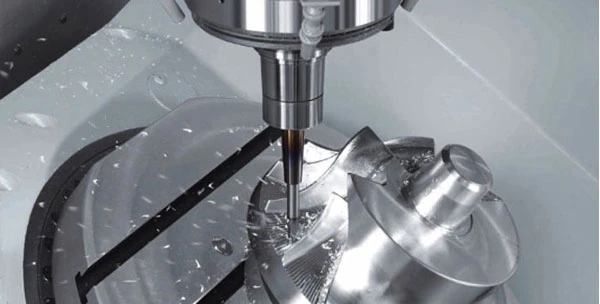
Regarding aluminum alloy parts with large machining allowances, in order to invent better heat dissipation conditions and reduce thermal deformation, it is necessary to prevent the heat from being concentrated too much. For example, there is a 90 mm thick aluminum alloy plate, which needs to be milled to 60 mm thick. If one side is milled, the other side is turned over immediately to mill the other side, because each side is processed to the size of the back, continuous processing The larger the margin, the problem of heat concentration will be formed.
The flatness of the milled aluminum alloy plate can only reach 5 mm. If the symmetrical processing method of repeated feed on both sides is adopted, each surface is processed at least twice until it reaches the final size, which is conducive to heat dissipation and the flatness can be controlled at 0.3 mm.
Layered repeated processing method When there are multiple cavities on the aluminum alloy plate parts to be processed, if one cavity is processed one after another, it is easy to cause the cavity wall to be deformed due to uneven stress. A good processing method is to adopt the layered and repeated processing method, that is, to stop processing all the cavities at the same time, but not to complete the processing at one time, but to divide into several layers and process each layer to the required size. In this way, the stress of the parts will be more average, and the probability of deformation is smaller.
Choosing the right amount of cutting to choose the right amount of cutting can effectively reduce the cutting force and heat during the cutting process. During the machining process, the excessive amount of cutting will cause the cutting force of one pass to be too large, which is easy to form the deformation of the parts, and it will affect the rigidity of the machine tool spindle and the durability of the tool. Among the various factors of the cutting amount, the big influence on the cutting force is the amount of back eating.
It is said that reducing the amount of back-eating knives is beneficial to ensure that the parts are not deformed, but at the same time it will reduce the processing efficiency. The high-speed milling of CNC machining can deal with this problem. It is only necessary to reduce the amount of back-feeding, and feed accordingly, and increase the speed of the machine tool, which can not only reduce the cutting force, but also ensure the processing efficiency.