

Introduction to the manipulator
Apr 01, 2021
Leave a message
Introduction to the manipulator
An automatic operating device that can imitate certain motion functions of human hands and arms to grasp, transport objects or operate tools according to a fixed program. Manipulators are the earliest industrial robots and the earliest modern robots. They can replace human labor to achieve mechanization and automation of production, and can operate in harmful environments to protect personal safety. Therefore, they are widely used in machinery manufacturing, metallurgy, Departments of electronics, light industry and atomic energy.
Chinese name manipulator, foreign name machine hand type, industrial robot function to replace people's heavy labor
Drive mode: hydraulic, pneumatic, electric, mechanical composing actuator, drive mechanism and control system
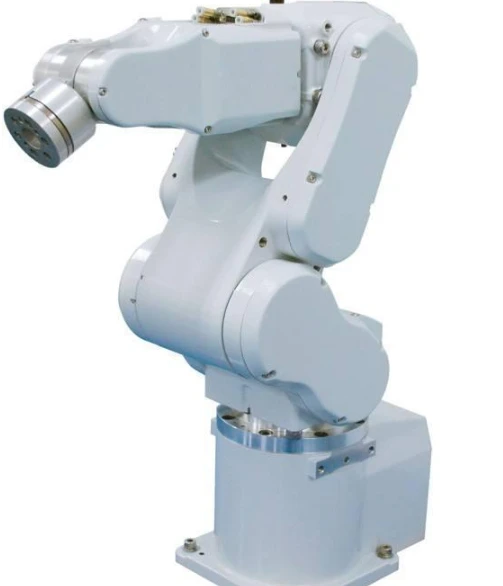
Introduction
In today's life, with the rapid advancement of science and technology, the biggest difference between a robotic arm and a human arm lies in its flexibility and endurance. That is, the biggest advantage of the manipulator is that it can repeat the same action and never feel tired under normal mechanical conditions! The application of robotic arms will also become more and more extensive. The robotic arm is a high-tech automatic production equipment developed in recent decades. It has the accuracy of operations and the ability to complete operations in the environment. An important branch of industrial manipulator robots.
Types can be divided into hydraulic, pneumatic, electric, and mechanical according to the driving mode. The feature is that it can be done through programming
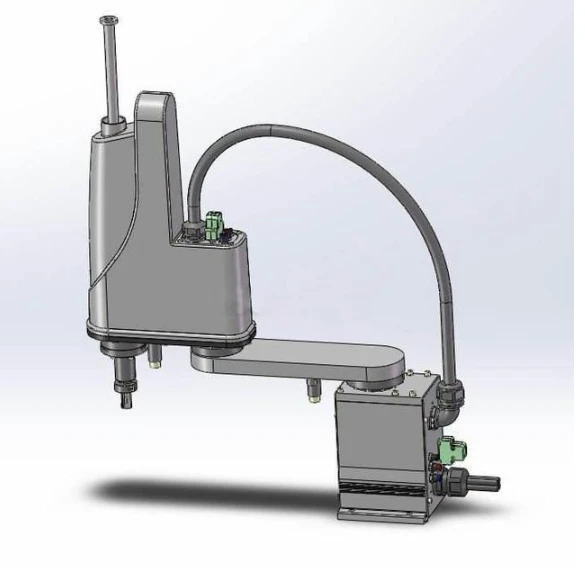
To achieve various expected operations, the structure and performance have the advantages of both human and mechanical handpieces.
constitute
The manipulator is mainly composed of three parts: the actuator, the drive mechanism and the control system. The hand is a part used to hold the workpiece (or tool). According to the shape, size, weight, material and operation requirements of the object to be grasped, there are various structural forms, such as clamping type, holding type and adsorption type, etc. . The movement mechanism enables the hand to complete various rotation (swing), movement or compound movements to achieve the specified actions and change the position and posture of the object being grasped. The independent movement methods such as lifting, telescoping, and rotating of the movement mechanism are called the degrees of freedom of the manipulator. In order to grab an object at any position and orientation in space, 6 degrees of freedom are required. The degree of freedom is a key parameter of the manipulator design. The more degrees of freedom, the greater the flexibility of the manipulator, the wider the versatility, and the more complex its structure. Generally, the dedicated manipulator has 2 to 3 degrees of freedom. The control system completes specific actions by controlling the motors of each degree of freedom of the manipulator. At the same time, it receives feedback from the sensor to form a stable closed-loop control. The core of the control system is usually made up of micro-control chips such as single-chip microcomputer or dsp, and the required functions are realized through programming.
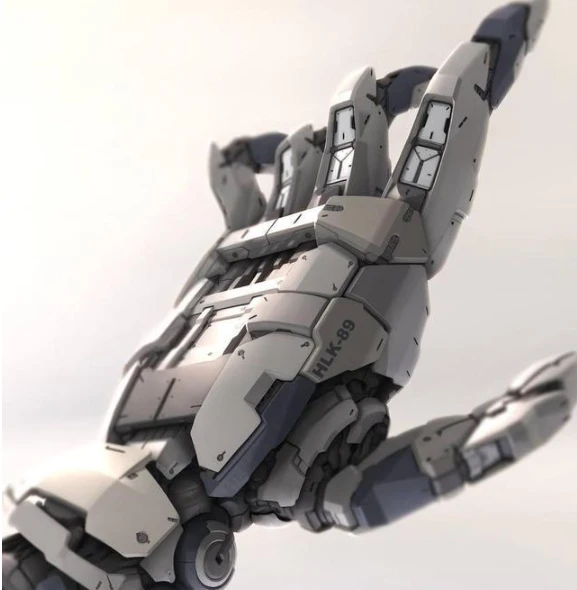
Executive structure
The actuator of the manipulator is divided into hands, arms, and torso; 1. The hands and hands are installed on the front end of the arms. The inner hole of the arm is equipped with a transmission shaft, which can transmit the application to the wrist to rotate, stretch the wrist, and open and close the fingers. The structure of the manipulator hand imitates a human finger, and is divided into three types: no joints, fixed joints and free joints. The number of fingers can be divided into two fingers, three fingers, and four fingers, among which two fingers are the most used. According to the shape and size of the clamping object, it can be equipped with various shapes and sizes of chucks to meet the needs of the operation. The so-called hands without fingers generally refer to vacuum suction cups or magnetic suction cups. 2. The function of the arm is to guide the fingers to grasp the workpiece accurately and transport it to the desired position. In order for the manipulator to work correctly, the 3 degrees of freedom of the arm must be accurately positioned. 3. Torso The torso is a bracket for installing arms, power sources and various actuators.