Innovative Technologies in Drone Manufacturing: Applications & Impact
Mar 28, 2024
Leave a message
The realm of drone manufacturing is witnessing a paradigm shift, driven by relentless innovation and technological advancement. In this article, we delve into the profound impact of innovative technologies on drone manufacturing processes, exploring their applications and transformative potential.
Advanced Sensor Technology
Development and Application of Sensor Technology
Sensor technology lies at the heart of drone manufacturing, facilitating precise navigation, obstacle avoidance, and data acquisition. Recent advancements in sensor technology, including LiDAR, GPS, and inertial measurement units (IMUs), have revolutionized drone capabilities. LiDAR sensors, for instance, enable high-resolution mapping and terrain modeling, enhancing the accuracy of aerial surveys and environmental monitoring tasks.
Visual Recognition and Imaging Technology
Visual recognition and imaging technologies play a pivotal role in enhancing situational awareness and facilitating autonomous operations. Computer vision algorithms enable drones to recognize and track objects in real-time, empowering applications such as search and rescue missions, infrastructure inspection, and security surveillance. High-resolution imaging sensors capture detailed aerial imagery, enabling precise analysis and decision-making in various industries, including agriculture, construction, and disaster response.
Artificial Intelligence and Autonomous Flight Technology
Application of Machine Learning in Flight Control
Machine learning algorithms optimize flight control systems, enabling drones to adapt to dynamic environments and perform complex maneuvers with precision. Reinforcement learning techniques enhance flight stability and response times, particularly in adverse weather conditions or challenging terrain. By leveraging vast datasets and iterative learning processes, machine learning algorithms continuously improve drone performance and operational efficiency.
Development and Deployment of Autonomous Flight Systems
Autonomous flight systems empower drones to execute predefined missions autonomously, without human intervention. Advanced path planning algorithms optimize flight paths and avoid obstacles in real-time, ensuring safe and efficient navigation in complex environments. Autonomous drones are increasingly deployed in applications such as aerial mapping, infrastructure inspection, and parcel delivery, streamlining operations and reducing human workload.
New Materials and Manufacturing Processes
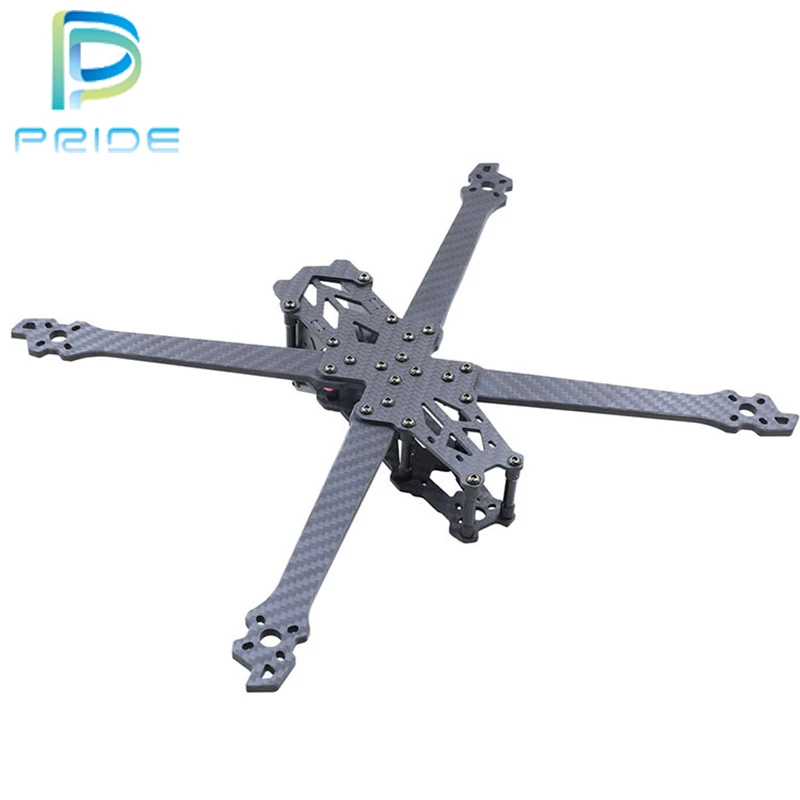
Integration of Lightweight Materials Lightweight materials, such as carbon fiber composites and lightweight alloys, enhance drone performance by reducing weight and improving structural integrity. Carbon fiber frames and components offer exceptional strength-to-weight ratios, enabling drones to achieve longer flight times and higher payloads. Moreover, advanced manufacturing techniques, such as additive manufacturing and composite layup, enable the production of complex, lightweight structures with minimal material waste.
Advancements in 3D Printing Technology
3D printing technology revolutionizes drone manufacturing by enabling rapid prototyping, customized design iterations, and on-demand production. Additive manufacturing processes, such as fused deposition modeling (FDM) and selective laser sintering (SLS), enable the fabrication of intricate components with high precision and repeatability. 3D printing also facilitates the integration of functional features, such as internal channels for wiring and cooling, optimizing drone performance and functionality.
Future Outlook and Challenges
Trends in Technological Development and Application
The future of drone manufacturing is poised to witness further advancements in sensor technology, artificial intelligence, and materials science. Emerging technologies, such as quantum sensors, bio-inspired algorithms, and meta-materials, hold the potential to revolutionize drone capabilities and unlock new applications in fields such as healthcare, environmental monitoring, and urban air mobility.
Addressing Challenges and Solutions
While innovative technologies offer unprecedented opportunities, they also present challenges such as regulatory compliance, cybersecurity risks, and ethical considerations. Collaborative efforts between industry stakeholders, regulatory bodies, and research institutions are essential to address these challenges and foster responsible innovation. By establishing robust frameworks for technology assessment, data privacy, and safety standards, the drone manufacturing industry can realize its full potential and drive positive societal impact.
Conclusion
In conclusion, the integration of innovative technologies is reshaping the landscape of drone manufacturing, ushering in an era of unprecedented capability, efficiency, and versatility. From advanced sensor systems and autonomous flight algorithms to lightweight materials and additive manufacturing techniques, these technologies are propelling the drone industry towards new frontiers of exploration and innovation. As we navigate the evolving technological landscape, collaboration, foresight, and ethical stewardship will be paramount in ensuring that drone technology continues to serve humanity's needs while respecting societal values and environmental sustainability.