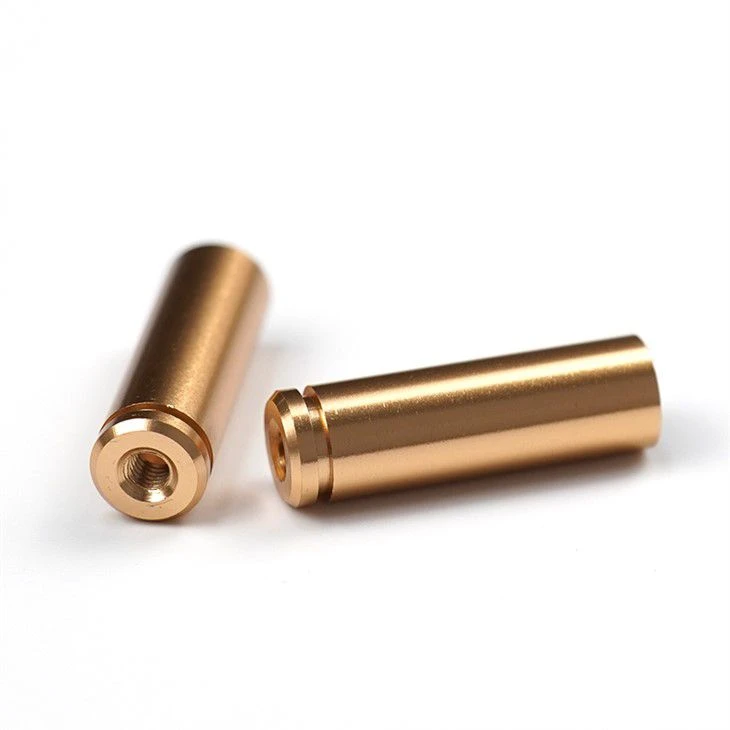
Hardware Fastener Bolt With Internal Thread
May 08, 2014
Leave a message
Forging crack
Inappropriate forging process, such as poor heating and cooling temperature control, incorrect operation, dent and folding of the workpiece, etc., the cracks are generally dense and clear, or folded or bent. The metal undergoes rheology during the forging process. Due to the varying degrees of force and deformation of each part, the resulting cracks are often related to the internal defects of the steel ingot. For example, when there are bubbles under the forging blank, forging cracks are easy to form. Such forging cracks often appear on the surface of forgings and are easier to find during work. Also, when there are shrinkage cavities or inclusions on the forging blank, forging cracks and shrinkage cavities are easily caused. The cracks formed are generally relatively long, appearing in the core of the forging, and belong to internal cracks, while the cracks formed by inclusions or interlayers are slender and have irregular distribution. The probability of this situation is relatively small. If the direction of the cracks is not coincident, even ultrasonic detection may not be able to detect all of them.
Please contact us at zhang@pride-cnc.com