

Discussion on surface drawing processing method
Mar 24, 2021
Leave a message
Discussion on surface drawing processing method
In our lives, different surface drawing processes can be seen everywhere. The surface drawing process is a surface treatment method that forms lines on the surface of the workpiece by grinding products to achieve a decorative effect. Today, I will discuss with you the surface drawing processing methods from the application, classification, and processing methods of drawing.
01
Wire drawing application
Metal surface treatment generally has many different forms as follows:
Sandblasting (to form a matte pearl silver surface)
Electroplating (covering a layer of other metals)
Polishing (to form a mirror surface)
Spraying (covering other non-metallic coatings)
Embossing (compressing various textures)
Wire drawing (form a satin-like effect)
Wire drawing treatment can make the metal surface get non-mirror-like metallic luster
Has a very strong decorative effect
The products that are processed by wire drawing around us are:
Swipe right to view the next picture ☞
02
Classification of surface drawing
The common surface drawing on the market is mainly divided into two types: hairline and snow pattern
The effect of wire drawing is usually determined by the processing method of wire drawing, the grinding products used and the process parameters. Let us further discuss the processing methods of wire drawing.
03
Processing method of surface drawing
The processing method of surface drawing should be selected according to the requirements of drawing effect and the size and shape of different workpiece surfaces. There are two ways of wire drawing: manual wire drawing and mechanical wire drawing.
▶ 3M has a complete range of industrial scouring pad series products to meet common manual drawing needs
▶Common mechanical wire drawing methods are divided into flat pressure type abrasive belt wire drawing, non-woven roller brush wire drawing, wide abrasive belt wire drawing and centerless grinding wire drawing.
Flat pressure type abrasive belt drawing
It is suitable for small-area flat brushed surfaces, such as the brushing of digital camera casings, and the brushing of mobile phone casings.
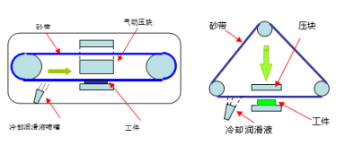
Features
Straight wire with continuous pattern
Suitable for plane
Wide selection of abrasive belt size
Easy to generate a lot of heat
3M has various types of pyramid series abrasive belts and non-woven nylon abrasive belts, which can meet the process requirements of flat-pressing abrasive belts.
Non-woven fabric roller brush drawing
It is suitable for notebook magnesium/aluminum alloy panel, keyboard board, LCD frame of mobile phone, battery cover, camera protection board, camera sliding cover, etc.
Features
Has good adhesion
Suitable for large area drawing
Avoid a lot of heat generation
Use non-woven structure to grind products, with good cold grinding effect
Since the non-woven roller brush can be very wide, the processed sheet can also be very long
It can be operated continuously, which improves the efficiency of production
Wide abrasive belt drawing
It is suitable for making stainless steel plates, aluminum alloys and other plates into wire drawing semi-finished products, so as to further produce products using plates as raw materials, such as stainless steel elevator wire drawing door panels, stainless steel counters, aluminum alloy chassis, etc.
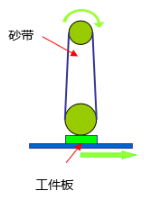
Features
Suitable for flat wire drawing
Especially suitable for sheet metal processing
The drawing effect is usually snow pattern
Requires better conformability of the abrasive belt
3M's non-woven abrasive belt has better conformability than traditional coated abrasive belts.
Heartless Grinding
Suitable for round tube-shaped workpieces, such as handles, etc.
Features
Use non-woven brass wheels or abrasive belts for wire drawing
The drawing effect is usually short silk