Decoding the Mechanics: How Dental Turbine Rotors Power Precision Dentistry
Dec 29, 2023
Leave a message
The Dental Turbine Rotor is a crucial component in the field of dentistry, responsible for the high-speed rotation essential in various dental procedures. Understanding the working principles of these small yet powerful devices is vital for both dental professionals and patients. In this article, we will delve into the intricate workings of Dental Turbine Rotors, shedding light on their fundamental principles and the technology that drives them.
Understanding Dental Turbine Rotor
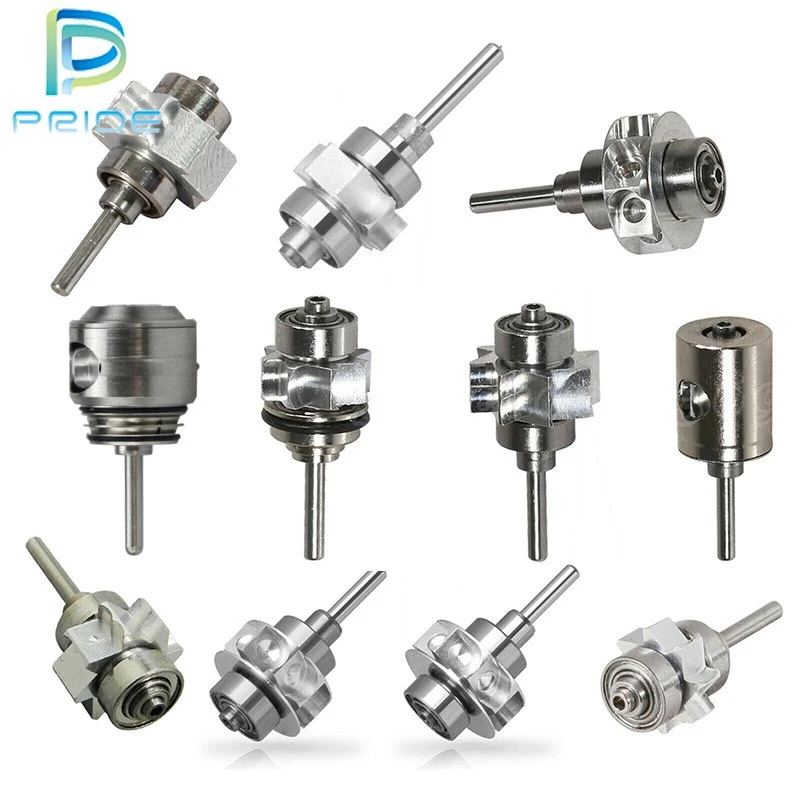
To comprehend the functioning of Dental Turbine Rotors, let's start by defining what they are and how they are structured. A Dental Turbine Rotor is a compact but highly efficient device that consists of several key components. At its core, it comprises a rotor, bearings, a turbine, and a drive mechanism. The rotor, often made from precision materials, is the central part responsible for the rapid rotation.
High-speed rotation: core principles
The primary principle underlying Dental Turbine Rotor operation is high-speed rotation. When activated, the rotor within the device rapidly spins, translating this rotational motion into the necessary force for dental procedures. Achieving high speeds is essential in tasks like drilling, cutting, or polishing teeth. This rotation is facilitated by the drive mechanism, which can be powered either pneumatically or electrically.
Pneumatic vs. Electric: Dental Turbine Rotors can be powered by compressed air (pneumatic) or electric motors (electric). Pneumatic versions are known for their lightweight and ease of control, while electric models offer precise speed regulation.
Power source: pneumatic or electric
Dental Turbine Rotors can be classified into two main categories based on their power source: pneumatic and electric. Pneumatic turbine rotors rely on compressed air to generate the rotational force, while electric ones use electrical power. The choice between these power sources depends on various factors, including the dental procedure's requirements and the dentist's preferences.
Pneumatic Dental Turbine Rotors: These devices are known for their lightweight design and ease of control. Compressed air is supplied to the rotor, which drives the rapid rotation required for dental procedures. Pneumatic turbine rotors are often favored for their agility and precision in tasks such as cavity preparation and polishing.
Electric Dental Turbine Rotors: Electric turbine rotors are powered by electrical motors, allowing for precise speed regulation. They are commonly used in dental practices that require a wider range of speed control, making them suitable for diverse procedures.
Braking system: ensuring safety
While high-speed rotation is essential, safety remains paramount during dental procedures. Dental Turbine Rotors are equipped with brake systems to control the rotational speed and ensure the safety of both the dentist and the patient. The brake system is responsible for slowing down and stopping the rotor's rotation when necessary.
The brake system functions through a combination of mechanical and electronic components. When a procedure requires a reduction in speed or the rotor to come to a complete halt, the brake is engaged, and the rotor's motion is safely controlled.
High-speed ceramic bearings: reduce friction
Dental Turbine Rotors often incorporate high-speed ceramic bearings to reduce friction and enhance performance. These ceramic bearings are designed to withstand the high rotational speeds and provide a smoother operation. Their exceptional durability and low friction properties contribute to the overall efficiency of the rotor.
Cooling System: Maintaining Performance
Maintaining optimal performance is crucial for Dental Turbine Rotors, and one key aspect of this is temperature control. Dental procedures can generate heat, and excessive heat can lead to reduced performance and potential damage. Therefore, Dental Turbine Rotors are equipped with cooling systems to dissipate heat and ensure consistent operation.
These cooling systems often involve the circulation of air or water around the rotor, effectively preventing overheating and preserving the device's functionality.
Application examples: Use in dentistry
Let's explore how the principles discussed above are put into action in various dental procedures:
Cavity Preparation: Dental Turbine Rotors are commonly used for cavity preparation, where the high-speed rotation allows for precise and efficient removal of decayed tooth material.
Polishing and Finishing: In cosmetic dentistry, these rotors play a crucial role in polishing and finishing procedures, achieving a smooth and aesthetically pleasing tooth surface.
Restorative Dentistry: Dental professionals rely on turbine rotors for tasks like crown preparation and fitting, ensuring a snug and functional fit.
Endodontics: During root canal treatments, precise and controlled rotation is essential for cleaning and shaping the root canals.
Orthodontics: Dental Turbine Rotors are also used for bracket bonding and adjustments in orthodontic procedures.
Future development trends: technological innovation
The field of dental technology is continuously evolving, and Dental Turbine Rotors are no exception. Advancements in materials, manufacturing techniques, and design are driving innovation in dental rotor technology. Miniaturization and enhanced materials are making these rotors even more efficient and durable. Additionally, there is a growing focus on noise reduction and improved ergonomics to enhance the patient and dentist experience.
conclusion
In conclusion, Dental Turbine Rotors are remarkable devices that make many dental procedures possible. Understanding their working principles, power sources, safety features, and applications is essential for dental professionals and patients alike. As technology continues to advance, these devices will play an increasingly vital role in delivering high-quality dental care.