

Comprehensive List Of Orthopedic Surgical Instruments
Jul 11, 2024
Leave a message
Surgery is a crucial medical treatment method in modern medicine, especially in orthopedic surgery. in everyday language, people sometimes refer to orthopedic surgeons as "carpenter doctors." orthopedic surgeries often use tools similar to those of carpenters, like nails, hammers, and chisels. This parallel can be both surprising and unsettling for many.
Surgery, like orthopedic surgery, depends on the surgeon's skill, experience, and having the right tools - orthopedic surgical instruments. Sometimes, these surgical instruments can greatly enhance efficiency and even determine the success or failure of the surgery.
How do surgical tools affect results? Which medical instruments do orthopedic surgeons commonly use in surgeries? Pride will introduce you to the commonly used trauma orthopedic surgical instruments.
Ⅰ Scalpel
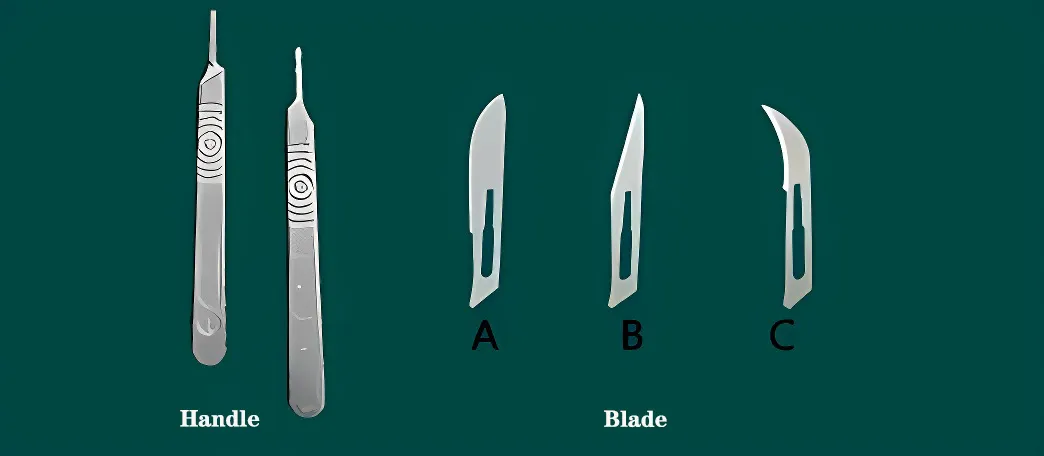
A scalpel consists of a handle and a blade. The blade is disposable, while the handle is not.
Blades generally come in three types: circular blades, pointed blades, and crescent blades, as shown in Figures A, B, and C.
Circular blades are used for excising skin, subcutaneous tissue, fascia, muscles, etc.
Pointed blades are used for excising gastrointestinal tract, blood vessels, nervous tissues, and heart tissues.
Crescent blades are used for excising palatopharyngeal tissues.
Ⅱ Surgical Scissors
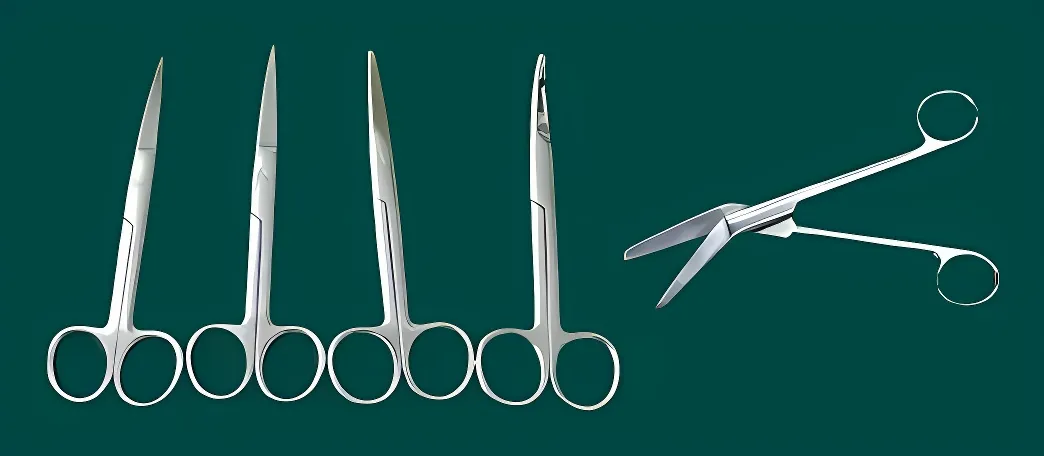
Surgical scissors can be divided into six types: fine scissors, tissue scissors, suture scissors, bandage scissors, bone scissors, and wire scissors.
Each category of surgical blades varies in length, shape (straight or curved), tip type (sharp or blunt), and blade thickness.
Long curved scissors: Used to dissect deep tissues.
Short curved scissors: Used to dissect superficial tissues.
Thin-blade sharp curved scissors: Used to dissect delicate tissues.
Thick-blade blunt curved scissors: Used to cut ligaments or dense tissues.
Straight scissors: Used to cut sutures, dressings, etc.
Bone scissors: Used to cut osseous tissues.
Wire scissors: Used to cut wires, Kirschner wires, and other metallic materials.
Ⅲ Surgical Forceps
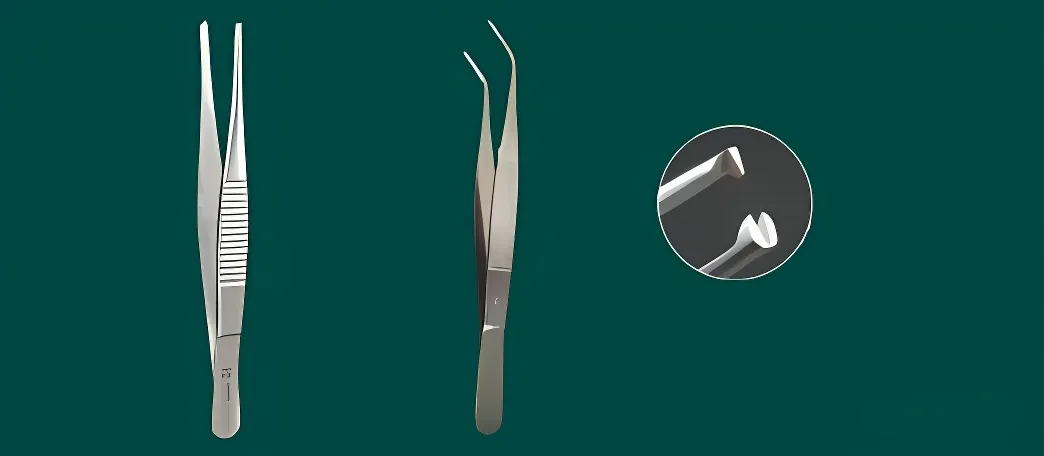
Surgical forceps come in various lengths, curvatures, thicknesses, tips (with or without teeth), and serrations.
Surgeons primarily use them to grasp, manipulate, dissect, and suture tissues during surgery.
Ⅳ Needle Holder
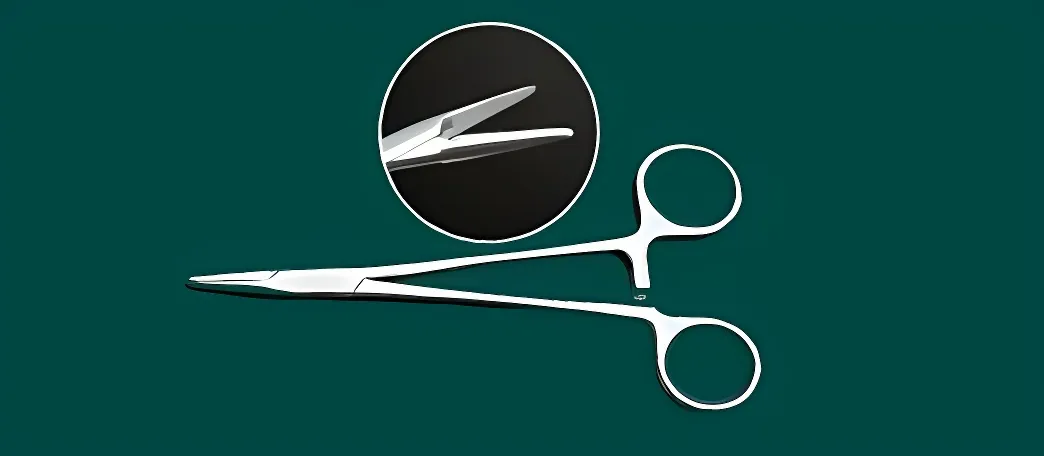
A needle holder, also known as a needle driver, comes in different lengths and thicknesses. It looks like a hemostat, but with special ends for holding surgical needles when sewing tissue.
Different sizes of surgical needles require corresponding sizes of needle holders. Surgeons require needle holders with finer or wider jaws to accommodate different sizes of surgical needles.
For sewing deep tissues, use longer needle holders. For sewing superficial tissues, use shorter ones.
Ⅴ Retractor
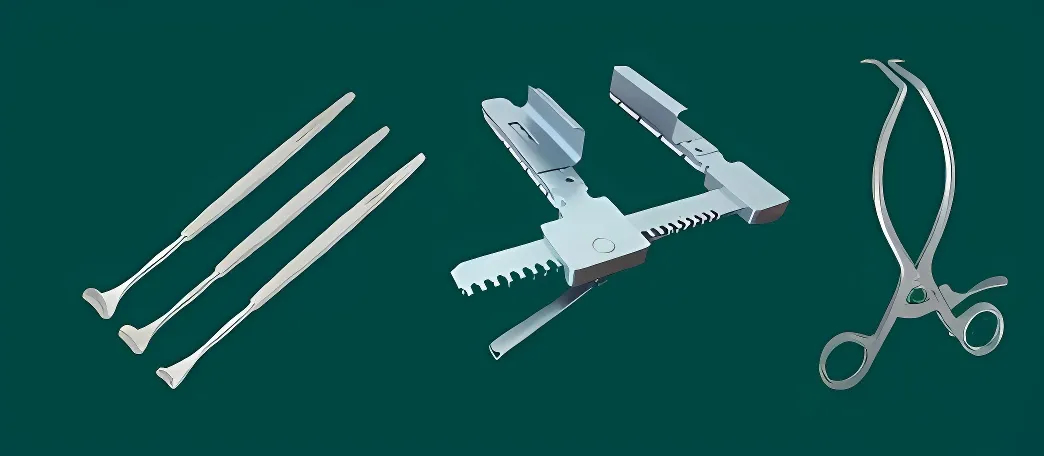
Retractors, also known as hooks or retracting instruments, can be categorized into automatic retractors and handheld retractors. Surgeons use them actively to retract and expose different layers and depths of tissues during surgery.
Retractors vary widely in size, shape, and function.
Common types include:
Brain spatula: Smooth surface, highly moldable, used to retract delicate brain tissues.
Mastoid retractor: Used to retract and expose mastoid and scalp tissues through small incisions.
Mouth gag: Used to open the upper and lower jaws for oral cavity exposure.
Thyroid retractor: Used for shallow incisions to expose the thyroid glands. Available in various sizes and lengths.
Ⅵ Periosteal Elevator
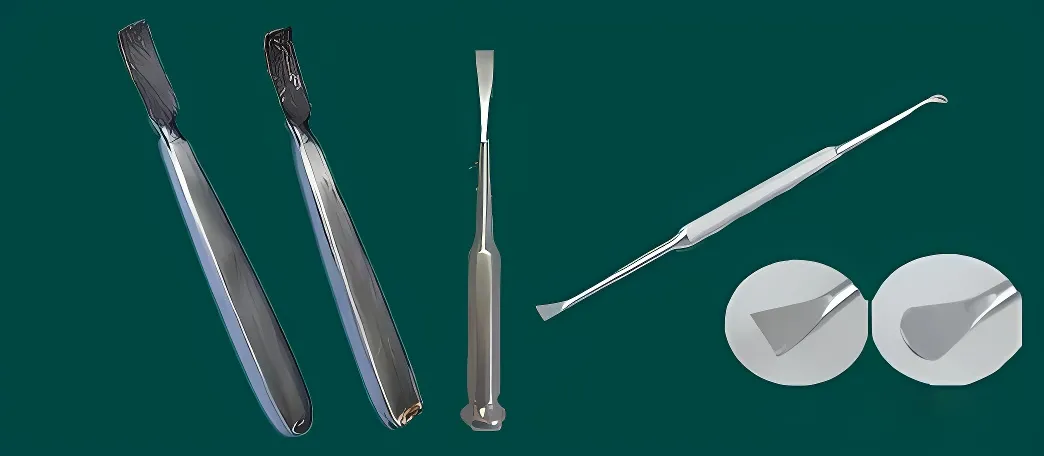
A periosteal elevator, also known as a bone elevator or periosteal elevator, is used to separate periosteum and soft tissues from bone surfaces. It comes in various shapes and degrees of sharpness.
Ⅶ Bone Drill / Saw
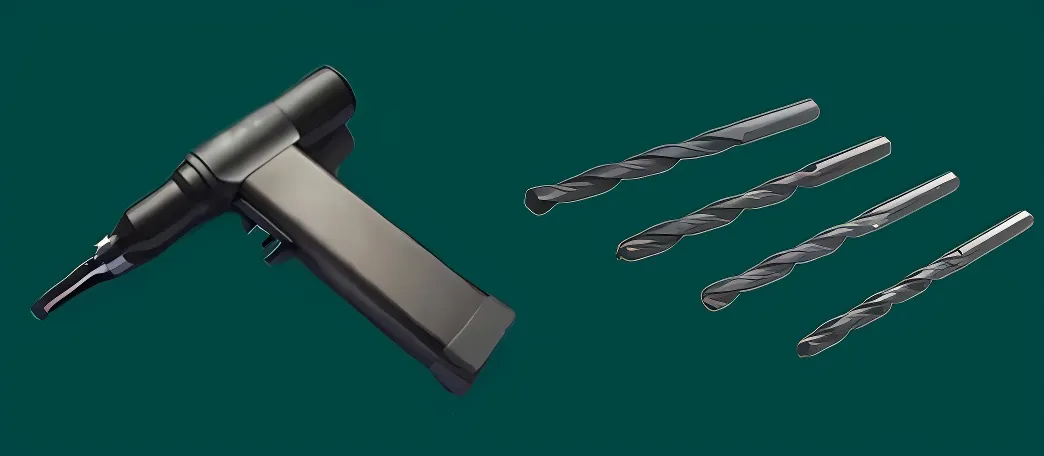
Bone drills are available in manual and electric types. Manual drills are now less common because their simple construction and limited use for drilling holes in bones.
Electric drills, on the other hand, are more common and consist of a motor, battery and various sizes and shapes of blades. By replacing the drill bit with a saw blade, they can use them as electric saws for bone cutting and bone sectioning. Electric bone drills assist in reducing surgical time to some extent.
Ⅷ Osteotome
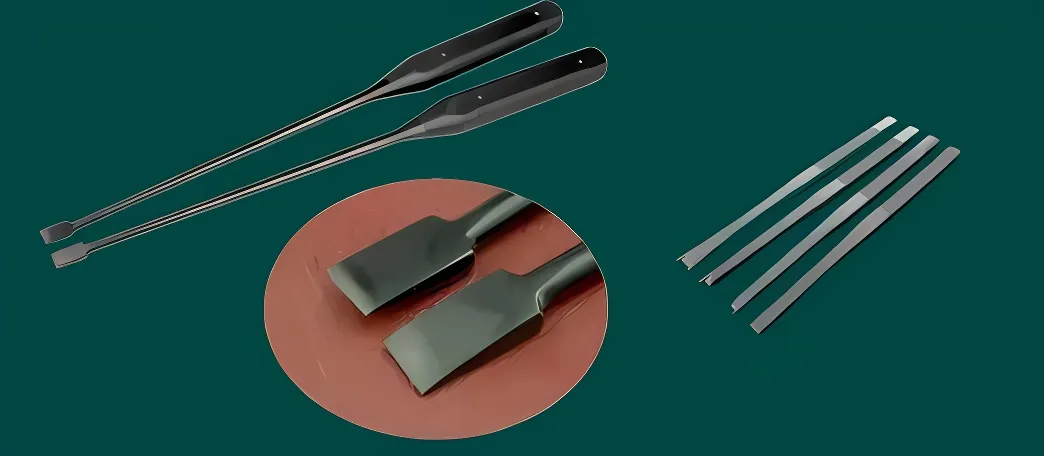
An osteotome is a surgical instrument used for cutting or preparing bones during orthopedic surgeries. It comes in different types like large, small, flat, round, and hollow osteotome, with straight or curved blades. Key technical indicators include a sharp cutting edge without edge collapse or curling.
Ⅸ Bone Mallet and Scraper
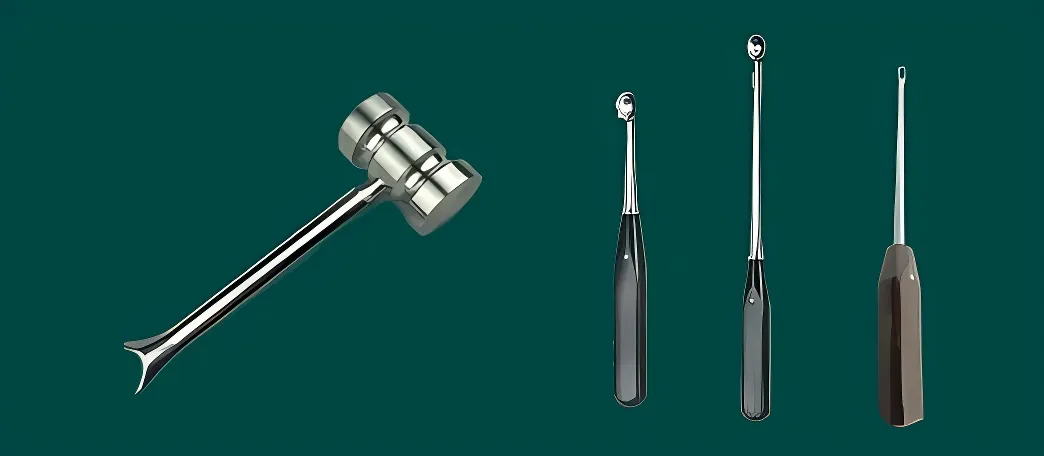
A bone mallet is used for direct or indirect impact functions. Surgeons categorize it into general-purpose bone mallets and specialized bone mallets. The mallet's head consists mostly of metal, with surfaces covered in hard wood or polyethylene.
Bone mallets are classified by weight and size:
Lightweight mallets: Mainly used for finger bones, toe bones, and small joint surgeries.
Medium mallets: Mainly used for radius, ulna, and spine surgeries.
Heavy mallets: Used for femur, tibia, humerus, and large joint surgeries.
Surgeons use a bone scraper to remove necrotic bones, granulation tissues, and scar tissues from bone cavities. Different types of curved long-handled scrapers are needed for surgeries to clear spinal tuberculosis lesions. These scrapers help access lesions from different angles and remove necrotic bones and tissues.
Ⅹ Bone-Holding Forceps
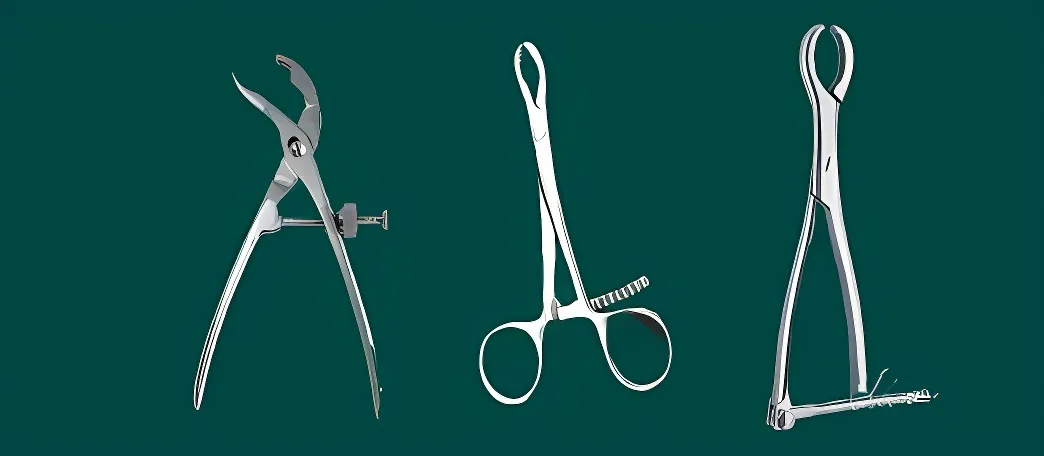
Surgeons use bone-holding forceps to grasp bones during orthopedic surgeries, providing fixation and reduction functions. Typically, they consist of handles, heads, and shaft screws, with toothed surfaces inside the heads. The handles can be equipped with locking devices and are generally made of stainless steel.
Bone Holding Forceps are available in curved, straight (with and without lock), three-pronged, automatic center, and serrated.
Three-pronged bone holding forceps have a three-pronged clamping end. They are available in large, medium, and small sizes based on external dimensions.
Automatic center bone holding forceps are available in large and small sizes. The large size is 270mm long, suitable for lower limb surgeries, while the small size is 170mm long, suitable for upper limb surgeries.
Toothed bone-holding forceps are available in large and small sizes.
Ⅺ Bone Rongeur

A bone rongeur is a type of orthopedic surgical instrument used to cut and remove bone tissue during surgery. It features sharp double blades that allow it to effectively cut bone or cartilage. Surgeons frequently utilize bone rongeurs in orthopedic, neurosurgical, and other procedures where cutting or removing bone structures is necessary. They employ bone rongeurs specifically to cut bones, remove dead tissue, and correct bone alignment.
Bone rongeurs come in different shapes: double-joint, Kerrison, and single-joint. Double-joint bone rongeurs come in three types: straight round, slightly curved, and pointed curved. Single-joint bone rongeurs come in two types: straight head and curved head.
Ⅻ Depth Gauge
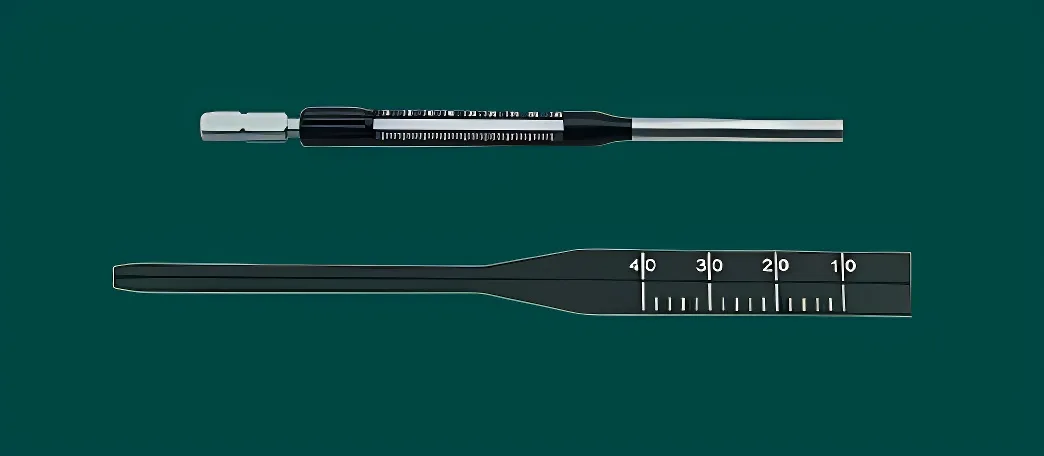
A depth gauge is a tool used to measure the depth of bones, especially during orthopedic surgeries. It helps surgeons measure bone depth to choose the right-length screws or other devices, which makes surgery safer and more successful.
A depth gauge typically includes a handle, gauge rod, and pointed tip. The gauge rod, typically made of stainless steel, features clear scale markings. The pointed tip at one end is slender and used for precise insertion into bone drill holes to ensure it reaches the bottom. Some depth gauges also feature a sliding ruler or adjustable indicator to aid in precise depth measurement.
These are some of the commonly used surgical tools in trauma orthopedics. While this list may not be exhaustive, Pride hopes that readers will actively contribute. Your suggestions are our greatest driving force for improvement. Stay tuned for the next issue on commonly used surgical tools in spinal surgery!