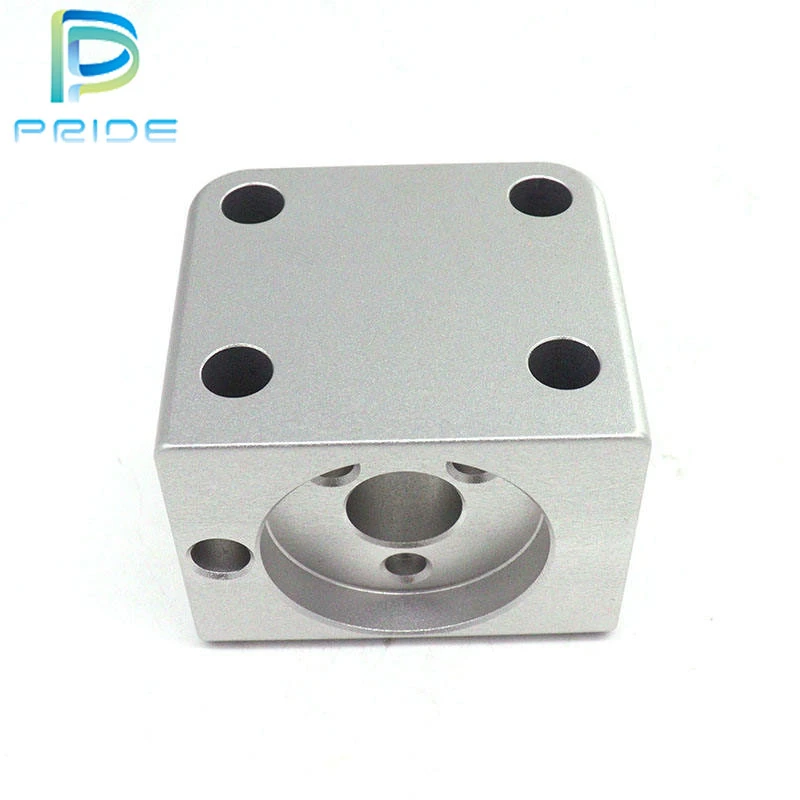
CNC Metal Camera Bracket Manufacturing Challenges & Solutions
Apr 22, 2024
Leave a message
In the dynamic realm of photography, CNC metal camera brackets play a pivotal role in providing stability and support to photographers' equipment. However, the journey from design to production of these brackets is rife with technical challenges that demand innovative solutions. This article delves into the intricacies of CNC metal camera bracket manufacturing, dissecting the hurdles faced and the strategies employed to overcome them.
Overview of CNC Metal Camera Bracket Manufacturing Process
Manufacturing a CNC metal camera bracket involves a multi-faceted process that begins with meticulous design planning and extends to precision machining and assembly. The process encompasses material selection, machining techniques, and surface finishing methods, all aimed at producing a bracket that meets the stringent requirements of professional photographers.
Analysis of Technical Challenges
Throughout the manufacturing process, several technical challenges emerge, posing significant obstacles to efficiency and quality. Machining complex geometries presents difficulties in achieving intricate designs with precise tolerances, while material selection involves striking a balance between strength, weight, and cost. Additionally, ensuring compatibility with various camera models and accessories adds another layer of complexity to the manufacturing process.
Exploring Solutions
To address the technical challenges inherent in CNC metal camera bracket manufacturing, manufacturers employ a combination of innovative techniques and strategic approaches. Advanced machining technologies, such as computer-aided manufacturing (CAM) software and multi-axis CNC machining centers, enable precise execution of intricate designs. Furthermore, the adoption of high-performance materials, including aerospace-grade aluminum alloys and titanium, enhances the bracket's strength and durability while minimizing weight.
Quality Control and Performance Evaluation
Maintaining stringent quality control measures is paramount to ensuring the reliability and performance of CNC metal camera brackets. Quality control protocols encompass dimensional inspection, surface finish analysis, and load-bearing capacity testing, conducted at various stages of the manufacturing process. Additionally, performance evaluation involves rigorous testing under real-world conditions to validate the bracket's stability, durability, and compatibility with a range of camera systems.
Practical Applications of Challenges and Solutions
Real-world case studies provide tangible examples of how manufacturers navigate technical challenges and implement effective solutions in CNC metal camera bracket manufacturing. These case studies offer insights into process optimization, material selection, and quality assurance strategies, illustrating best practices and lessons learned in overcoming manufacturing hurdles.
Future Outlook and Development Trends
Looking ahead, the future of CNC metal camera bracket manufacturing is shaped by emerging technologies and evolving market demands. Additive manufacturing techniques, such as 3D printing, offer new opportunities for design innovation and customization, while sustainable manufacturing practices gain traction in response to environmental concerns. Furthermore, the integration of smart technologies, such as IoT sensors and data analytics, holds the potential to revolutionize quality control and production efficiency.
Conclusion
In conclusion, the journey of CNC metal camera bracket manufacturing is fraught with technical challenges that demand ingenuity, precision, and adaptability. By embracing innovative solutions and leveraging advanced technologies, manufacturers can navigate these challenges effectively, producing high-quality brackets that meet the evolving needs of photographers worldwide.