CNC Machining Revolutionizes Gear Manufacturing: Insights and Innovations
Apr 25, 2024
Leave a message
Gear manufacturing serves as a critical pillar supporting various industrial sectors, ensuring the seamless operation of machinery and equipment. Within this realm, CNC (Computer Numerical Control) machining emerges as a pivotal technology, renowned for its precision, efficiency, and versatility. This article delves into the indispensable role CNC machining plays in gear manufacturing, dissecting its applications, advantages, and future trajectories.
Overview of CNC Machining Technology
CNC machining epitomizes a manufacturing paradigm wherein computerized controls orchestrate machine tools' operation, encompassing mills, lathes, and grinders. These machines translate digital blueprints into physical components with remarkable precision and consistency. Embraced for its capacity to fabricate intricate parts with exacting tolerances and complex geometries, CNC machining has become the cornerstone of modern manufacturing.
Applications of CNC Machining in Gear Manufacturing
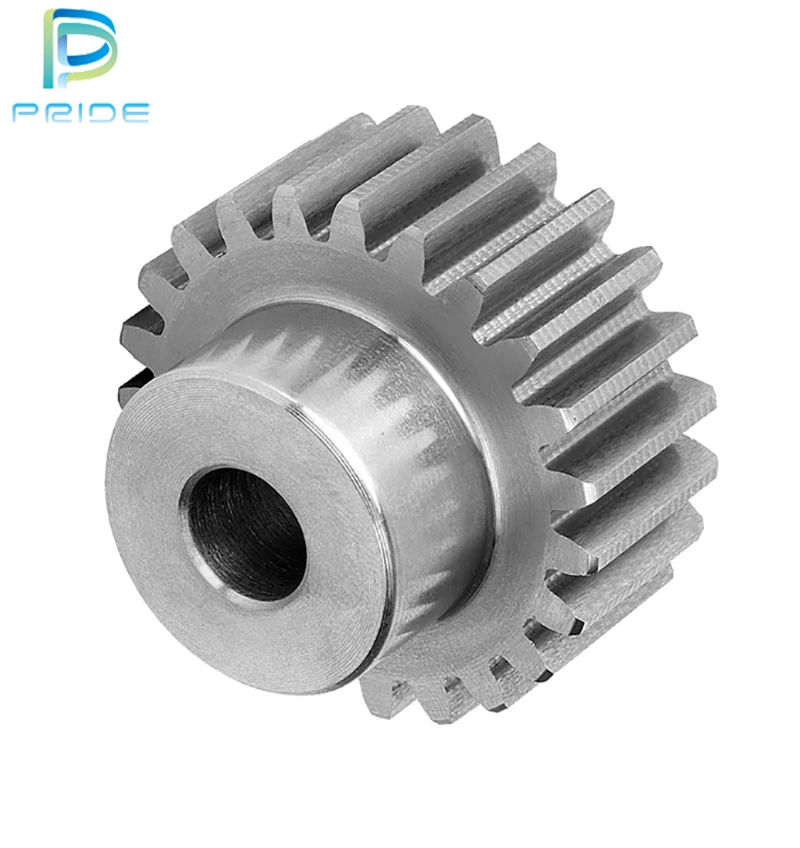
CNC machining permeates the entire gear manufacturing spectrum, from initial shaping to meticulous finishing. Milling, turning, and grinding constitute primary CNC machining techniques employed in crafting gears of diverse configurations and sizes. Renowned for precision tooth profiling, CNC machines ensure seamless meshing and optimal gear assembly performance.
Relationship Between CNC Machining and Gear Design
The advent of CNC machining has catalyzed a revolution in gear design, endowing designers with unparalleled flexibility and complexity. Intricate gear profiles and tooth forms hitherto deemed impractical or unattainable are now within reach. CNC machining facilitates bespoke gear solutions tailored to precise application demands, propelling gear design innovation and efficacy.
Advantages of CNC Machining in High-Precision Gear Manufacturing
In the realm of high-precision gear manufacturing, CNC machining holds sway, offering distinct advantages over traditional methodologies. Exemplary precision and surface finish capabilities hallmark CNC machines, yielding gears with minimal dimensional deviation and superlative performance attributes. Furthermore, CNC machining fosters swift prototyping and iterative design enhancements, expediting the quest for optimized gear solutions.
Future Trends in CNC Machining Technology
The horizon of CNC machining in gear manufacturing portends continued evolution and innovation. Digitalization, automation, and integration with CAD/CAM software are poised to streamline machining processes, heightening overall efficiency. Concurrently, material science advancements and cutting-edge tooling technologies will empower CNC machines to tackle more formidable materials and geometries, ushering in new vistas for gear design and fabrication.
Conclusion
In summation, CNC machining occupies a central role in contemporary gear manufacturing, underpinning precision, adaptability, and productivity. From conception to fruition, CNC machines empower the creation of high-caliber gears that satisfy the rigorous demands of diverse industries. As technological strides persist, CNC machining will remain at the vanguard of gear manufacturing, propelling innovation and shaping mechanical engineering's future.