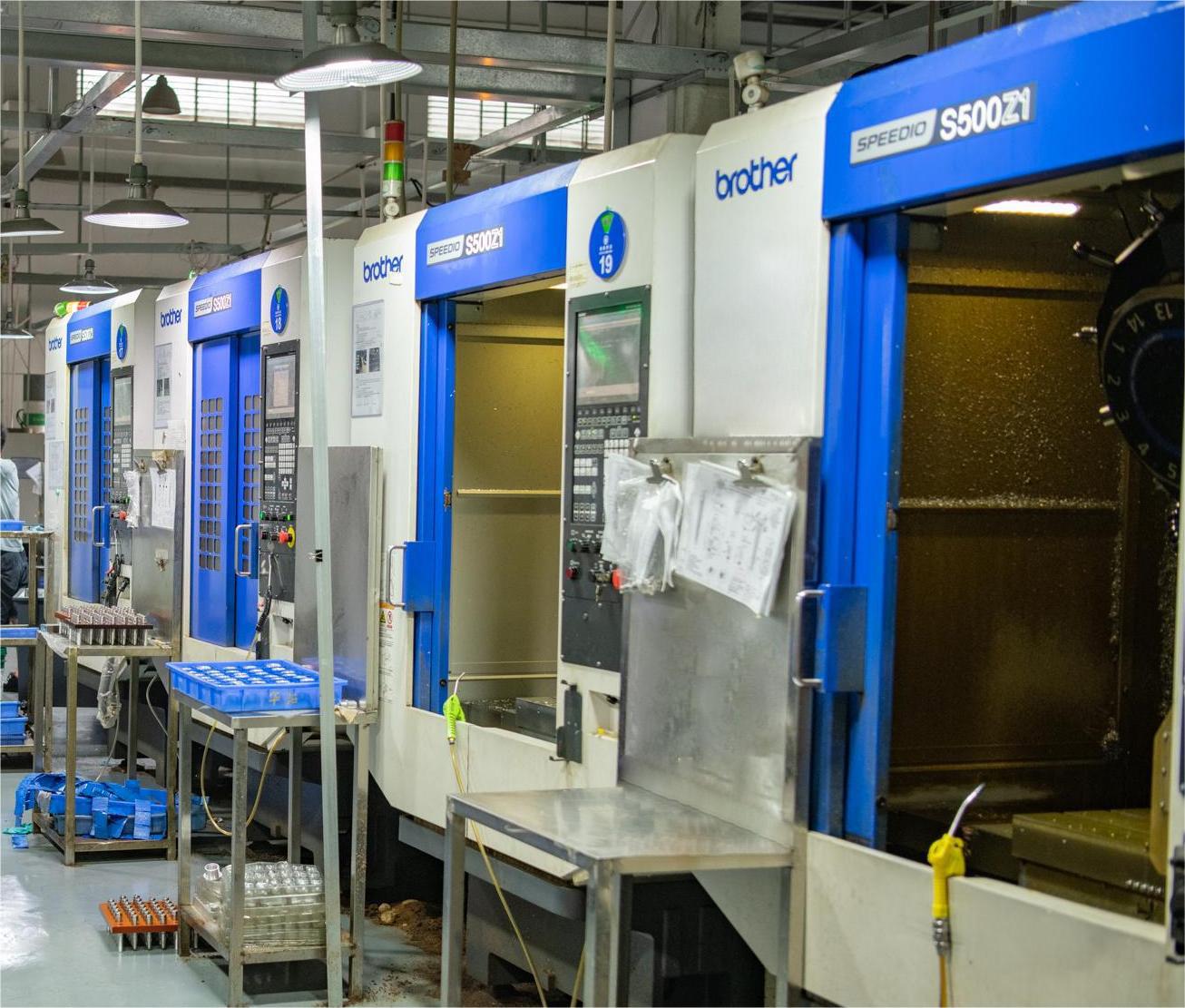
Accelerating Innovation: How CNC Machining Revolutionizes Rapid Prototyping
Nov 29, 2023
Leave a message
In an era where speed and precision dictate market success, rapid prototyping emerges as a vital process in manufacturing and design. Central to this is Computer Numerical Control (CNC) machining, a technology that is revolutionizing the way prototypes are created, tested, and refined. This article delves into how CNC machining is accelerating innovation by transforming the landscape of rapid prototyping.
The Basics of CNC Machining
CNC machining is a subtractive manufacturing process that uses computer-controlled machine tools to shape material into a desired form. Unlike manual machining, it offers unparalleled precision by translating a digital design into physical reality. Common types of CNC machines include mills, lathes, and routers, each serving unique purposes in the prototyping phase.
Advantages of CNC Machining in Rapid Prototyping
Precision and Accuracy: CNC machining's accuracy is unparalleled, ensuring that prototypes match their designs down to minute details. This precision is critical for testing and validation purposes, where even slight deviations can lead to flawed conclusions.
Material Versatility: From metals to plastics, CNC machines can work with a broad spectrum of materials, enabling the creation of prototypes that closely mimic the properties of final products.
Speed and Efficiency: In rapid prototyping, time is of the essence. CNC machining streamlines the production process, turning designs into prototypes much faster than traditional methods.
Customization and Complexity: CNC machining thrives in creating complex, custom-designed parts that would be difficult or impossible to produce with other methods.
Comparing CNC Machining with Other Prototyping Methods
When compared to 3D printing, another popular prototyping technology, CNC machining stands out for its strength and material options. While 3D printing is excellent for creating intricate geometries, CNC machining is better suited for prototypes that require structural integrity. Traditional machining, on the other hand, lacks the precision and automation that CNC offers, making it less efficient for rapid prototyping.
Real-World Applications and Case Studies
Industries from aerospace to medical devices rely on CNC machining for rapid prototyping. For instance, in the automotive industry, CNC prototyping has been crucial in developing new engine designs, allowing for rigorous testing and refinement before mass production. In healthcare, custom surgical tools tailored to individual patient anatomy have been prototyped using CNC machines, showcasing its ability to produce highly specialized equipment.
Challenges and Considerations in CNC Prototyping
Despite its advantages, CNC machining in rapid prototyping is not without challenges. The cost can be significant, particularly for complex parts. Additionally, the design must be CNC-friendly, meaning certain geometries might be difficult to machine. It's essential for designers to understand these limitations and work closely with machinists to optimize their designs for CNC machining.
Future Trends and Innovations in CNC Machining for Prototyping
The future of CNC in prototyping is bright, with advancements in machine learning and automation poised to make CNC machines even faster and more precise. Integration with virtual reality for design verification and the use of sustainable materials are other trends shaping the future of CNC prototyping.
Conclusion
CNC machining has irrefutably transformed the field of rapid prototyping. Its precision, speed, and versatility accelerate innovation by allowing designers and engineers to quickly turn their ideas into tangible, testable prototypes. As technology continues to evolve, CNC machining will undoubtedly play a pivotal role in driving forward the next generation of products and innovations.