

About laser welding, you should know these
Mar 19, 2021
Leave a message
About laser welding, you should know these
Butt welding, lap welding, filler wire welding-the scope of welding terminology is as wide and varied as the technology itself. Laser welding and laser brazing are two standardized joint processes in the thermal joint method.
Compared with the traditional arc welding process, the laser beam seam has many advantages:
Selective energy application in a small area: reduce thermal stress and reduce heat affected zone, extremely low distortion
Narrow joints and smooth surface: reduce or even eliminate reprocessing
Combination of high strength and low welding volume: the welded workpiece can withstand bending or hydroforming
Easy to integrate: can be combined with other production operations, such as alignment or bending
Only one side of the seam needs to be approached
High process speed reduces processing time
Especially suitable for automation technology
Good program control: machine tool control and sensor system detect process parameters and ensure quality
The laser beam can produce solder joints without touching the surface of the workpiece or applying force to the workpiece
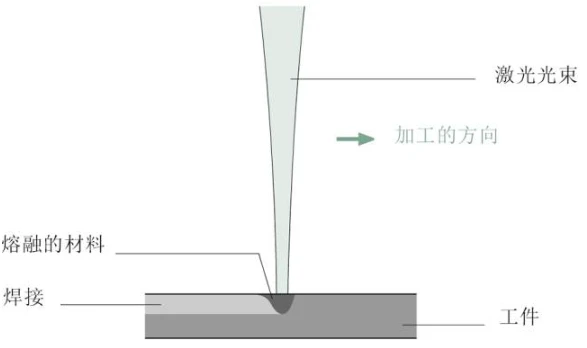
Figure 1 The surface is melted during heat conduction welding
The laser beam can connect workpieces or produce deep welds on metal surfaces, and can also be combined with traditional welding methods or used as brazing.
1 Heat conduction welding
In thermal conduction welding, the laser beam melts the mating parts along a common joint, and the molten material flows together and solidifies, producing a smooth, circular weld that does not require any additional grinding or finishing.
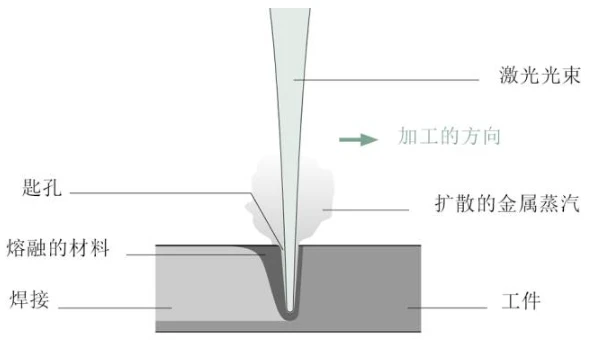
Figure 2 Deep penetration welding produces a steam-filled hole, or pinhole effect
The heat conduction welding depth ranges from only a few tenths of a millimeter to one millimeter. The thermal conductivity of the metal limits the maximum welding depth, and the width of the welding point is always greater than its depth.
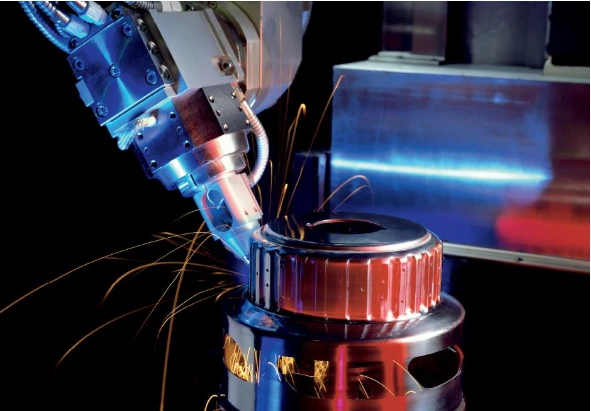
Figure 3 Deep penetration welding of transmission components
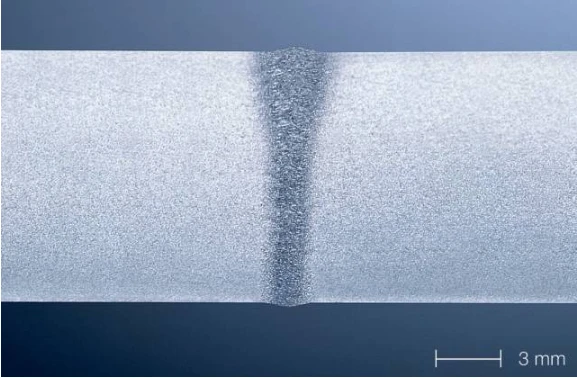
Figure 4 Laser welding cross-section observed under a microscope
If the heat cannot be quickly dissipated, the processing temperature will rise above the vaporization temperature, metal vapor will be formed, the welding depth will increase sharply, and the process will become deep penetration welding.
2 deep penetration welding
Deep penetration welding requires an extremely high power density of about 1 MW/cm 2 . The laser beam melts the metal while generating vapor. The vapor exerts pressure on the molten metal and partially replaces it. At the same time, the material continues to melt, creating a deep, narrow, vapor-filled hole, that is, the pinhole effect. The laser beam advances along the welding seam, and the small hole moves with it. The molten metal circulates through the small hole and solidifies in its trajectory, resulting in a deep, narrow internal weld with uniform structure. The welding depth may be ten times greater than the welding width. 25mm or deeper.
Deep penetration welding is characterized by high efficiency and fast welding speed, small heat-affected zone, and distortion can be controlled to a minimum. It is often used in applications that require deep penetration welding or multiple layers of materials that need to be welded at the same time.
3 Active gas and protective gas
Active gas and shielding gas assist the laser beam during welding.
Active gas is used for CO 2 laser welding to prevent the formation of a plasma cloud on the surface of the workpiece to obstruct the laser beam.
The shielding gas is used to protect the welding surface from the ambient air, and the flow of the shielding gas to the workpiece is non-turbulent (laminar flow).
4 filling material
The filler material is usually added as silk or powder to the points to be connected. Its role:
1. Fill gaps that are too wide or irregular and reduce the amount of work required for seam preparation.
2. The filler is added to the molten metal in a specific form to change the welding suitability, strength, durability and corrosion resistance of the material.
5 Hybrid welding technology
Hybrid welding technology refers to a combination of laser welding and other welding methods. Compatible processes are MIG (inert gas shielded welding) or MAG (active gas shielded welding) welding, TIG (tungsten inert gas welding) or plasma welding. Hybrid welding technology is faster than MIG welding alone and has less part deformation.
6 laser soldering
In laser brazing, matching parts are connected together by filler material or solder. The melting temperature of the solder is lower than the melting temperature of the base material. During the brazing process, only the solder is melted, and the matching parts are only heated. The solder melts and flows into the gap between the parts and bonds with the surface of the workpiece (diffusion bonding).
The strength of the brazed joint is the same as that of the solder material. The surface of the joint is smooth and clean without finishing. It is often used for car body processing, such as trunk lid or roof.