


USB Housing Aluminum Alloy Die Casting Parts
Specifications: customized according to the requirements of drawings and samples
Introduction: Professional hardware accessories processing factory
Description
Technical Parameters
Product Description
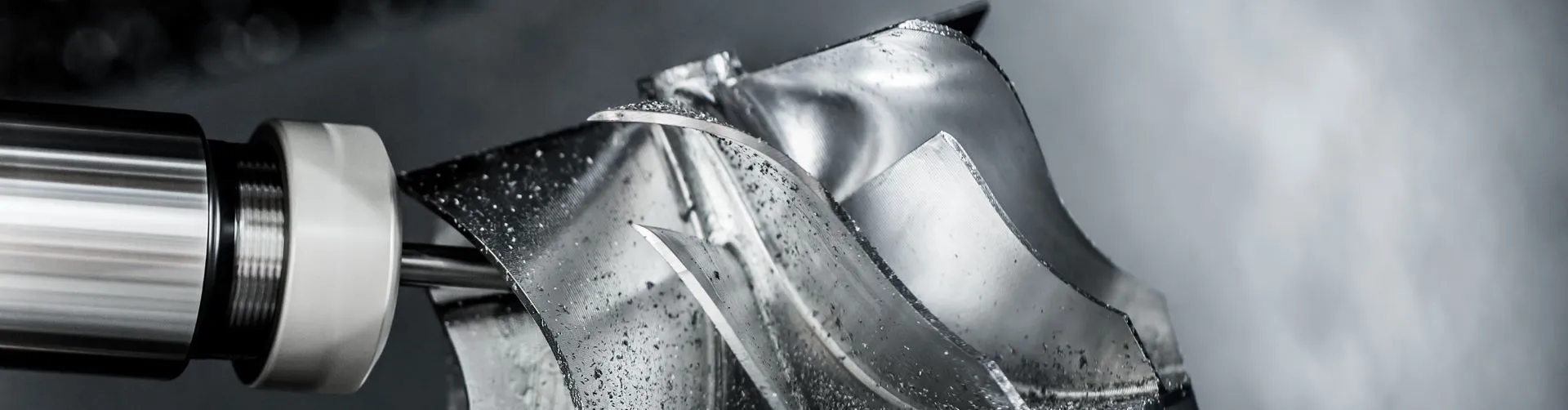
1, Aluminium die casting is a process of injection aluminum alloy under pressure, which produces parts in high volume at low costs. 2, There are two processes of Aluminum die casting: hot chamber and cold chamber. 3, A complete cycle can vary from one second for small components to minutes for a casting of large part, making aluminium die casting the fastest technique available for producing precise aluminium alloy parts. 4, Any aluminium alloy die casting parts are customized according to the clients' drawing or samples.
5, Certification: TS16949, ISO9001, SGS, ROHS
Aluminium Die Casting Auto Parts
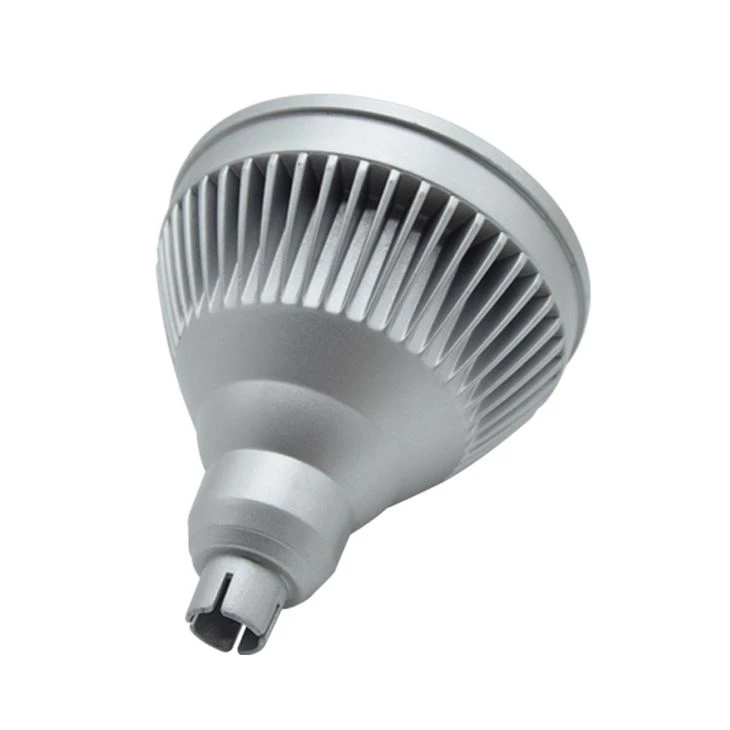
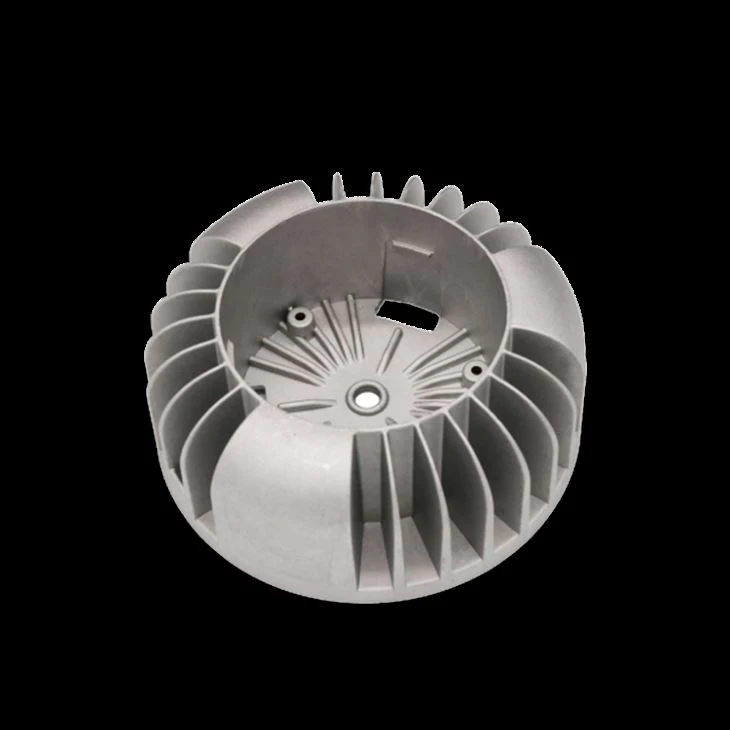
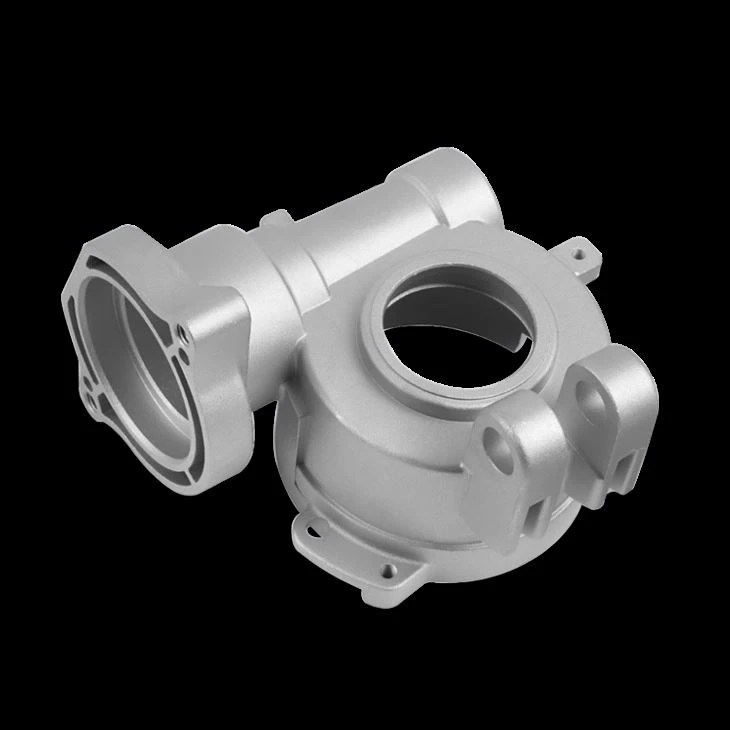
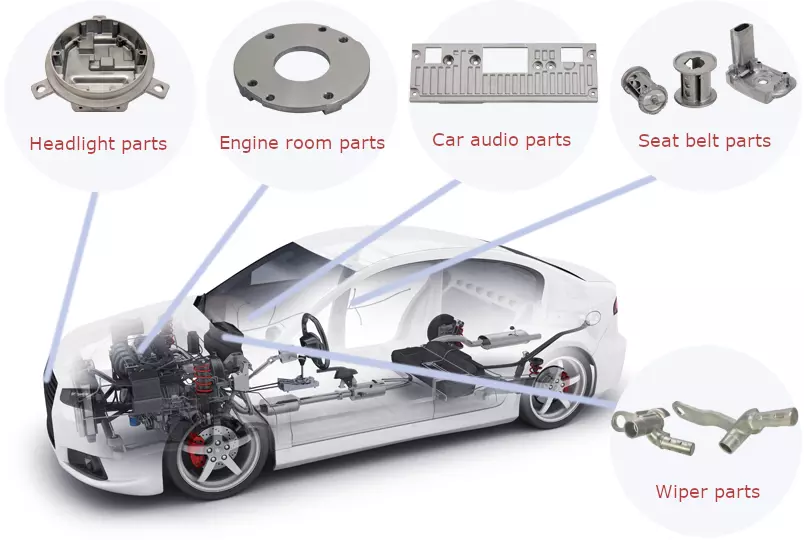
Aluminum die-casting products are characterized by high quality, light weight, high hardness and nice appearance.Therefore, aluminum die casting products are widely used in the automotive field. For example, Heat sink for auto headlights, Gearbox housing, Engine cooling fan, Gear shift lever housing, Coolant pump housing, Water pump housing and end cover, Auto air condition housing
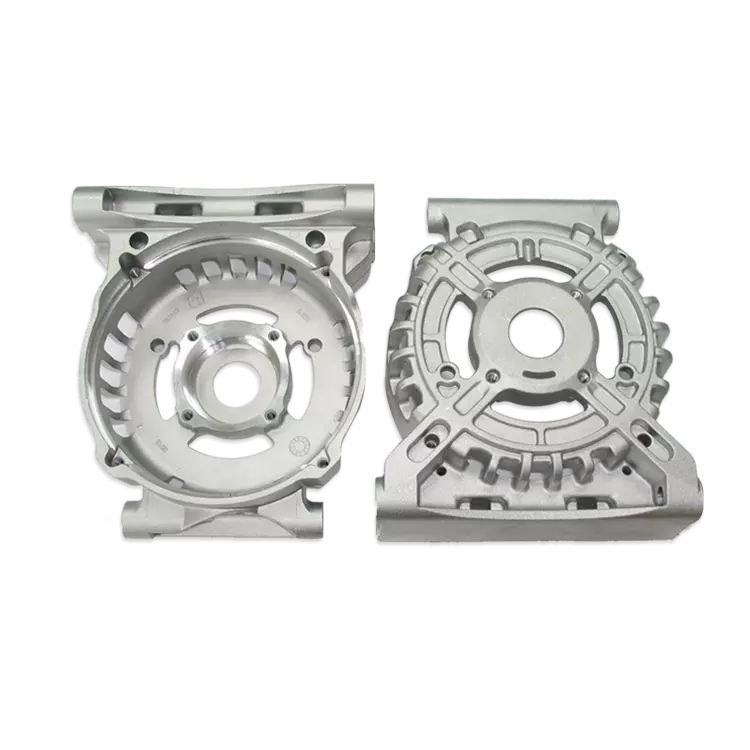
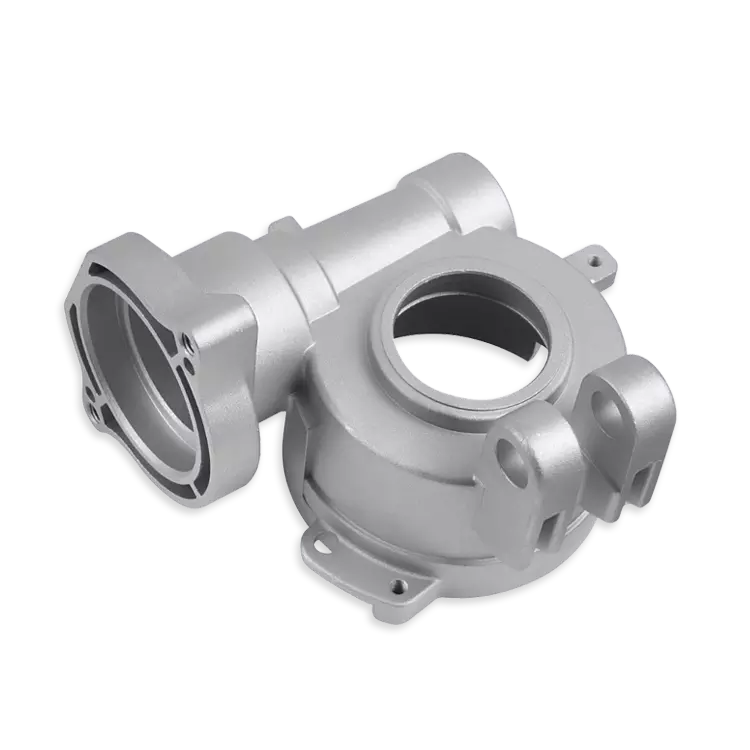
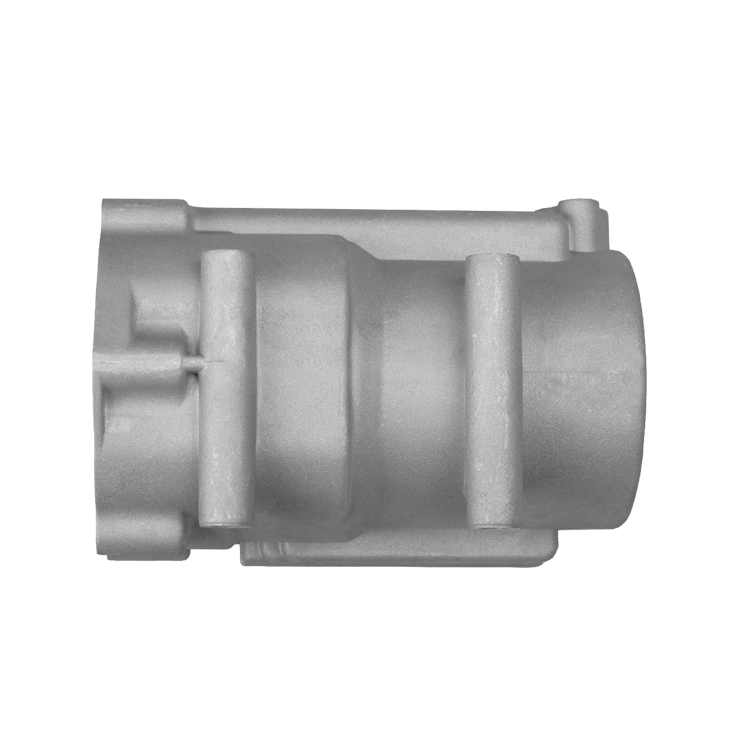
Name | Aluminium Alloy Die Casting Housing |
Material | ADC12, A380, AlSi9Cu, ADC10 |
Dimension | Mini 80*80 mm, Max800*800 mm |
Technology | High Preressure Die Casting, CNC, CMM Measure, Painting, X-Ray Detection |
Processing | 1, Sign Drawing (General clients provide the drawing or samples) 2, Opening the Mold 3, Die Casting ( Aluminium or Aluminium Alloy) 4, Precision Machining (Burring, Lathe, Milling, etc) 5, Surface treatment: Polishing, Electroplating, Sandblasting, Anodizing 6, Inspection and Packing |
Application | Automobile 42%, Furniture 21%, Industry 18%, Lighting 15%, Other 4% |
provides service of die casting part design, prototype making, mold design, mold production, mass production and assembly service in house. We are cooperating with many clients all over the world and have a deep understanding of the die casting mold industry, our experience range from simple design to challenging technical parts.
Mold Design:
For sand casting, the mold is made of wood or other metal materials. In this process, we asked our engineers to make the mold size slightly larger than the finished product, and the difference is called the shrinkage allowance. The purpose of this is to melt the metal into the mold to ensure that the molten metal solidifies and shrinks, thereby preventing voids in the casting process.
Core Making: The core is formed by casting resin sand into a mold to form a casting of the inner surface. Therefore, the gap between the core and the mold eventually becomes a casting.
Casting Producing: A mold is required during the smelting process. Molding typically involves the support frame of the mold, which is pulled out to separate during the casting process, where the previously placed core melts in the mold and then closes the die opening.
Cleaning & Machining: The purpose of cleaning is to remove sand, sand and excess metal in the casting. Welding, sand removal can improve the appearance of the casting surface by burning the sand and the scale is removed to improve the appearance of the surface of the casting. Excess metal and other risers are removed. A step further by welding and grinding. Some castings are subject to special post-processing requirements such as heat treatment, shaping, anti-rust treatment, roughing, etc. Finally, Checking the defects and comprehensive quality finishing, before processing, and then re-processing, according to the requirements of different customers, we can do heat treatment, surface treatment, additional inspection and so on.
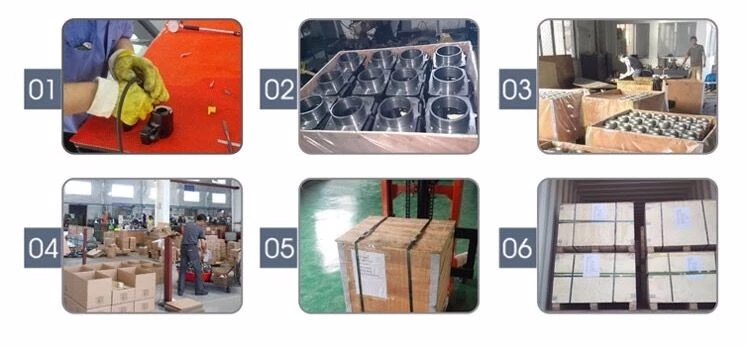
Packing & Delivery (Show As Above):
Inner Packing →Strong & waterproof plastic big is packed inside, to keep the product in safe condition.Or as customer requests.
Outer Packing →Multilayer wooden box with strong bandages, used for standard export package. Or customized as per customer's requirements.
Our Company
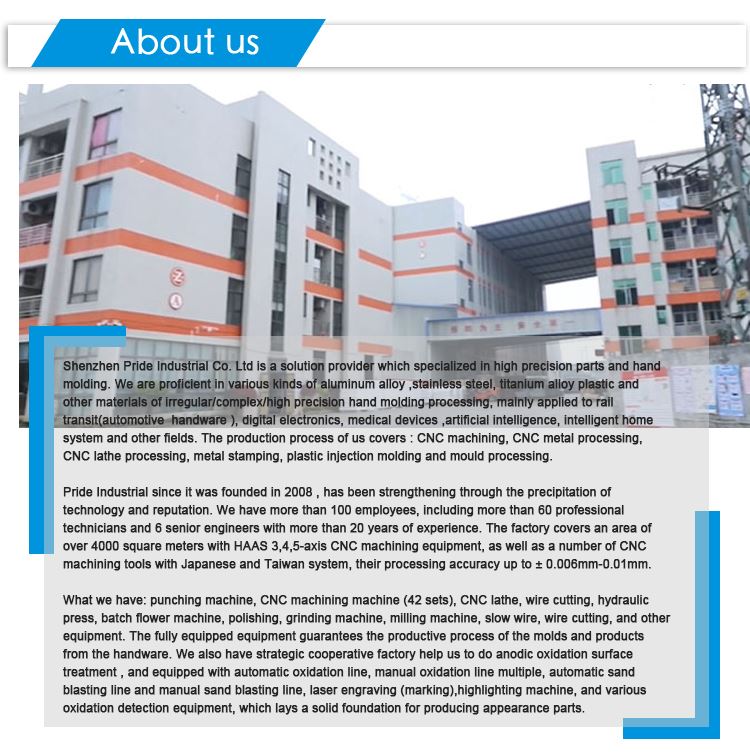
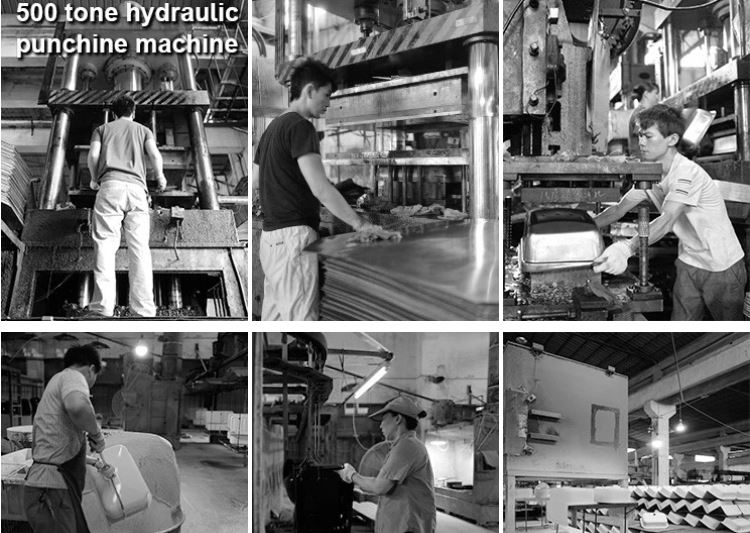
Shenzhen pride Industrial Co., Ltd.
Tel:+8618666663894
Fax:+86-917-3387002
Mob:+86-755-23699351
E-mail: crush@pride-cnc.com
Add: Block D, Dianlian Science Park, Matian St., Guangming District, Shenzhen 518106, China
Latest News
Reduce deformation of aluminum parts with I-type quenching agent
Water quenching
The fundamental defect of water quenching agent is uneven heat transfer and unstable steam shock. Rose, who first studied this problem, pointed out that the cooling rate of water is firstly affected by water temperature and stirring, and steam shock is first formed on the surface of the hot metal entering the water ( See Figure 1). The temperature of the unstable state is about 23°C. Above this temperature, the steam film cooling time increases with the increase of water temperature (see Figure 2). The steam film cooling stage, the nucleation boiling cooling stage and the convective cooling stage It can happen at the same time on the surface of the part. The huge difference in the cooling rate at these different stages causes a large thermal gradient on the cooling surface.
When the temperature of the water quenching agent is 20~60, the irregular and unstable vapor film on the surface is latent with a large temperature gradient, and this temperature gradient will cause deformation or cracks, even though the vapor film surrounding the hot aluminum parts is above 60C It is relatively stable, but it is very difficult to obtain the required mechanical properties. Attach pointed out that cold water with stirring can get lower residual stress than hot water without stirring.
This is because during the cooling process, the vapor film is easily broken under stirring conditions, which makes the heat transfer more uniform.
Baes and Totten pointed out that the sensitivity of the physical properties of the cooling process to stirring increases as the water temperature increases.
PAG polymer quenching agent
The interfacial cooling characteristics of the type I polymer quenching agent are shown in Figure 3. The hot metal is surrounded by the polymer film at the beginning of the water entering. When the metal is sufficiently cooled, the vapor film ruptures and nucleation boiling occurs. When the parts are cooled below the boiling point of water, convective cooling occurs and the remaining polymer is re-dissolved. The above process can be strengthened by stirring. Compared with water, the quenching agent has good cooling uniformity because the thermal gradient is reduced at this time, thereby reducing the possibility of potential deformation and cracking.
Hot Tags: USB Housing Aluminum Alloy Die Casting Parts, China, manufacturers, suppliers, factory, wholesale, customized, made in China
Send Inquiry


